
Summary
- Thousands of traders in many of Ghana’s markets breathe heavily polluted air every day, adding to illness and death, but government agencies do not routinely measure how dangerous it is.
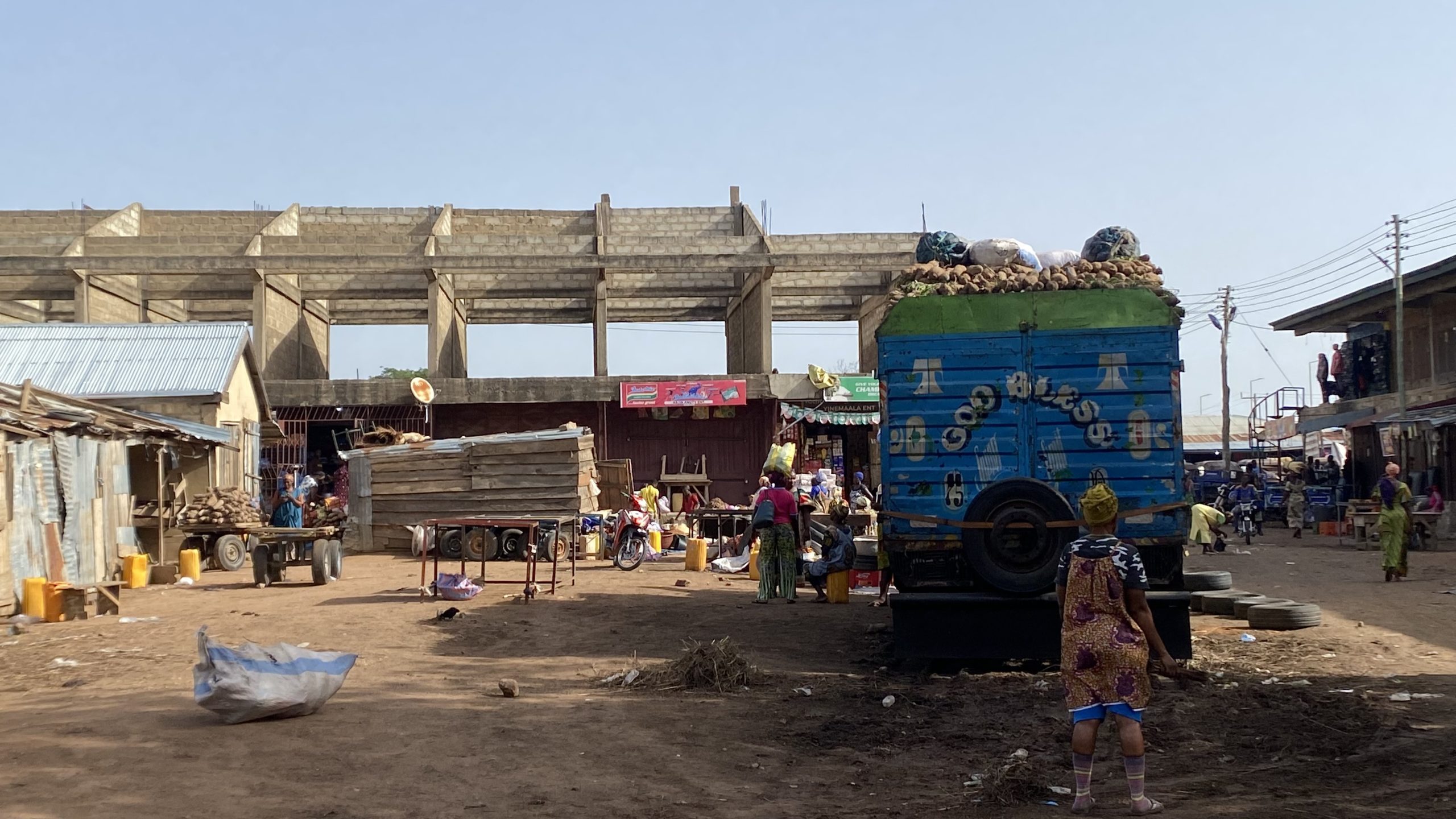
- Ghana’s new 24-hour economy markets, costing over GH¢30 million (US$2.65 million) each, are being built without any air quality data or pollution controls to protect the people who will work inside them.
- In Bolgatanga, where construction on one new market has begun, the Municipal Chief Executive admits there is no environmental assessment for existing markets and no clear air pollution plan for the new ones.
By Mark Kwasi Ahumah Smith in Bolgatanga
Every morning, shortly before eight o’clock, Mma Teni spreads a rubber sheet on the ground at the entrance here to the Bolgatanga new market. She places a stone at each corner to hold it flat, then tips out a heavy sack of second-hand clothes.
A cloud of plastic particles from the clothes rises into the air to mix with diesel fumes and smoke from charcoal fires. As she settles onto a low stool as she has done for five years, ringing a bell to call passing shoppers, the pollutants travel into her lungs and eventually her bloodstream. She knows the danger.
“The cars, the big ones that bring the foodstuff, the ‘motor-kings,’ and the motorbikes come in all the time,” Teni says in her Gurune language. “Some park in front of me here, and the smoke is bad. They bring dust too. We get catarrh, chest pains, and other problems, but there is nothing we can do about it”.
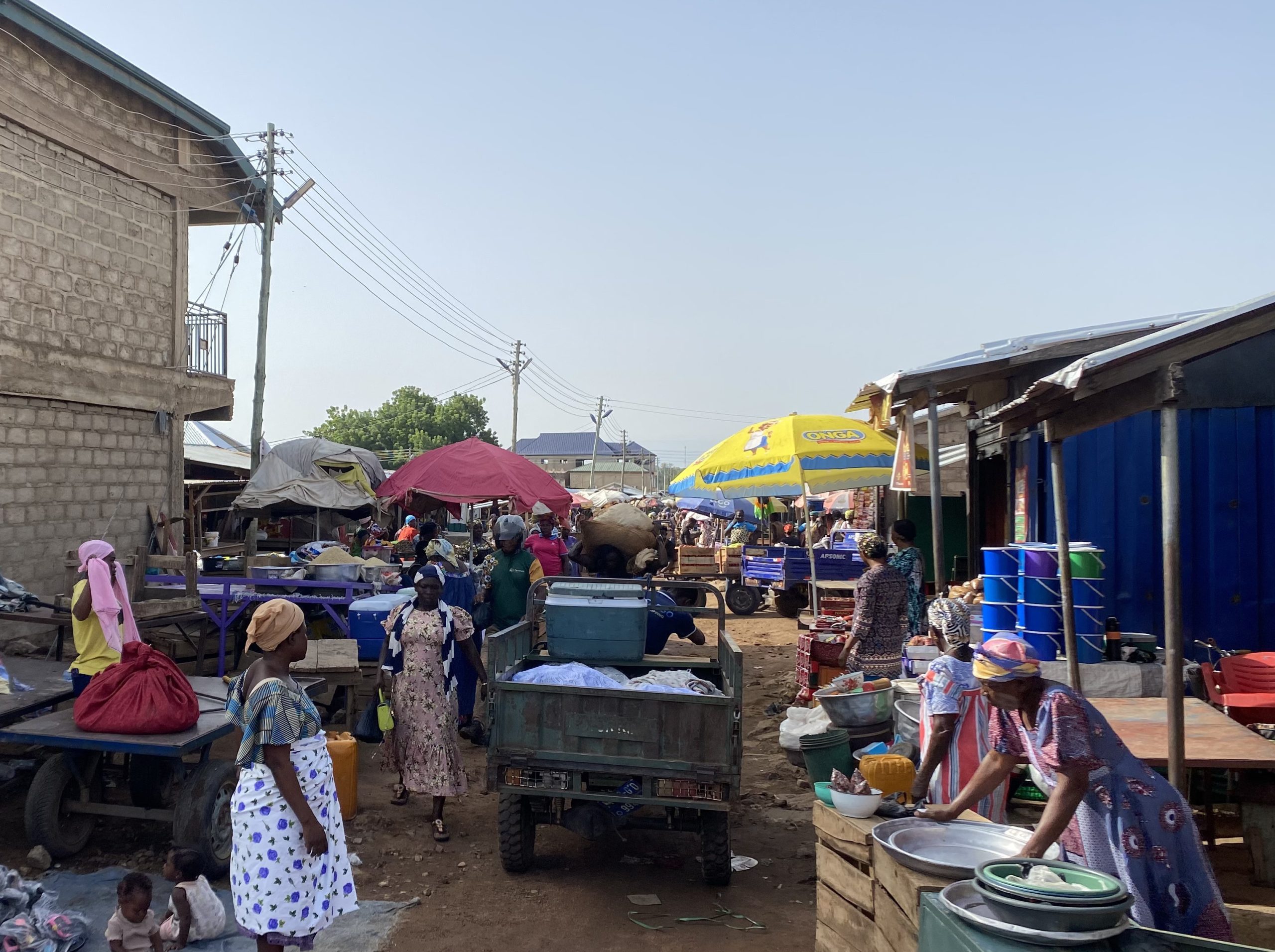
An idling tricycle carrying goods into the market. Toddlers play under the exhaust.
Teni is one of thousands of traders across markets in Ghana who spend their working lives breathing toxic air that studies show is killing about 35,000 Ghanaians prematurely every year. Yet according to government officials, not a single government agency, including the Environmental Protection Agency, routinely measures what is actually in the air the traders inhale. Here in the Upper East Region for example, government officials confirm, there is no monitoring station. There is no data.
But studies elsewhere show these markets are dangerously polluted and getting worse as Ghana’s population rapidly grows. At Accra’s Kantamanto market a 2025 study found dangerously high levels of airborne microplastic particles – from the large number of second-hand clothes – in the spit, urine, faeces and breastmilk of workers. Similar markets in India and Nigeria have registered dangerous air pollution levels up to 77 times those recommended by the World Health Organisation.
And yet, as the government rolls out projects totaling Ghc7.8 billion in the country’s 261 districts, the plans include no effort to measure or address air pollution. Experts warn the plan will add further to a fast-growing crisis of air pollution in the country.
A polluted market and traders with few choices
The Bolgatanga Central Market is the economic backbone of the Upper East Region. On market days, which occur every three days, a surge of diesel-powered trucks, motorcycles, and tricycles converges on a single point in the city to offload goods before crowds of traders, head porters, and consumers. While there is no scientific measurement of air pollution levels in the area, residents and traders describe a noticeable haze that forms during the morning rush and lingers in the crowded, enclosed trading environment long after the vehicles have departed.
Teni, like most traders here, is aware of the dangers. But she feels she has no choice. The work that helps her support her family is, slowly and invisibly, costing her something she cannot afford to lose: her health.
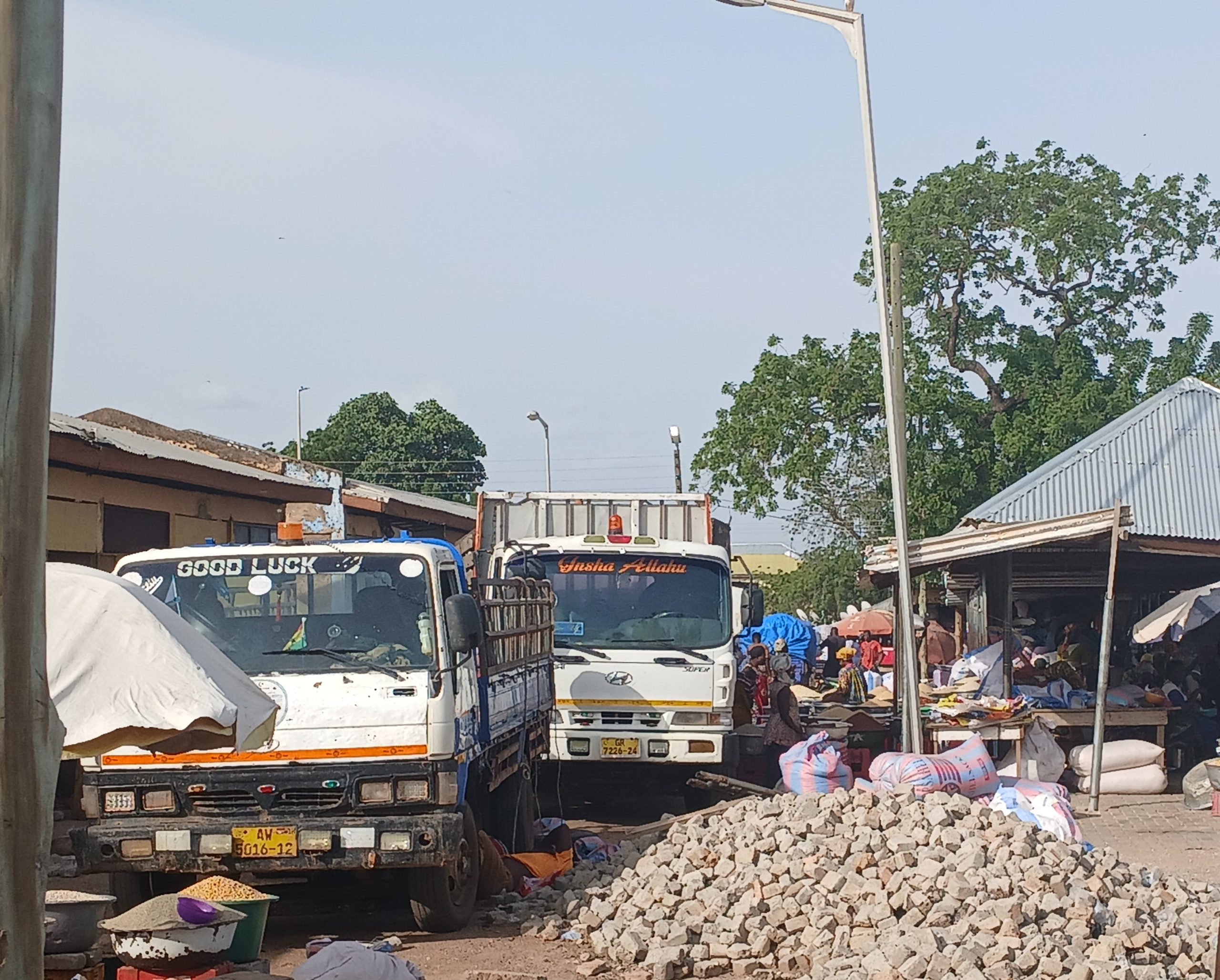
Trucks parked in the Bolgatanga market offloading grain
Joshua Akavibere, who trades near the millet section of the Bolga new market, is also aware of the dangers.
“The cars and candoo are really disturbing us,” he says. “When you complain, sometimes the drivers would fight us or insult us. The smoke and dust isn’t even good for me. I’m always sick when I inhale it, but this is my only source of livelihood. I just have to manage.”
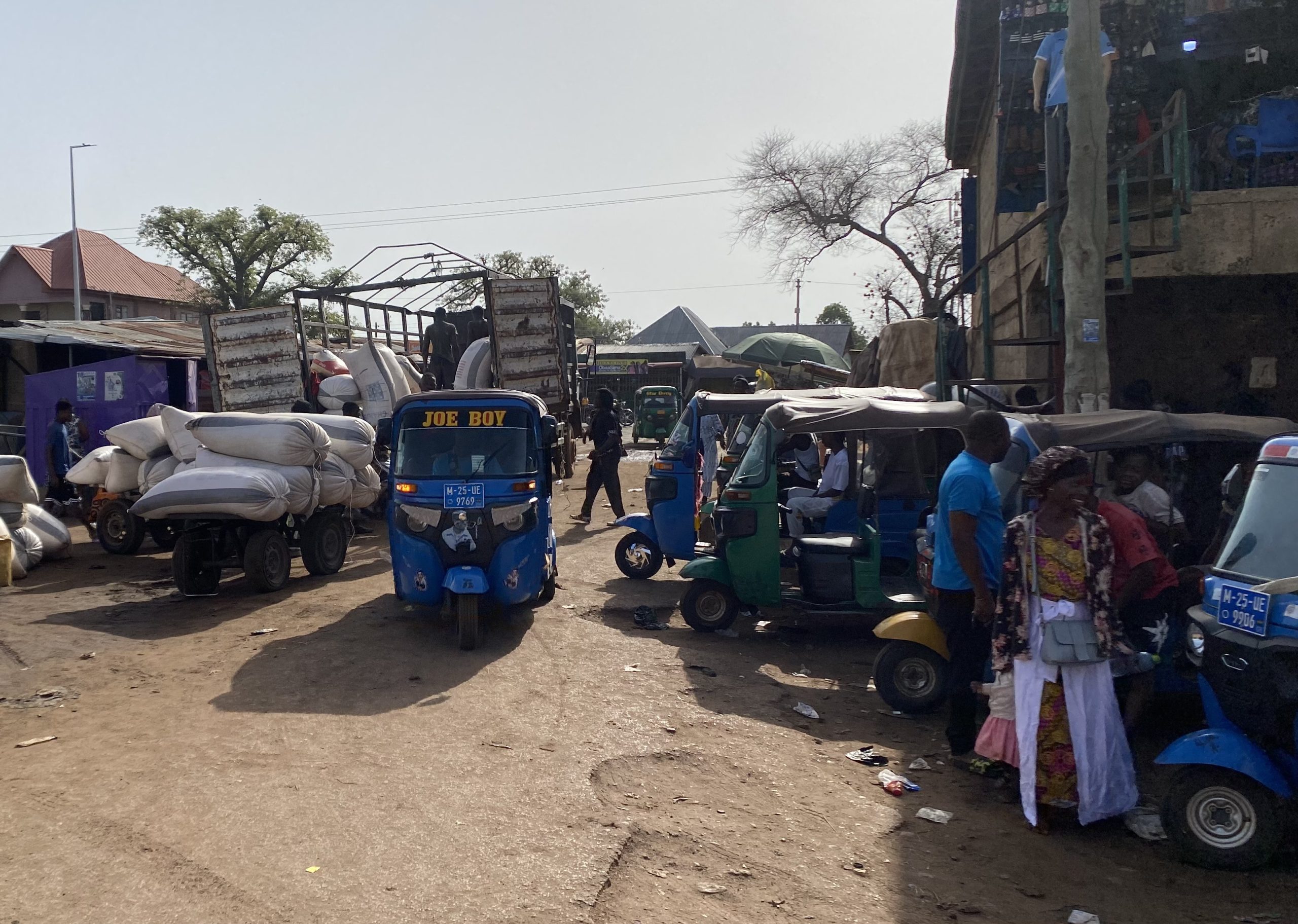
Trucks and autorickshaws popularly known as “Mahama Candoo” parked next to shops where traders sit.
Ethel Adongo, who sells dried herbs and spices nearby, frames the tension not as a conflict between traders and drivers, but between two groups of people simply trying to earn a living, with no system in place to protect any of them.
“The tricycles and cars, that’s their source of livelihood, and trading is our source of livelihood, but they most often cover our things with dust, making our things dirty and also causing us health problems,” Adongo says.
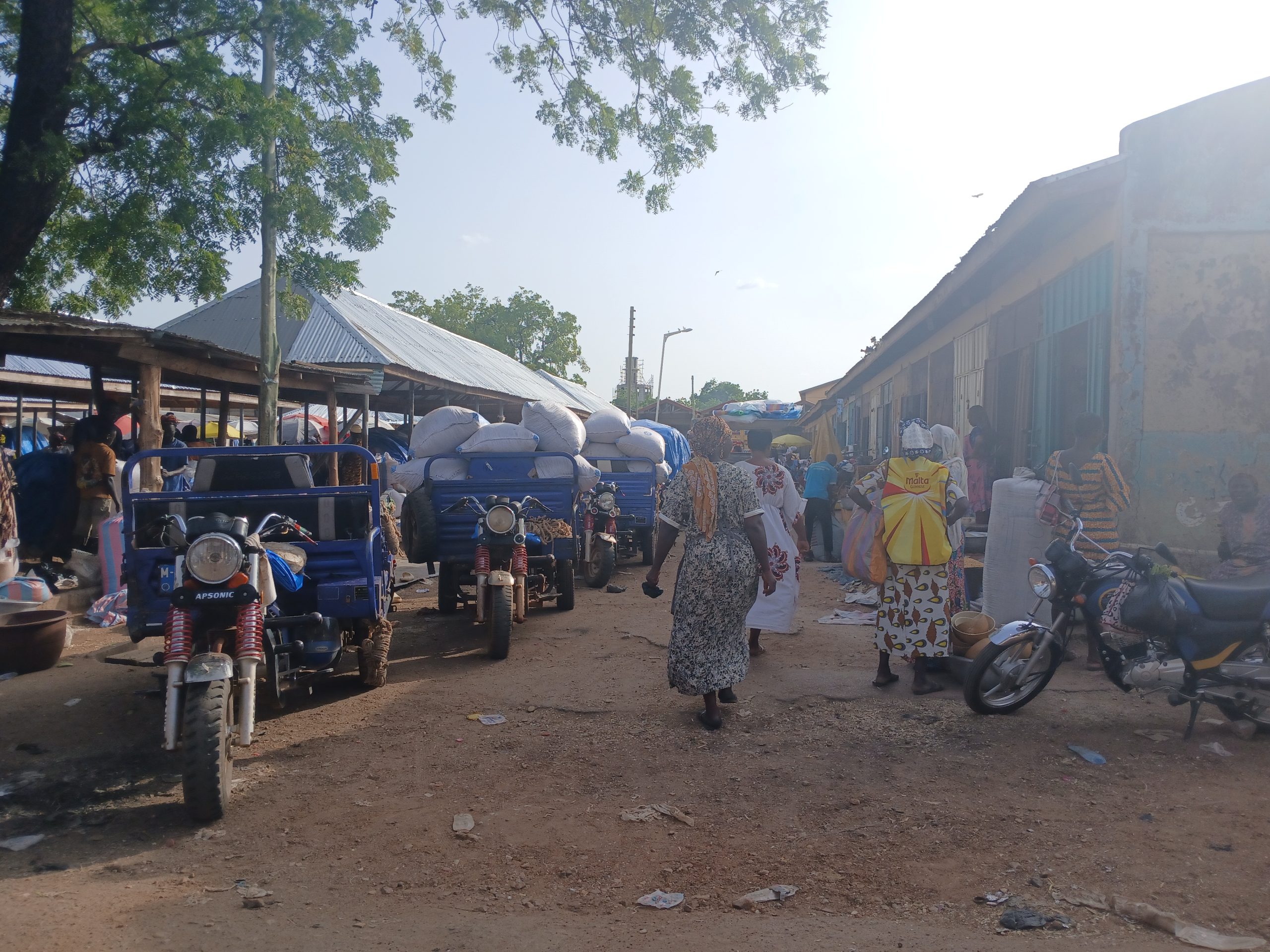
Idling tricycle loading grain in the Bolgatanga market next to traders and consumers
What none of these traders can know, because no one has told them and no one has measured it, is the precise scale of the danger of what they are inhaling.
What the science says
Across West Africa, researchers who have studied comparable market environments have found consistently alarming results. A study conducted at Bodija Market in Ibadan, Nigeria, broadly similar in character to Bolgatanga’s trading spaces, recorded concentrations of the smallest and most dangerous air pollution particles known by their size, PM2.5, that are 77 percent higher than the World Health Organisation’s recommended standard. The same study found that 43 percent of traders reported suffering from respiratory disease.
PM2.5 particles are small enough to enter the blood stream. Unlike larger dust particles, which the body can filter, PM2.5 particles travel through the airways and reach the portions of the lungs, where they enter the bloodstream directly. From there they can cause or exacerbate a wide range of major illness from cardiovascular disease to diabetes, stroke, hypertension, infertility and cancer.
A dangerous lack of data leaves government officials and traders powerless
In the Upper East Region, the equivalent figure for market pollution is unknown. Emmanuel Yennumi Wandaat, the acting Regional Director for the Environmental Protection Agency, confirmed the measurement has never been taken.
In an interview, Roland Ayoo, the Bolgatanga Municipal Chief Executive, conceded the same.
“The Assembly has not in any way consciously conducted such an exercise,” he said. “I’m also not aware of any institution or body that has gone into such a study and has put available data. So, honestly speaking, I cannot speak to any available data as a standard, because for now there’s no available data.”
He acknowledged that the environmental consequences were real and worsening.
“So long as population continues to increase, social amenities increase, and as the population gets thicker and thicker, the more environmentally polluted the area is,” he said. “The more the environment becomes more polluted, the more danger that is ahead of us.”
Ayoo listed the sources of pollution including motor bikes, cars and taxis, welders, charcoal burners, and the small factories around Bolgatanga. He was clear that collective responsibility was needed but conceded he has done little in his time in office to address it.
Experts warn of planning failures at new markets
A new national government plan would dramatically increase the number of people facing exposure. In July 2025, the NDC government launched its flagship 24-hour economy policy, committing GH¢110 million in preliminary funding to transform Ghana’s economic infrastructure. A central pillar of the policy is the construction of badly needed modern, multi-purpose markets in each of the country’s 261 districts over the course the government’s 4-year term. Each market is expected to cost roughly GH¢30 million, for a total of GH¢7.8 billion. In Bolgatanga, sod has been cut for the construction of the market in Soe, a suburb of the municipality.
But the policy makes reference to an air quality baseline assessment. It includes no mention of environmental health standards for market design. It sets out no plan for monitoring the exposure of traders and consumers to pollution.
When pressed on what specific provisions the new markets would include for air quality management, ventilation standards, and pollution control, Ayoo was unable to point to any. He said he is trusting the government will do the right thing.
“I want to believe that looking at the standards, a lot of safety measures will be put in place to ensure that the markets are not only economically viable, but they are also environmentally friendly,” Ayoo said.
Ayoo suggested that the stand-alone positioning of the new markets, away from congested areas, would itself provide some environmental benefit. But he was clear that, as an appointed government official rather than an environmental expert, he could not guarantee specific outcomes. “I do not want to say certain things whereby, in the future, if you ask me a question, I may not be in the capacity to respond,” he said.
But Ayoo was clear on the stakes.
“Environmental pollution is becoming so serious,” he said. “And as citizens, we have to be very, very careful. What we produce or what we pollute the air with is what comes back to haunt us.”
Ayoo called on the Environmental Protection Agency and other related institutions to map out strategies that will assist the people, especially in Ghana’s markets, to be able to manage waste, manage sanitation, and manage our environment well “so that at the end of the day, we have free air, regardless of pollutants, to breathe. Else, we are all sitting on a time bomb.”
Experts say there are a range of proven policy tools, including “congestion pricing” – tolls for certain areas at busy periods of the day, off-peak delivery windows, and low-emission zones, that cities have used to reduce vehicle pollution in dense commercial areas. They say these frameworks, adapted for a Ghanaian context, could form the backbone of an air quality strategy for the new 24-hour markets before a single one opens.
Jacob Johnson Attakpah, Zero Waste Director at the Green Africa Youth Organisation, one of Ghana’s leading environmental advocacy groups and winner of the 2024 Earthshot Prize for its work reducing air pollution, says the absence of any air quality plan for the new markets is not an oversight. It is a conscious decision by a government looking to save money.
He says there are simple solutions: Vehicles, visible and disruptive, are only part of the problem. Attakpah says his organization’s research points to a quieter, more pervasive source of pollution that builds steadily across markets in Ghana: organic matter. Traders clearing stalls at the end of the day, food vendors cooking over open fires, and market operators disposing of unsorted rubbish on-site all contribute to a toxic cocktail that, combined with engines or exhaust pipes in an enclosed 24-hour market, could be far more dangerous.
“Organic matter makes up more than half of all municipal waste generated in Ghanaian markets,” he says. “When left to accumulate and rot, it becomes the primary trigger for open burning.”
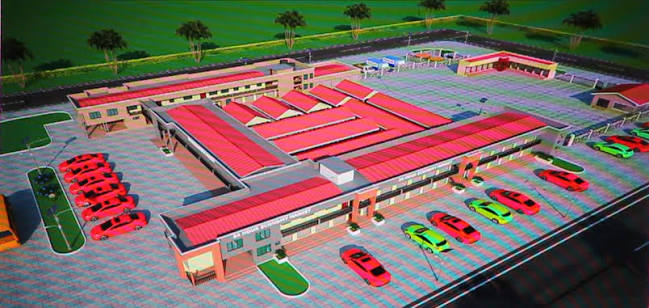
The design for the 24-hour economy market
Attakpah says the solutions are neither complicated nor beyond Ghana’s reach. His Green Africa Youth Organisation has created composting plants in parts of the country to demonstrate cleaner ways to dispose of organic waste. The composting plants, he says, have diverted 30 tonnes of organic waste monthly, eliminating the need for burning entirely. He says every new market should be built with on-site composting facilities, proper ventilation, smoke extraction systems, and real-time sensors to track PM2.5 levels. Colour-coded bins at every stall, formal integration of waste pickers as trained community educators, and clean cooking alternatives for food vendors would together address the sources of pollution that no traffic management plan can touch.
He says the government must establish a national market air quality standard, a legal framework that defines permissible pollutant levels and assigns clear accountability. “Without this baseline, there is no legal lever to mandate ventilation, monitoring, or enforcement,” he says. “It is the foundation upon which all other protections rest. The women who sustain these markets deserve nothing less.”
The window to act is narrow as construction for the new 24-hour economy markets has already begun in parts of the country. The designs have been modelled. Concrete is being poured. Experts say it will become far harder and far more expensive to add protections later.
For now, Mma Teni will return to her rubber sheet tomorrow morning. She will ring her bell. She will breathe the air around her, the same air that no instrument has ever measured, and that no policy has yet been written to protect her from, but that evidence clearly shows, is poisoning her a little bit more each day.
This story was a collaboration with New Narratives. Funding was provided by the Clean Air Fund. The donor had no say in the story’s content.