

The Upper East Regional Coordinating Council (RCC) is seeking investment and broad public support for a 10-year development framework estimated at GH¢8.6 billion to drive agriculture, enterprise, resilience and livelihoods across the region.
Known as PEARL, or Prosperity through Enterprise Agriculture, Resilience and Livelihoods, the framework is intended to provide a long-term development roadmap covering all 15 Municipal and District Assemblies in the Upper East Region.
Upper East Regional Minister Donatus Atanga Akamugre said the initiative should be collectively owned by residents and institutions in the region rather than associated with a particular government or political party.
“PEARL must belong to the people of the Upper East Region. It must not belong to one institution, one administration or one political party. It must belong to the region,” he said.
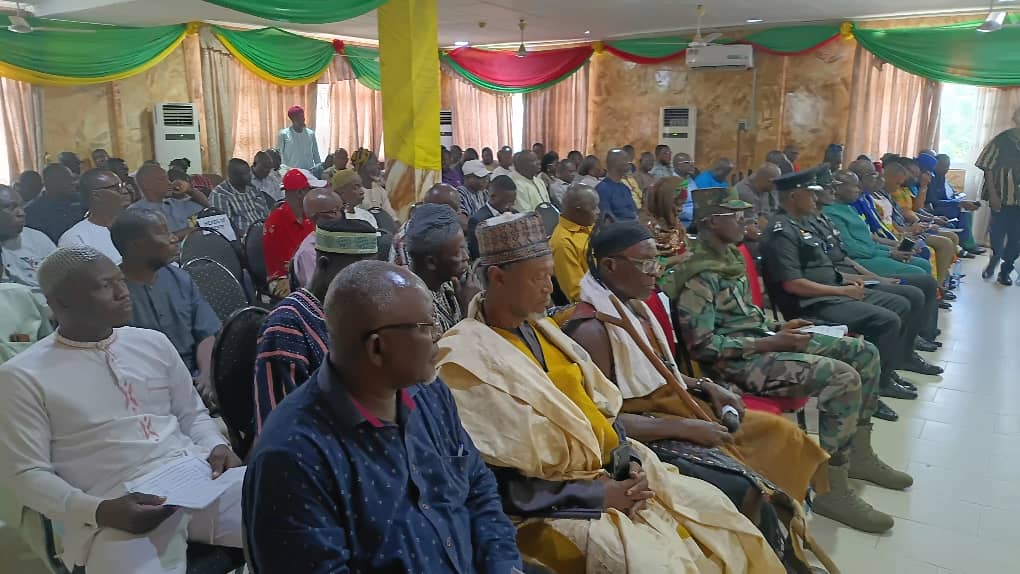
Mr. Akamugre made the comments during a stakeholder review and validation meeting organised by the RCC as part of efforts to further develop the framework.
According to him, the RCC initially presented PEARL to stakeholders about two months ago during a Regional Development and Business Forum, where participants had an opportunity to review the proposed development agenda.
He said the framework represents a 10-year development footprint for the region, backed by an estimated investment plan of approximately GH¢8.6 billion.
The framework is expected to guide investments and development interventions across the region’s 15 Municipal and District Assemblies, with a focus on creating sustainable economic opportunities and improving livelihoods.
Mr. Akamugre said achieving those ambitions would require more than government action and called for contributions from residents, institutions, development partners and other stakeholders.
“The principle of collective ownership is what brings us together today. As the framework continues to evolve and incorporate new ideas, we are calling on every well-meaning citizen of the Upper East Region to contribute meaningfully to its development,” he said.
He urged stakeholders to contribute ideas, expertise and constructive criticism, as well as financial resources and investments that could help translate the framework into development projects.
The Minister stressed that PEARL should remain inclusive and responsive to the aspirations of residents regardless of political affiliation or institutional background.
The stakeholder review brought together representatives from Bolgatanga Technical University, the University of Applied Sciences, Navrongo (UTAS), civil society organisations, the clergy, traditional authorities, political parties, academia and other organised groups.
Participants reviewed the evolving framework and made recommendations intended to strengthen its implementation and ensure that it reflects the development priorities of the region.
The RCC expressed appreciation to stakeholders for their contributions and said implementing PEARL would require shared responsibility among government, institutions, communities and other development actors.
A1 Radio | 101.1MHz | Joseph Napoleon Anaaya | Bolgatanga