
An extractive-sector focused civil society organisation, TAMA Foundation Universal, has renewed calls for sustainable mining practices in Northern Ghana, warning that current mining activities are threatening agriculture, the environment, education and social stability.
Dr. Anab observed that although Northern Ghana is richly endowed with mineral resources, it remains largely agrarian, with the majority of residents depending on farming for their livelihoods. He noted that instead of complementing agriculture, mining activities in many communities were undermining food security and destroying farmlands.
“Northern Ghana is essentially an agrarian economy. People depend on farming for their livelihoods. Mining was supposed to complement farming, but what we are seeing is that it is rather creating serious problems,” Dr. Anab said.
The Executive Director of TAMA Foundation Universal, Dr. Chrys Anab, raised the concerns during a two-day capacity-building workshop on monitoring and reporting mining infractions held in Bolgatanga in the Upper East Region.
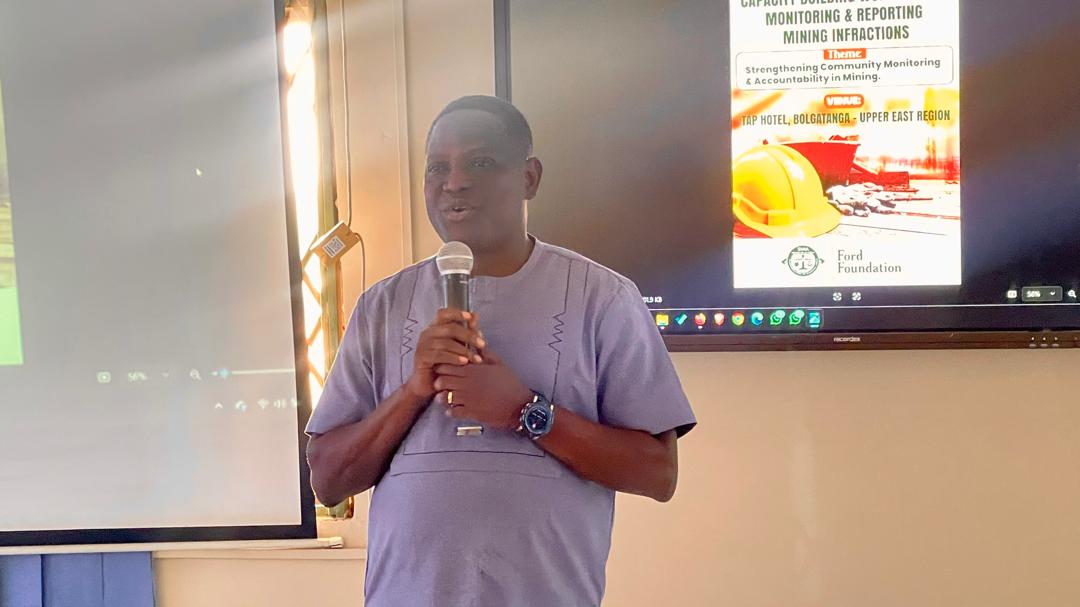
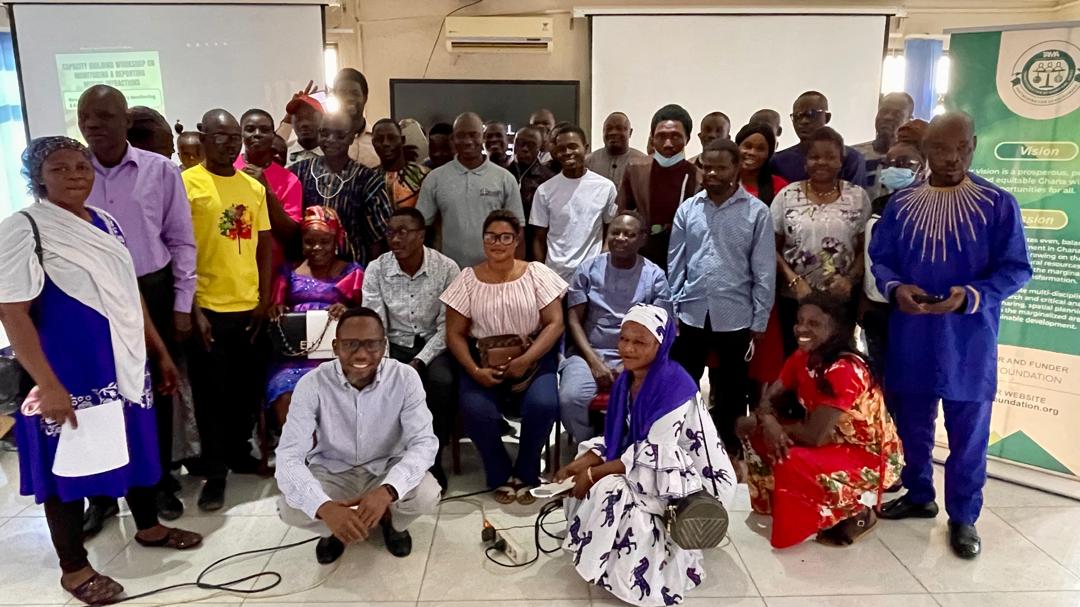
The workshop, themed “Strengthening Community Monitoring and Accountability in Mining,” brought together paralegal groups trained by the Foundation, community leaders, civil society organisations, NGOs and representatives of government institutions from across the five northern regions.
He explained that large tracts of farmlands had been taken over by mining concessions, while water bodies were increasingly polluted by mining-related chemicals. He cited a recent study conducted by TAMA Foundation in collaboration with the Water Research Institute, which revealed the presence of heavy metals such as cyanide and mercury in water samples taken along the White Volta Basin.
“These are chemicals with serious health implications. When our water bodies are polluted, it threatens not only agriculture but also the health and survival of our people,” he stated.
Beyond environmental degradation, Dr. Anab said mining activities were fueling social challenges, particularly the growing involvement of children in illegal mining at the expense of education. He described the situation as alarming, noting that classrooms in some mining communities were increasingly empty while school-age children worked at mining sites.
“You go to mining communities like Talensi and Kadema in the Builsa North District, and you will find children who should be in school already at mining sites. This is a violation of the constitutional provision on free, compulsory basic education,” he said.
Dr. Anab also linked mining activities to rising social vices in mining communities, including teenage pregnancy, drug abuse, prostitution and conflict, describing the situation as chaotic and divisive.
“Mining is a natural resource given to us by God. If it is done sustainably and with benefits to communities, it can complement agriculture. But certainly not in the way we find it across mining districts in the five northern regions,” he noted.
He called on regulatory agencies such as the Environmental Protection Authority, Minerals Commission, Water Resources Commission, Forestry Commission and district assemblies to be more proactive in enforcing environmental and mining regulations.
Dr. Anab also welcomed the passage of Legislative Instrument (LI) 2462, which bans mining in forest reserves, describing it as a positive step, though not a complete solution.
As part of broader solutions, Dr. Anab urged government to prioritise alternative livelihood programmes for young people in mining communities through skills training, startup support and access to markets.
Source: A1 Radio | 101.1Mhz | Joshua Asaah | Bolgatanga