
The Forestry Commission says it distributed and planted 410,000 seedlings in the Upper East Region last year and is targeting 400,000 more this year, as illegal mining, sand winning, and bushfires continue to destroy the region’s fragile ecosystem.
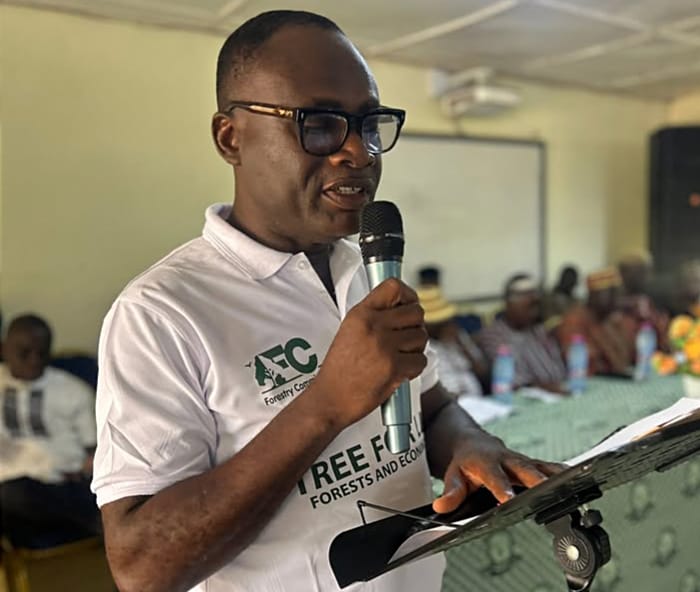
The disclosure was made by George Agbenomoshi, Upper East Regional Manager of the Forestry Commission, at this year’s “Tree for Life Restoration Program” held at the Zuarungu Nursing Training College. 410,000 seedlings planted in 2024, 400,000 targeted for 2025
Mr. Agbenomoshi said last year’s planting activities were carried out under the government’s “Tree for Life” program and covered woodlots, watershed management, and planting in schools. “The Commission also distributed and planted 410,000 seedlings under Tree For Life last year. The planting activities included woodlots, watershed management, planting in schools and among others,” he stated.
“The target for this year’s planting exercise is 30 million seedlings across the sixteen regions in Ghana, out of which 400,000 seedlings are to be distributed freely and planted within Upper East Region,” he announced.
Despite the replanting efforts, Mr. Agbenomoshi warned that illegal activities are erasing gains and accelerating climate change impacts. “The Forestry Commission in the Upper East Region is faced with a number of forest offences including illegal mining, illegal sand winning, illegal cattle grazing, illegal farming, and illegal cutting of wood and saplings for fuel wood, bush fires,” he said.
He said these activities have led to a “gradual disappearance and loss of vegetative cover and destruction of the fragile ecosystem,” leaving communities more exposed to drought, heat, and poor rainfall patterns.
The Regional Manager stressed that tree planting alone cannot restore the region’s environment without tackling the underlying offences. He urged community members, traditional leaders, students, and security agencies to support enforcement and protect newly planted trees.
The “Tree for Life Restoration Program” is part of government’s broader afforestation drive to increase Ghana’s forest cover, improve watersheds, and build resilience against climate change. Officials say planting in schools is key to building a culture of environmental stewardship among the youth.
A1 Radio | 101.1 MHz | David Azure | Bolgatanga