
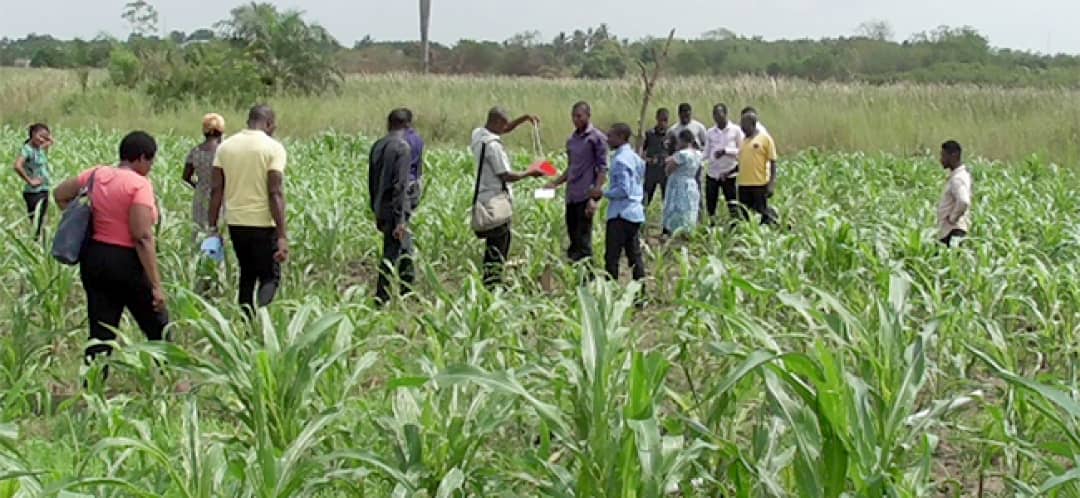
Samuel Ajebona stands in his field in Mirigu, watching the morning sun climb over the parched earth of Ghana’s Upper East Region. The 38 – year-old farmer knows exactly where many of his neighbors’ sons have gone.
They’re hundreds of miles south, waist-deep in muddy pits, sifting through soil for flecks of gold in the illegal mining operations that Ghanaians call ‘Galamsey.’ Others may not have travelled far south, they are in the Upper East Region tunneling through pits, still pursuing illegal mining.
“They know it’s destroying the country,” Ajebona says, pulling a weed from between his crops. “They know the water is being poisoned, the forests cleared. But when you need to feed your family and there’s no other work, what choice do you have?”
“I believe if the government makes agriculture attractive, they will join and stop ‘Galamsey,'” he adds, squinting toward the horizon where the dry season has already begun to crack the ground. “It’s not about guns. It’s about giving them an alternative.”
The view from northern Ghana offers a starkly different perspective on the illegal mining crisis that has seized national attention and sparked protests across the country. While politicians in Accra debate military crackdowns and environmental regulations, farmers like Ajebona are making a simpler argument, young Ghanaians aren’t turning to illegal mining because they’re criminals they’re doing it because farming has been allowed to fail them.
The Exodus to the Pits
The scale of the problem is staggering. According to Ghana’s Minerals Commission, more than 5,600 children are involved in ‘Galamsey,’ while between 20,000 and 50,000 youth work in illegal mining operations nationwide. Some estimates suggest 3 million Ghanaians roughly one in ten citizens depend on ‘Galamsey’ for their livelihoods.
In communities across the Upper East and North East Regions, that exodus is deeply personal. Pangabu Issaka, a farmer from the Binduri district, puts it bluntly: “Our youth are not inherently bad, but they are driven by desperation and lack of alternatives.”
Sule Ayine from Arigu in the West Mamprusi Municipality recalls a particularly bitter harvest. “That year we had a bumper crop,” he says. “We produce almost all crops here and the yield is always good. But we had no market.” Two of his fellow farmers, unable to sell their produce in time, watched helplessly as their harvest rotted. Within months, both had left for ‘Galamsey’ sites. “They are currently there doing illegal mining,” Ayine says, his voice heavy with irony. “Yet they say they are fighting ‘Galamsey.'”
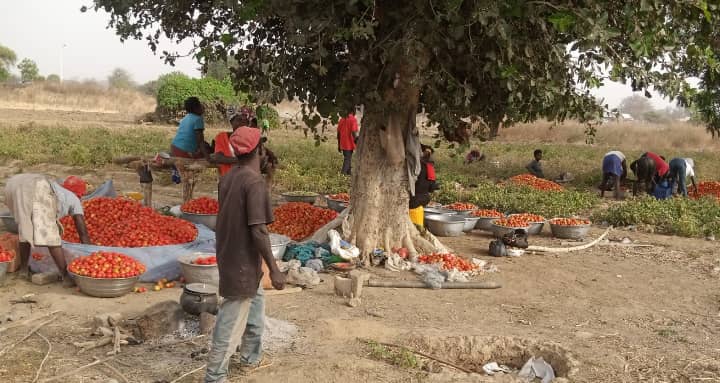
It’s a pattern repeated across northern Ghana: good harvests, no buyers, farmers abandoning their fields for the promise of quick cash in the mining pits. The problem isn’t that people can’t grow food it’s that they can’t make a living doing it.
When Water Runs Dry
Sebastian Atiah, a dry season farmer from the Talensi district, speaks for many when he identifies the core challenge: water. Or rather, the lack of it.
“The fight against ‘Galamsey’ is not about guns,” Atiah says. “It’s about the lack of government commitment to properly invest in the agriculture sector such that the youth can be employed.” He and his fellow farmers struggle each year to find reliable water sources for their crops during the long dry season that blankets the north.
“If the government can provide the youth in ‘Galamsey’ with jobs in the agriculture sector, they will abandon it in no time,” he continues. “Just like ‘Galamsey,’ in farming you don’t need a certificate before you can be a farmer. So it is clear that agriculture is the only sector that can employ our brothers and sisters doing illegal mining.”
The Vea Dam, built decades ago to support irrigation in the region, stands as both a symbol of agricultural potential and governmental neglect. Sulemana Atugtue, the 2025 Bolgatanga Municipal best farmer, knows its limitations intimately.
“People always say, Vea dam is there for dry season farming but the dam is having problems,” Atugtue explains. “The dam is not able to serve all the communities because the canals are not in good shape. I can assure you that if government works on the Vea dam, you will see the number of youth who will come on board and stop this ‘Galamsey.'”
The Political Problem
But water and infrastructure are only part of the story. Many farmers identify a more corrosive issue: political interference.
Cesar Akolgo, a rice farmer from Zaare in the Bolgatanga municipality, describes a system where access to tractors, seeds, and fertilizer often depends more on party affiliation than farming skill. “Food doesn’t have political colors,” he says with frustration. “So you are not supposed to determine who to support and who not to support because at the end of the day all the produce is going to feed Ghanaians.”
He’s witnessed serious farmers denied opportunities because they supported the wrong party. Agricultural officials get accused of being politicians. The whole system, farmers say, breeds cynicism and drives capable young people away from the land.
“There are many instances where serious farmers have been denied opportunities because of political affiliation,” Akolgo says. “It doesn’t help farming.”
A Different Kind of Gold Rush
What farmers are calling for isn’t complicated, though it requires commitment: modern equipment, functioning irrigation systems, tractors, extension services, restrictions on food imports that undercut local producers, guaranteed markets, loans, and crucially the end of politically motivated distribution of farming inputs.
Roy Ayariga, a former director of agriculture and irrigation specialist who now runs Green Planet Consultancy Limited, has worked with farmers for more than two decades. He believes irrigation is the key to making agriculture competitive with illegal mining’s quick profits.
“If the youth can be engaged in irrigated agriculture, because that is more profitable than rainfall,” Ayariga explains. “When the youth help with water pumps near the White Volta, Black Volta and other perennial water sources, where they can irrigate maize, tomato, pepper these are high-value crops. Emphasis on irrigation will attract the youth if we really want to fight ‘Galamsey’ using agriculture.”
With irrigation, farmers can harvest three times a year instead of waiting for unpredictable rains. The math becomes compelling: steady work, steady income, without the risk of pit collapses or mercury poisoning.
Robert Awure, Upper East Regional Chairman of the poultry farmers association, is already putting theory into practice. He recently helped a young man from Bongo district who returned from a ‘Galamsey’ site to start a poultry farm.
“I sat him down and advised him to start rearing chickens and he agreed,” Awure says. “I have arranged birds for him to start. If he gets engaged in this, he wouldn’t think of going back again considering the risk involved.” But Awure is quick to add that such individual efforts need systemic support, including restrictions on imported chicken that make local production economically viable.
The Cost of Doing Nothing
The environmental devastation of ‘Galamsey’ is well documented: water bodies polluted with mercury and cyanide, farmlands stripped bare, forests cleared, communities displaced. Research indicates illegal mining is largely responsible for declining food production, food price spikes, and Ghana’s rising cost of living.
“Look at the way ‘Galamsey’ is destroying our lands, water bodies,” Awure says. “People are even giving out their farmlands for illegal mining. Young people are being killed daily by these activities. This can stop if the government does the needful by addressing farmers’ concerns.”
Alhaji Zakaria Fuseini, Upper East Regional Director of Food and Agriculture, confirms what the farmers already know: agriculture employs roughly 60% of Ghana’s youth. The potential is enormous.
“What the farmers are saying is true and very important,” Fuseini says. “If the government should give them a listening ear and make a commitment, invest so much into the agriculture sector, I think it will go a long way to help mitigate the issues of ‘Galamsey.’ If you are into all-year agriculture, you will be engaged throughout the 12 months.”
The government has tried military approaches Operation Vanguard under former President Nana Akufo-Addo, now blue water guides and the National Anti-Illegal Mining Operations Secretariat under current leadership. None have achieved significant success.
Dominic Atogumsekiya Anarigide, managing director of the Irrigation Company of Upper Region (ICOUR) Limited, which manages irrigation infrastructure across northern Ghana, agrees with the farmers’ analysis.
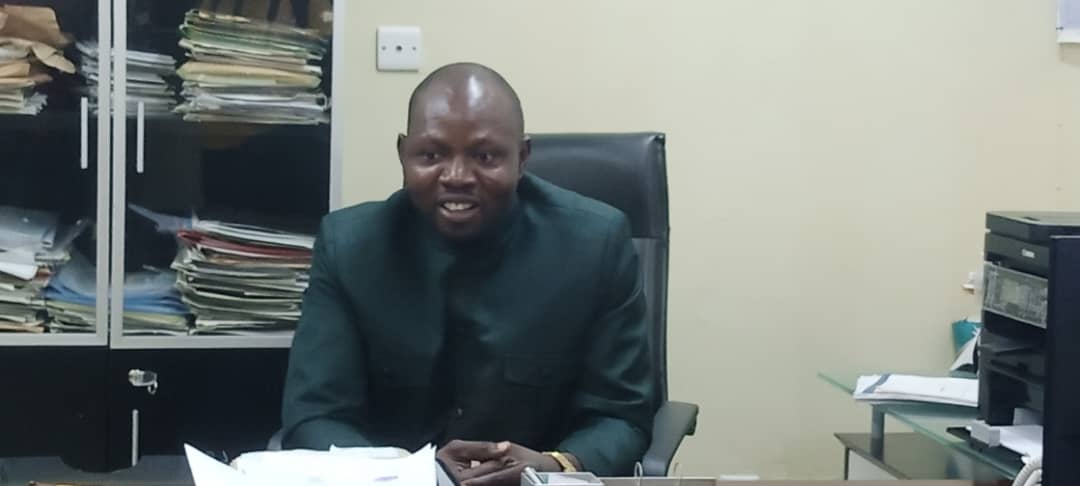
“Most of the youth have gone to ‘Galamsey’ areas apart from the fact that gold is expensive and gives them quick money—some go there because they have no alternative source of livelihood,” Anarigide says. “If the inputs are made cheaper, if the machinery are made cheaper, if there is also ready market for the produce, it will motivate young people to go into farming.”
He points out that agriculture, properly supported, is already lucrative for those with resources. “Most people who do commercial farming are big-time guys—professors, doctors, members of parliament, ministers. If it was not lucrative, such caliber of people would not engage in agriculture.”
Seeds of Change
Emmanuel Nsobila, chief operations officer of Farm Yield Africa, an NGO that has supported over 1,700 farmers across northern Ghana in 2024 alone, believes the solution requires collaboration between government, private sector, and civil society.

“The farmers’ advocacy is in the right direction,” Nsobila says. “Government should come out with programs that provide input support like improved seeds, fertilizer and agrochemicals. Then NGOs can take up the training, so they can train youth on things they need to know. This alone I believe will get many youth into farming, and they will do away with ‘Galamsey.'”
Back in Mirigu, as the day’s heat begins to build, Samuel Ajebona surveys his fields with a mixture of pride and frustration. He knows what the land can produce. He knows what the youth are capable of. He’s watched the military operations come and go, achieving little except to push miners deeper into the bush.
“Per my own experience in ‘Galamsey,’ security officers cannot win the fight without giving those guys jobs,” Ajebona says. “If the government really wants to fight and conquer this menace, it’s not about guns. Provide them with job opportunities through farming. It’s not that they intentionally want to go into ‘Galamsey,’ where someone will end up dying in a pit.”
The solution, farmers insist, is hiding in plain sight in the same soil that illegal miners are destroying, waiting for the investment and commitment that could transform it from a source of desperation into a foundation for sustainable livelihoods.
The question now is whether Ghana’s government will listen before more young people trade hoes for sluice boxes, and more rivers run gold with poison.
Source: A1 Radio |101.1 MHz| David Azure| Bolgatanga|