
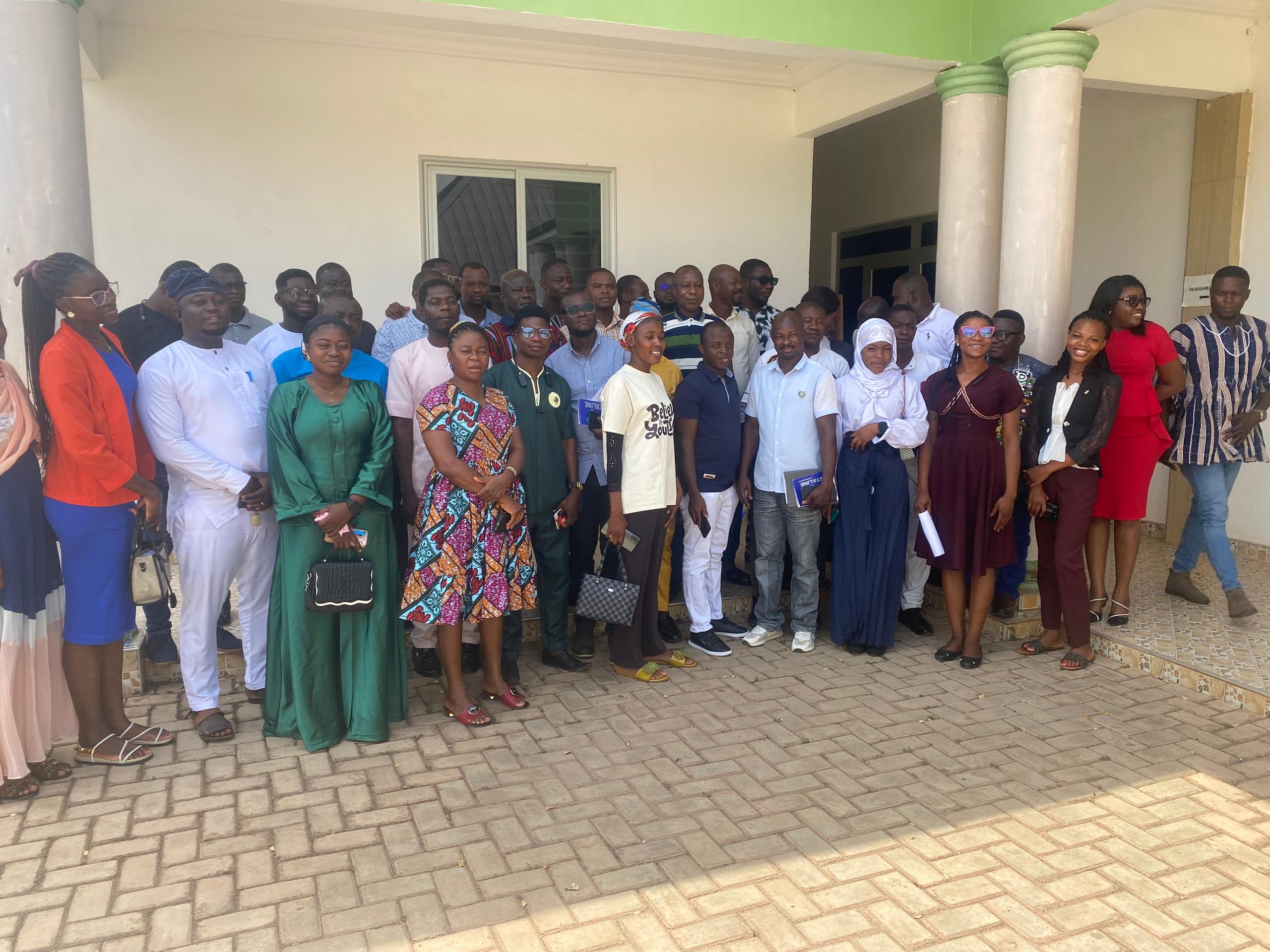
The Centre for Democratic Development (CDD-Ghana) has engaged journalists to examine the impact of chieftaincy disputes on Ghana’s economy.
According to the organization, chieftaincy and land disputes occurring across several traditional areas in the country have significant social and economic consequences.
CDD-Ghana notes that prolonged and unresolved chieftaincy and land conflicts pose a major threat to stability and economic development.
Speaking during the engagement, the Programme Manager and Team Lead for Security Sector Governance at CDD-Ghana, Paul Nana Kwabena Aborampah Mensah, explained that such conflicts can create conditions that make communities vulnerable to radicalization and extremist infiltration.
“We are conducting a landscape assessment of structural vulnerabilities, and one of the key issues we identified is the numerous chieftaincy and land-related conflicts across the country, particularly in northern Ghana, and the impact they can have,” he said.
Mensah further highlighted the financial burden conflict places on the state, noting that significant public resources are spent on maintaining security in conflict-prone areas.
“Some of the funds used to contain these conflicts involve heavy security deployments. Data from national security shows that Bawku alone costs close to one million Ghana cedis each month in security expenditure,” he said. “That translates to about 12 million Ghana cedis annually—resources that could otherwise be invested in development projects.”
He also pointed to the issue of brain drain in communities affected by prolonged conflicts.
“As soon as conflict begins, banks close their branches, teachers and other public service workers either leave or refuse postings to those communities,” he explained. “These are the broader consequences that both the state and communities must consider, beyond the individuals directly involved in the disputes.”
The engagement aimed to raise awareness about how chieftaincy disputes affect national reconciliation, social cohesion, and economic activity.
By informing and equipping journalists, CDD-Ghana hopes to promote responsible and conflict-sensitive reporting that contributes to a better understanding of these issues and supports peaceful resolutions.
The program, supported by the Global Community Engagement and Resilience Fund (GCERF), brought together selected journalists from the Upper East, North East, and Upper West Regions for a specialized capacity-building workshop in Tamale.
The training goes beyond basic journalism practice, focusing on security literacy, social cohesion, and conflict-sensitive reporting, with the aim of strengthening the media’s role in promoting community resilience and preventing violent extremism in northern Ghana.
A1 Radio | 101.1 Mhz | Joseph Napoleon Anaaya | Tamale