
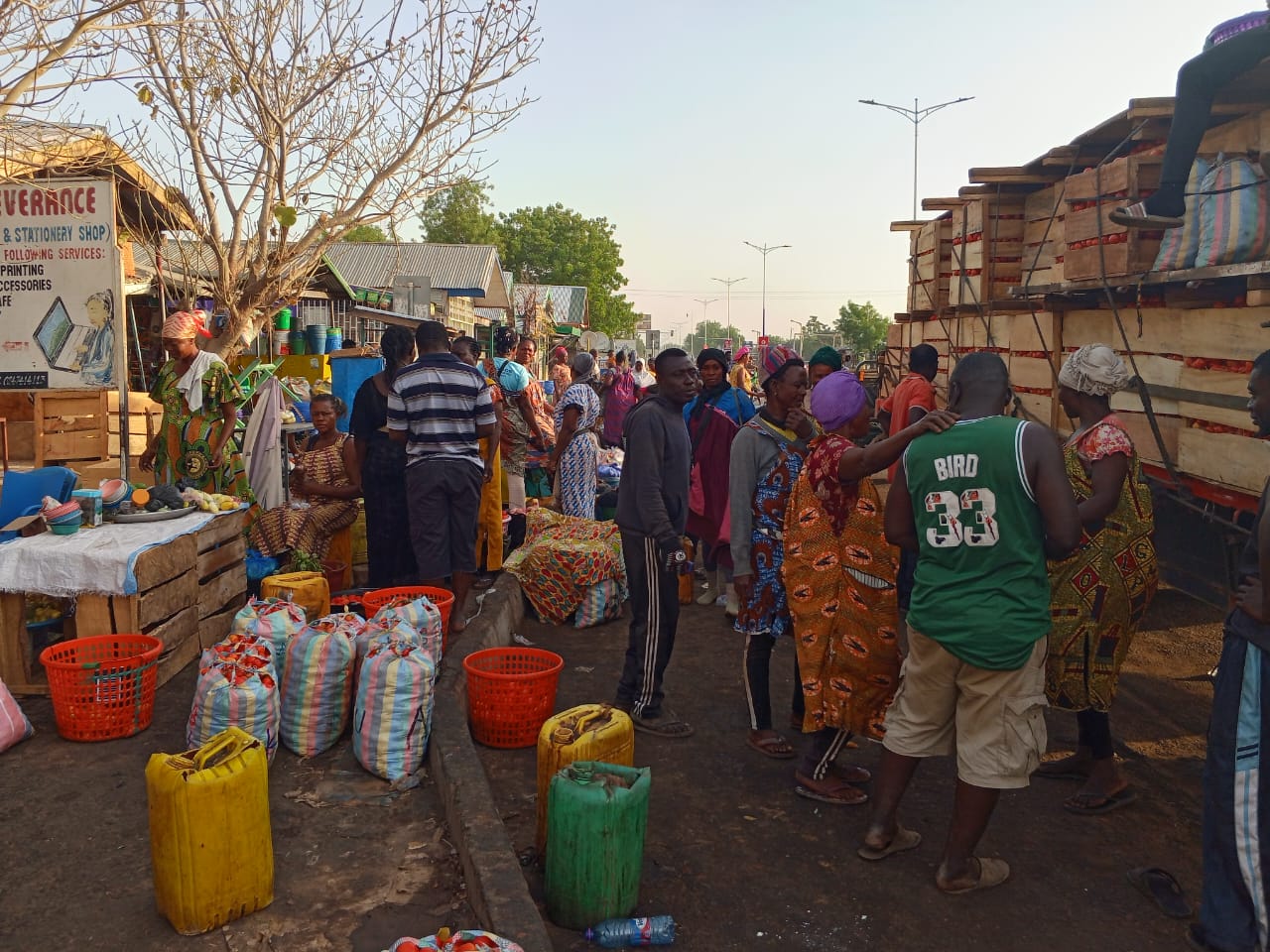
Tomato farmers in Nyariga in the Upper East Region are calling on the government to fast-track the establishment of Farmer Service Centres to boost local tomato production and reduce reliance on imports.
The appeal comes amid growing concern over Ghana’s heavy dependence on tomatoes from Burkina Faso, particularly following a recent export ban that has disrupted supply and exposed weaknesses in the country’s agricultural system.
Speaking on the issue, tomato farmer Tahiru Ayuuba said the government’s plan to roll out 50 Farmer Service Centres across the country is a step in the right direction but must be implemented urgently to have a meaningful impact.
According to him, the centres are expected to provide farmers with improved seeds, fertilisers, machinery, and other essential inputs needed to increase productivity and strengthen the sector.
He also highlighted the importance of the Tomato Production Scheme, which is expected to support about 1,500 farmers across 20 districts in addressing key challenges such as poor-quality seeds, crop diseases, and post-harvest losses.
Mr. Ayuuba noted that the recent export ban by Burkina Faso, which he said accounts for a significant share of Ghana’s fresh tomato supply, has created a supply gap, leading to rising prices and increased pressure on local farmers.
He described the situation as more than a temporary disruption, calling it a “structural break” that has exposed Ghana’s long-standing dependence on external sources and underinvestment in local agriculture.
According to him, the impact is already evident, with rising tomato prices in major markets, dry-season supply shortages, increased reliance on imported tomato paste, and income losses for traders who depend on cross-border trade.
Mr. Ayuuba is therefore urging the government to implement a coordinated national response, including the rollout of Farmer Service Centres, to stabilise supply and move the country towards self-sufficiency in tomato production.
He further called for the development of a comprehensive national strategy to address the crisis, stressing that Ghana has the capacity to rebuild a resilient tomato sector if the right interventions are put in place.
“The solution lies within our own systems. This is an opportunity for Ghana to invest in its farmers, strengthen production, and reduce our dependence on imports,” he said.
A1 Radio | 101.1 MHz | Moses Anaba Azubire | Bolgatanga