A network of civil society organisations is calling for weekly neglected tropical disease clinics at primary healthcare facilities and greater access to social protection programmes for people affected by the diseases in Ghana.
The Civil Society Organisations Network on Neglected Tropical Diseases wants eligible persons affected by NTDs enrolled onto the Livelihood Empowerment Against Poverty programme, while those who qualify should receive free National Health Insurance Scheme coverage.
The Network is also asking District Assemblies to ensure eligible people living with disabilities and socio-economic vulnerabilities resulting from NTDs are considered for support under the District Assembly Disability Fund.
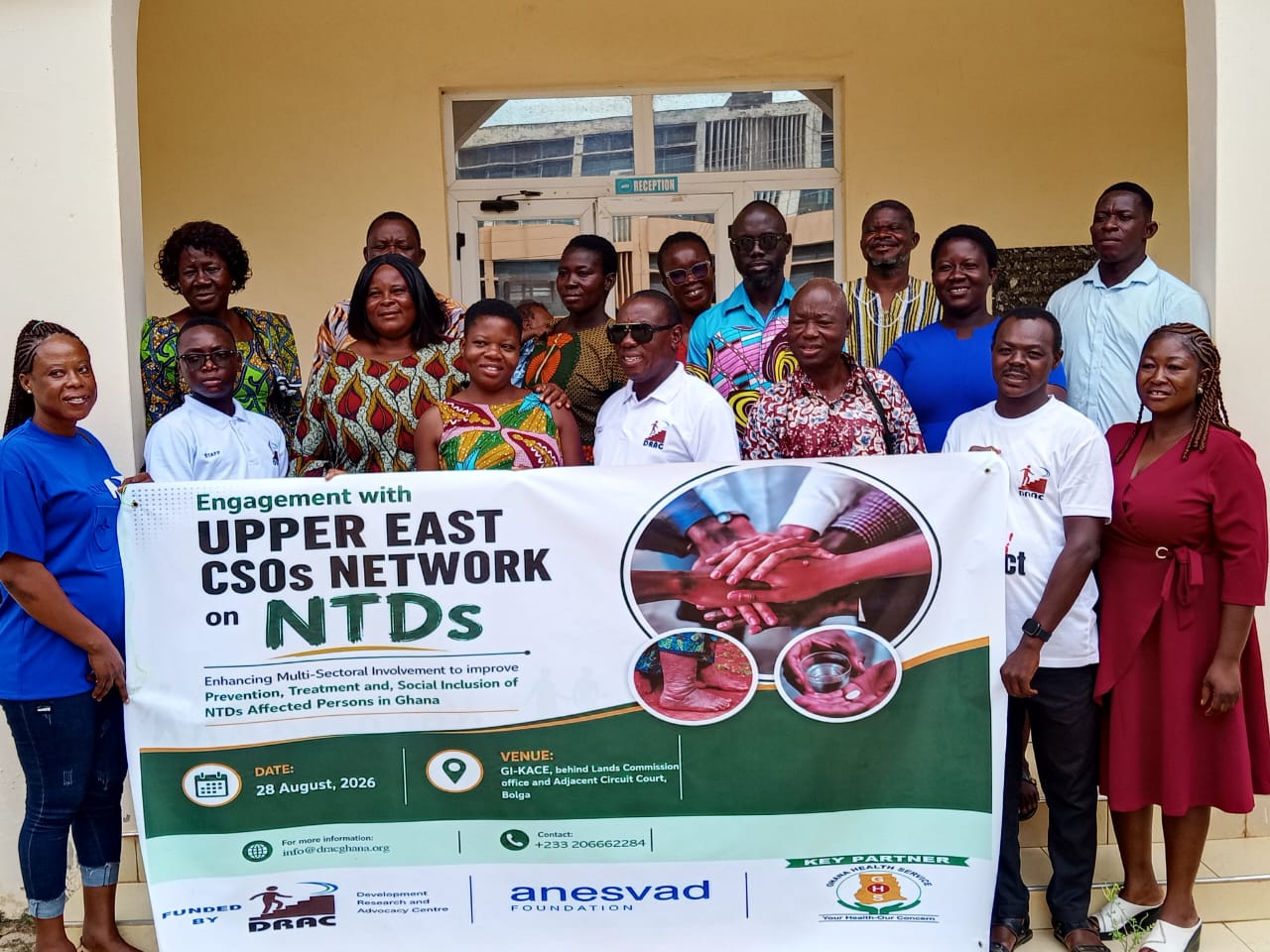
The demands form part of a six-point communiqué issued following a forum organised by the Development Research and Advocacy Center (DRAC) in Bolgatanga to discuss challenges confronting people affected by NTDs.
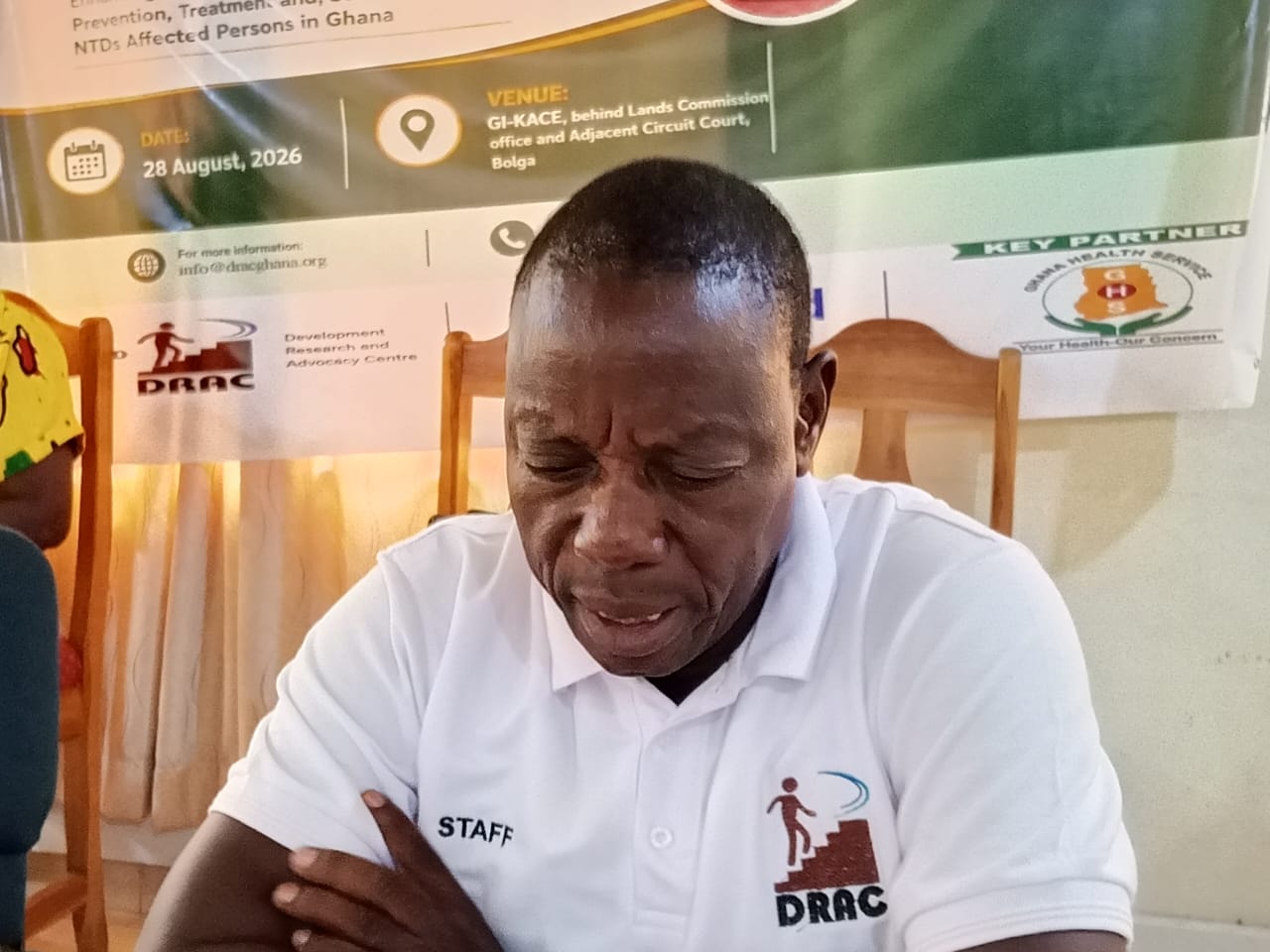
Deputy Director of DRAC, Milton Aberinga, who read the communiqué on behalf of the Network, said diseases including leprosy, lymphatic filariasis and skin-related NTDs continue to have health, social and economic consequences for affected people.
Beyond their health effects, the Network said people affected by the diseases can experience stigma, discrimination, social exclusion and loss of livelihoods.
It acknowledged Ghana’s interventions through national policies and programmes but said gaps remain in early detection, treatment, community-level screening and the social protection of affected people.
As part of its demands, the Network wants the Ghana Health Service to establish and operationalise weekly NTD clinics at appropriate primary healthcare facilities, particularly in underserved communities.
The proposed clinics would provide screening, diagnosis, treatment, follow-up care, counselling and health education.
The Network also called on the Ministry of Health to provide adequate resources for regular community-wide screening for skin-related NTDs as part of Ghana’s efforts to eliminate the diseases.
It said early detection would allow affected people to receive treatment sooner, reducing the risk of disability and improving their quality of life.
The CSOs also want traditional and religious leaders, the media, educators and community leaders to intensify public education to address stigma and discrimination against people affected by NTDs.
According to the Network, people affected by NTDs should also be directly involved in decisions about programmes intended to address their needs.
It called for their inclusion in the planning, implementation, monitoring and evaluation of NTD programmes, as well as public consultations at the national, regional, district and community levels.
The Network said eliminating neglected tropical diseases cannot be left to the health sector alone and requires coordinated interventions involving social protection agencies, local government, educational institutions, traditional and religious leaders, the media and civil society.
“Ending NTDs is not only a public health responsibility but also a matter of social justice, human dignity and inclusion,” the communiqué said.
The Network urged the government and other stakeholders to translate existing commitments into interventions that improve healthcare access, livelihoods and social inclusion for people affected by NTDs.
Source: A1 Radio | 101.1 MHz | David Azure | Bolgatanga