- Advertisement -
Home Blog Page 3

“Marriage is not a marketplace” – Activist rebuts viral claims on bride price for Builsa marriages

0

A cultural activist, Lawrence Akangagnang Abakisi, has pushed back against claims in a viral video suggesting that marriage in the Builsa community is “cheap” and that women are “given out easily,” urging a deeper understanding of the values behind the tradition.

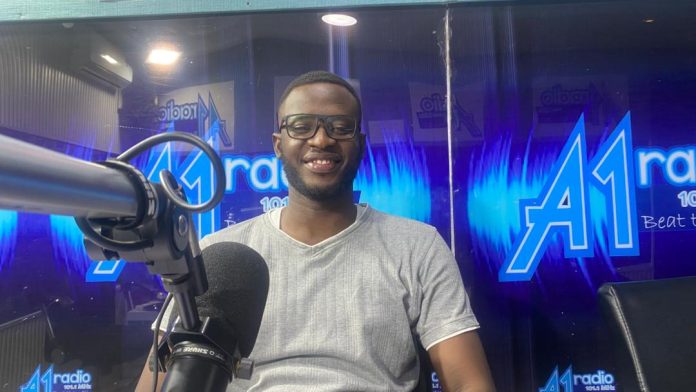
Speaking on the Love Affairs programme on A1 Radio, Mr. Abakisi described the characterization as a misinterpretation of Builsa cultural philosophy, explaining that the system is designed to prioritize relationships over material demands.

He noted that historically, the Builsa people, an agrarian society, viewed marriage not merely as a union between two individuals but as a vital institution for sustaining family lineage and economic productivity.

“In a farming society, labour is essential, and labour comes from people. Marriage was therefore designed to encourage procreation and continuity, not to create barriers,” he said.

According to him, imposing heavy financial demands on prospective husbands would discourage young men from marrying and undermine the social fabric of the community.

Addressing the issue of bride price, Mr. Abakisi clarified that, in Builsa culture, it is deliberately modest, typically consisting of kola nuts, tobacco, and a token sum of money.

“The value is not in the amount. It is the intention and the respect behind it. Marriage is not a marketplace transaction,” he stressed.

He argued that comparing bride price across ethnic groups misses the point, noting that the Builsa system reflects the belief that a woman’s worth cannot and should not be quantified.

Mr. Abakisi further explained that marriage among the Builsa is not a one-time event but a lifelong process involving multiple stages, from courtship, known as “duenideka,” to family acknowledgment and subsequent rites that may extend beyond the woman’s lifetime.

He described traditional courtship practices in which a man regularly visits the woman’s family, bringing small gifts as a sign of commitment and respect. These gestures, though informal, play a key role in building relationships between families.

Responding directly to the viral claim, he said the simplicity of the bride price is a protective measure for women, not a sign of diminished value.

“If the bride price is too high, it can trap women in abusive marriages because the cost of leaving becomes unbearable. Our system ensures that a woman’s dignity and freedom are preserved,” he said.

He emphasized that Builsa marriage practices are rooted in cooperation, mutual respect, and long-term family bonds rather than material exchange. Families continue to support each other through farming, child-rearing, and social obligations, often far exceeding any initial bride price.

“The true value of a Builsa woman is seen in the life she builds with her family. Appreciation is shown over time, not demanded upfront,” he added.

Mr. Abakisi urged the public, especially younger generations, to seek a fuller understanding of their cultural heritage before making public judgments.

“Bride price reflects the identity and values of a people. To call it ‘cheap’ is to misunderstand the very principles on which it was built,” he said.

The discussion has sparked renewed debate on social media, with many calling for greater cultural education to bridge the gap between tradition and modern perceptions.

A1 Radio | 101.1 MHz | Samuel Adagom | Bolgatanga
Upper East Region: Future for Africa expands education, health, and water interventions

0

Future for Africa, a youth-led nonprofit organization, is expanding access to education, healthcare, and clean water in underserved communities, particularly in the Upper East Region.

Speaking on A1 Radio’s Equal Voices programme, Programs Lead Mr. Nayang Samuel outlined the organization’s growth and impact since its founding in 2014.

“We started as a small initiative focused on education, but over time, we realized communities needed more holistic support,” he said.

The organization began with its Books for Change initiative, collecting unused textbooks and learning materials from urban areas and redistributing them to deprived schools. However, Mr. Nayang said access to books alone was not enough.

“We introduced reading clubs to support literacy and later expanded into long-term sponsorship programmes for vulnerable children,” he explained.

Today, Future for Africa supports students from basic school through to university level, providing sustained educational assistance to those from underprivileged backgrounds.

Beyond education, the organization runs targeted health outreach programmes in rural and hard-to-reach communities, offering basic health screenings, health education, and referrals for more serious conditions.

Mr. Nayang emphasized that water remains central to the organization’s work.

“Where there is no access to clean water, health outcomes decline and children, especially girls, are forced to miss school,” he said.

Through its water, sanitation, and hygiene (WASH) interventions, Future for Africa has expanded access to clean water for many communities. The organization focuses not only on infrastructure but also on sustainability by involving communities in project planning and maintenance.

“One key thing we’ve learned is that when communities take ownership of projects, they last longer,” he added.

He also highlighted the organization’s efforts to promote social cohesion, particularly among marginalized groups such as nomadic communities, using shared water resources as a tool for peacebuilding.

Despite its progress, Future for Africa faces challenges including limited funding, high community expectations, and the technical complexities of delivering water infrastructure in remote areas.

Still, Mr. Nayang remains optimistic.

“The future is for Africa, and young people must play their part. No contribution is too small when it comes to community development,” he said.

A1 Radio | 101.1 MHz | Keziah Porepaya Nsoh | Bolgatanga

Assembly member calls for unity to drive development in Bongo District

0

The Assembly Member for the Bongo Anafobiisi Electoral Area, Mrs. Hannah Asanyuure Talata, has called on the newly appointed District Chief Executive (DCE) and assembly members to rise above partisan and personal interests and focus on the development of the district.

She said Bongo, one of the most deprived districts in Ghana, requires the collective efforts of all stakeholders to improve infrastructure and enhance the socio-economic well-being of its residents.

Speaking on Bolga FM’s Tinmaalgo Sanga, Mrs. Talata stressed that accelerating development in the district depends on unity and collaboration among leaders and the community.

She identified key priorities including road reshaping, electricity extension, installation of streetlights, and provision of mechanized boreholes.

Following the confirmation of new DCEs, she urged the Bongo District Chief Executive to work closely with assembly members and set aside political differences to address the district’s urgent needs.

Mrs. Talata noted that challenges such as poor roads, sanitation, and inadequate health facilities continue to affect the area.

She further called for stronger collaboration between assembly members, traditional authorities, and the DCE to end the politicization of local development and ensure progress in the district.

A1 Radio | 101.1 MHz | Moses Anaba Azubire | Bolgatanga

Future for Africa call for volunteers to support development of rural communities

0

Youth-led nonprofit Future for Africa is calling on young people and global volunteers to take an active role in transforming underserved communities through meaningful engagement and service.

Speaking on A1 Radio’s Equal Voices programme, Programs Lead Mr. Nayang Samuel emphasized that young people are at the center of the organization’s work and impact.

“We are a youth-led organization, and everything we do is driven by young people who are passionate about change,” he said.

Future for Africa operates across education, healthcare, and water, sanitation, and hygiene (WASH). Beyond its projects, the organization has built a strong volunteer network that supports interventions in rural and hard-to-reach communities.

Mr. Nayang said the organization runs a vibrant volunteer programme that welcomes both local and international participants.

“We’ve had students, professionals, and volunteers from different parts of the world join us. It’s not just about giving back, it’s also about learning, cultural exchange, and personal growth,” he explained.

Volunteers contribute in various ways, including teaching in schools, supporting medical outreach campaigns, assisting with water projects, and providing technical expertise.

“There is something for everyone. Whether you are in health, education, or technical fields like construction, you can find a place in our work,” he added.

He noted that volunteerism has been key to the organization’s ability to reach underserved communities.

“Our work in very remote areas is made possible because people are willing to give their time and skills,” he said.

Beyond volunteering, Mr. Nayang encouraged young people to take initiative within their own communities.

“You don’t need to belong to an NGO to make a difference. Start where you are, use what you have, and stay committed to creating change,” he advised.

He likened community development to a jigsaw puzzle, where every individual effort contributes to a bigger picture.

“If we all play our part, no matter how small, we can solve the challenges facing our communities,” he said.

Future for Africa is also seeking to expand its reach through partnerships and increased awareness as it continues to engage more young people in its mission.

Interested individuals can connect with the organization through its website and social media platforms to explore volunteer and collaboration opportunities.

A1 Radio | 101.1 MHz | Keziah Porepaya Nsoh | Bolgatanga

Upper East Region gains new Division One side as Berekum City FC secures promotion

0

Berekum City FC has secured promotion to Ghana’s Division One League after a decisive second-half victory over Bolgatanga-based Soccer Masters FC at the Kurt E.S. Okraku Technical Centre in Winkogo.

The win marks a major milestone for the club, which narrowly missed promotion last season, and adds a new Division One representative from the Upper East Region.

The “winner-takes-all” clash in the Upper East Regional Middle League final began as a tightly contested, tactical encounter.

In the first half, Soccer Masters FC, playing on home ground, held firm with a disciplined defensive display that limited Berekum City’s attacking threat. The opening 45 minutes ended goalless.

Berekum City returned from the break with renewed intensity. Adopting a more aggressive approach, they broke down Soccer Masters’ defense and capitalised on their chances to seal the promotion-clinching victory.

The promotion is a significant achievement for Berekum City, who fell short in the final stages of last season’s Division Two playoffs.

With this result, the Upper East Region will now have two teams in the Division One League. Berekum City joins Bolga All Stars FC, who currently compete in Zone One A, subject to maintaining their status in the league.

The development is expected to boost local interest in football, increase high-profile matches at venues such as the Winkogo Technical Centre, and provide greater exposure for young talent in the region.

Berekum City will now begin preparations for the upcoming Division One season as they aim to establish themselves in Ghana’s second tier.

Source: Solomon Yinbil Ziyaaba [News Contributor]

Bongo: Chief advocates financial empowerment of traditional leaders

0

The Saama Naba of Bongo, Dr. Kanmiki Kanluki Lambert, has called on the government to extend financial support to sub-chiefs, sub-divisional chiefs, and divisional chiefs across Ghana.

Speaking in an interview on Bolga FM on Friday, April 24, 2026, he emphasized the need to empower traditional authorities financially to enable them to effectively perform their roles in local governance, peacebuilding, and community security.

Dr. Kanmiki said traditional leaders play a critical role at the grassroots level in maintaining peace, promoting development, and resolving conflicts, but their efforts are often constrained by inadequate resources.

He acknowledged the government’s recent decision to increase monthly allowances for paramount chiefs and queen mothers from GH¢1,000 to GH¢3,000, describing it as a step in the right direction. However, he urged authorities to also support lower-level chiefs who are directly involved in day-to-day community leadership.

“Our weakest point has been the poor financial status of our traditional leaders, and this has inhibited and derailed our activities,” he said.

The Saama Naba also highlighted initiatives by traditional leaders to support youth employment, including local savings schemes such as susu, aimed at improving economic opportunities for young people.

Speaking on Tinmaalgo Sanga, he reiterated that the chieftaincy institution remains committed to improving the living conditions of citizens but requires adequate financial backing to effectively carry out its development responsibilities.

He called on the government to provide the necessary recognition and support to strengthen traditional leadership at all levels for the benefit of local communities.

A1 Radio | 101.1 Mhz | Moses Anaba Azubire | Bolgatanga

Saama Naba of Bongo calls for irrigation investment to boost year-round farming

0

The Saama Naba of Bongo, Dr. Kanmiki Kanluki Lambert, has called for increased investment in irrigation systems to promote year-round farming and strengthen food security in the Bongo District.

Speaking on the need to improve agricultural productivity, the educationist and social entrepreneur said Ghana must reduce its reliance on imported food by investing in sustainable local production.

He described the current situation as a wake-up call for the country to address gaps in its agricultural system.

Dr. Kanmiki stressed that supporting farmers with irrigation infrastructure would enable continuous cultivation throughout the year, instead of relying solely on seasonal rainfall.

He also highlighted the need for farmers to adopt innovative technologies and best agricultural practices to mitigate the effects of climate change and improve yields.

In addition, he encouraged farmers to return to the land and embrace all-year-round farming, noting that it is key to ensuring household food security and generating sustainable income.

The Saama Naba further urged government to prioritise investment in irrigation as part of efforts to transition from rain-fed agriculture to a more resilient and productive system.

Such investments, he said, would make dry-season farming possible, reduce long periods of idle land, and enhance food availability and economic stability.

A1 Radio | 101.1 Mhz | Moses Anaba Azubire | Bolgatanga

“I don’t need recognition to defend NPP” – Anyorka fires back after ban

0

Peter Anyorka says being barred from the Upper East Regional Communications Team will not stop him from defending the New Patriotic Party (NPP) in the media.

His comments follow a clarification by the Upper East Regional Communications Director of the NPP, Peter Ayinbisa, that Mr. Anyorka is not a member of the party’s official regional communications team and is therefore not authorized to represent the party on radio programmes.

Mr. Ayinbisa stressed that the NPP operates a structured communications system, where only designated and recognized members are permitted to speak on behalf of the party in the media.

Mr. Anyorka previously served as the Upper East Regional Communications Officer for the campaign team of Kennedy Ohene Agyapong and was a prominent voice on radio political discussions in the region.

The clarification comes after concerns were raised about his absence from Bolga FM’s Zina Yela political show following the party’s presidential primaries.

Reacting in an interview on the same programme, Mr. Anyorka, who now prefers to be addressed simply as an “NPP Communicator,” insisted the decision would not silence him.

“Today, if my regional communications director does not recognize me, tomorrow I will get one to recognize me. I will not have to call anyone before I go on radio to defend my party,” he said.

He maintained that his right to speak for the party is grounded in the NPP’s constitution.

“My civil right in the NPP, as stated in Article 3 of the constitution, is to defend the party at all times. That does not mean I will stop communicating for the party,” he added.

Mr. Anyorka also acknowledged the directive from the current Communications Director.

“My big brother said I am not a member, so if you invite me, address me as an NPP Communicator,” he said.

A1 Radio | 101.1 MHz | David Azure | Bolgatanga |

Community involvement key to sustaining development projects – Future 4 Afrika

0

Future 4 Afrika, a youth-led nonprofit organization, has called for stronger community involvement and ownership in development projects to ensure sustainability and long-term impact.

Speaking on A1 Radio’s Equal Voices programme, Programs Lead Mr. Nayang said many community interventions fail due to a lack of local participation and maintenance.

“When communities don’t feel ownership, projects don’t last. But when they contribute, even in small ways, they protect and sustain them,” he said.

Mr. Nayang highlighted water access as a major challenge affecting both health and education in rural communities. He identified key barriers, including inadequate infrastructure, limited funding, and poor maintenance systems.

“Providing water is capital-intensive, and without proper maintenance, communities can quickly return to square one,” he explained.

He also noted that high expectations from communities can sometimes hinder effective project implementation.

“Sometimes expectations exceed what organizations can realistically provide, and that creates tension,” he said.

Despite these challenges, Future 4 Afrika continues to expand its reach, delivering interventions in education, healthcare, and water across underserved areas.

The organization has conducted multiple health outreach campaigns and implemented water projects benefiting thousands of people, particularly in hard-to-reach communities.

Mr. Nayang emphasized the importance of collaboration and volunteerism, noting that the organization welcomes both local and international volunteers.

“There is something for everyone. Whether you are a teacher, health worker, or skilled in technical work, you can contribute,” he said.

He encouraged young people to take initiative in their communities.

“We are all part of the solution. If everyone plays their role, we can collectively address the challenges we face,” he added.

Future 4 Afrika is also seeking partnerships with other organizations to scale its impact and reach more communities in need.

A1 Radio | 101.1 MHz | Keziah Porepaya Nsoh | Bolgatanga

NDC’s Abdallah rejects claims of undermining OSP, calls for legal reforms

0

The Upper East Regional Communications Officer of the National Democratic Congress (NDC), Jonathan Abdallah Salifu, has dismissed allegations by the Minority in Parliament that the government is deliberately weakening anti-corruption institutions.

Speaking in an interview on A1 Radio, he questioned the basis of the Minority’s claims, arguing that much of the criticism appears to be centered solely on developments involving the Office of the Special Prosecutor (OSP) rather than a broader range of institutions.

He clarified that the ongoing legal issues surrounding the OSP were not initiated by the government or the Attorney-General, but rather stem from a case brought by a private individual challenging the scope of the OSP’s prosecutorial authority. According to him, the legal challenge is based on perceived gaps within the law establishing the OSP, which he noted was enacted under a previous administration.

“It is not the Attorney General who went to court to ask for an interpretation of the works or the powers of the special prosecutor. It is a private individual who is handling a case on behalf of his client.”

He explained that the central issue in dispute is whether the OSP can independently initiate prosecutions or must do so with authorization from the Attorney-General, emphasizing that similar arrangements exist for other state institutions with prosecutorial functions.

While acknowledging concerns about limitations within the current legal framework, he maintained that such gaps should be addressed through legislative reforms rather than political accusations. He suggested that the appropriate course of action would be for stakeholders, including the Minority, to advocate for amendments to strengthen the law and clarify the OSP’s mandate.

“They should be calling on the Attorney General or the President to make sure that that lacuna is closed. After all, every law can be revised. They should rather be calling on the Attorney General to see what he can do, go back to Parliament, hopefully, and get that lacuna dealt with. But if they go ahead to accuse the government, assume it is the government that took the case to court, or the Attorney General took the case to court, seeking to seal off the powers of the special prosecutor, that is not true,” he said.

He also accused the Minority of misrepresenting the situation for political purposes, arguing that their criticisms overlook the legal origins of the issue and the role of the courts in interpreting the law.

He urged patience as the matter continues to be addressed through the judicial process, noting that the OSP has returned to court to seek further interpretation of its powers. He expressed confidence that the legal system will provide clarity on the matter. “The Special Prosecutor is back in court, asking for further interpretation to that act, or that portion of the act. Let’s wait and see how or what the outcome will be.”

His comments come amid ongoing political debate over the powers and independence of the OSP, following a High Court ruling that has intensified discussions about the effectiveness of Ghana’s anti-corruption framework.

A1 Radio | 101.1 MHz | Gifty Eyram Kudiabor | Bolgatanga