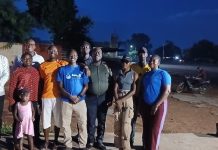

When 37-year-old Gloria Adda went into labor at the Manyoro Health Centre in Ghana’s Upper East Region, her family’s joy quickly turned into panic. Complications required that she be referred to the War Memorial Hospital in Navrongo, but the ambulance meant to save her life faced an obstacle that would prove fatal: a broken bridge.
The shortest route from Manyoro to Navrongo, just a 30-minute drive through Gumongo and Pungu, had been impassable for decades since the bridge connecting the two communities collapsed. The ambulance was forced to take a longer detour, from Navrongo through Kandiga, Sirigu, and Natugnia, a journey that stretched to nearly two hours. By the time help reached her, Gloria and her unborn baby were gone.
Her death has left the community devastated and angry. Residents say this tragedy is not an isolated incident but part of a grim pattern that has turned Manyoro’s rivers from lifelines into deadly barriers.
Once a thriving town in the Kassena-Nankana Municipality, Manyoro is now trapped by its geography. The community, made up of 16 sub-communities under 16 sub-chiefs, is surrounded by rivers, one separating it from Sirigu to the south, another bordering Gumongo to the west, and a third cutting it off from Navio to the north. But with the collapse of several bridges over the years, these waterways have become walls, cutting off residents from healthcare, markets, and essential services in Navrongo, the municipal capital.
For the people of Manyoro, Gloria Adda’s death is a painful reminder of what neglect costs. “She’s not the first, and she may not be the last,” one resident lamented. “Until the bridges are fixed, we are all at risk.”
As the dry season fades and the rivers swell again, the fear in Manyoro deepens, not just of the floods, but of what they symbolize: a community cut off, abandoned, and losing lives to water that should have sustained them.
The Missing Bridge: A Road to Safety That Never Was
The Manyoro–Gumongo bridge, a critical link that would connect the community to the main Navrongo road, was constructed in the 1990s but, due to torrential rain and lack of maintenance, the bridge collapsed decades ago.
Community leaders say the bridge could have cut the emergency travel time from two hours to less than thirty minutes, time that might have saved Mrs. Adda’s life.
On behalf of the Chief of Manyoro, Pe Clement Atudipare, described the situation as “a death trap created by neglect.”
“Every rainy season, we bury people who might have lived if only there was a bridge. We have made countless appeals, but all we get are promises,” he lamented.
Health workers at the Manyoro Health Centre confirmed that delays in transporting emergency cases from Manyoro and surrounding communities are a major contributor to maternal and child deaths in the area.
A District-Wide Problem: Collapsing Links and Widening Isolation
The Manyoro tragedy is not isolated. Across the Kassena-Nankana Municipality, several bridges and culverts have either collapsed or remain unconstructed, cutting off entire communities.
The Manyoro–Navio bridge, once a vital route for traders, collapsed over four years ago when a heavy truck loaded with rosewood passed through, collapsing it instantly. Meanwhile, the Natugnia–Pungu crossing is now passable only by motorbikes and bicycles. Recently, a nurse fell off her bike while trying to cross that river to reach her patients. Teachers and students remain stranded whenever there is a heavy downpour.
Nurses and teachers who commute daily to work in Manyoro have to desert work to be able to cross the river at the least sign of rain.
Assembly Member for the Manyoro Electoral Area, Kingsley Kanwi, said the problem is escalating.
“When the rains come, Manyoro is practically divided into islands. Students can’t attend school, farmers can’t reach their fields, and sick people can’t reach the hospital. It’s a humanitarian crisis we face every year,” he said.
Livelihoods Washed Away
Beyond the loss of lives, the broken road network has dealt a heavy blow to livelihoods and local commerce. Farmers in Manyoro and its adjoining communities often watch helplessly as their perishable produce rots because trucks cannot access the farms after rainfall.
Economic activity has also slowed dramatically. Manyoro’s once-bustling markets have dwindled as traders from neighboring communities find it too difficult to cross. The cost of goods has risen as transporters factor in the longer routes and fuel expenses.
Local trader Alice Asenona said her small business has been crippled by transport difficulties.
“We used to take tomatoes and onions to Navrongo market twice a week. Now, we can’t even go once. Transporters charge double, and sometimes they refuse to come at all,” she explained.
Fueling stations that used to thrive in Manyoro have ground to a halt because fuel tankers can’t access the town due to the collapse of these major bridges.
Education has not been spared either. Teachers posted to Manyoro schools often request transfers due to the difficulty of traveling in and out of the community. During the rainy season, attendance drops sharply as swollen rivers cut off children from their classrooms.
Residents are pleading for urgent government intervention to rebuild the collapsed bridges and repair the failing steel one. “We are citizens of Ghana too,” insists Ebenezer Adda, a local teacher. “We vote, we pay taxes, but when it rains, we are trapped like an island. Our children deserve better.”
Young people, unable to access jobs or training centers in the municipal capital, are migrating south in search of opportunities, leaving behind aging farmers and empty homes.
Authority Response: Promises Amid Tears
The District Chief Executive (DCE) for Kassena Nankana West District, Mr. Stephen Aeke Akurugu, said that upon assuming office, he reported the Navio bridge situation to the Regional Feeder Roads Directorate, which has since taken a tour of the area and promised to fix the bridge within the shortest possible time. Although no definite timeline was given, Mr. Aeke said he is highly confident the bridge will be fixed soon.
The Kassena-Nankana Municipal Chief Executive, Madam Faustina Akeyom Abulu has refused to respond to the inquiries of the reporter on this matter.
However, residents say they are growing weary of words. “We’ve been hearing about plans and promises for years,” said youth leader Samuel Abugri. “We want to see machines on the ground, not press releases.”
As the people of Manyoro mourn Gloria Adda and her unborn child, the rivers continue to flow, silently reminding all that for some communities, development delayed remains development denied.
Source: A1Radioonline.com|101.1 MHz|Samuel Adagom|Manyoro