Home Blog Page 10

Government working to address ZAMSTECH’s outstanding projects, vehicle needs – Apaak

0

The Ministry of Education says it is working with the Architectural and Engineering Services Limited (AESL) to address outstanding infrastructure needs at Zamse Senior High/Technical School (ZAMSTECH) in the Upper East Region.

Deputy Minister for Education Dr Clement Apaak said the Ministry was considering cost estimates submitted by AESL for projects identified by the school, alongside concerns about the need for a pick-up vehicle.

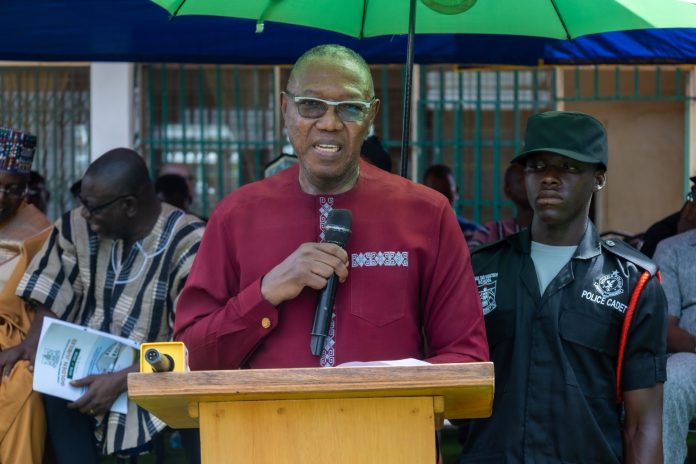
Speaking on behalf of the Minister for Education at ZAMSTECH’s 50th anniversary celebration, Dr Apaak assured the school’s management that the outstanding needs had received the Ministry’s attention.

“I want to assure the Board, Management and the entire ZAMSTECH community that these matters have the Minister’s attention, and that the Ministry is working with the Architectural and Engineering Services Limited on the cost estimates already submitted, with a view to progressing them as resources allow,” he said.

Although he did not provide a timeline for the implementation of the projects, Dr Apaak said government expected its commitment to the school to be assessed by the actions it takes following the anniversary celebration.

“Government’s commitment to this institution is not a matter of words alone, and we intend to be judged by what follows this visit,” he stated.

The Deputy Minister also linked the government’s commitment to ZAMSTECH to broader efforts to strengthen technical and vocational education in Ghana.

He said the country’s growing demand for technical skills in agriculture, construction, mechanics and other sectors required greater investment in institutions offering practical and vocational training.

According to him, schools such as ZAMSTECH have an important role to play in equipping young people with skills relevant to Ghana’s development needs.

Dr Apaak said the institution’s 50-year history demonstrated its contribution to secondary and technical education in the Upper East Region and its potential to support the country’s future workforce.

Established in 1976, ZAMSTECH is celebrating its Golden Jubilee under the theme, “Empowering Minds and Shaping the Future: The Role of Stakeholders.”

A1 Radio | 101.1 MHz | Moses Apiah | Bolgatanga
Teachers’ strike: Upper East students fear falling behind as classrooms remain without lessons

0

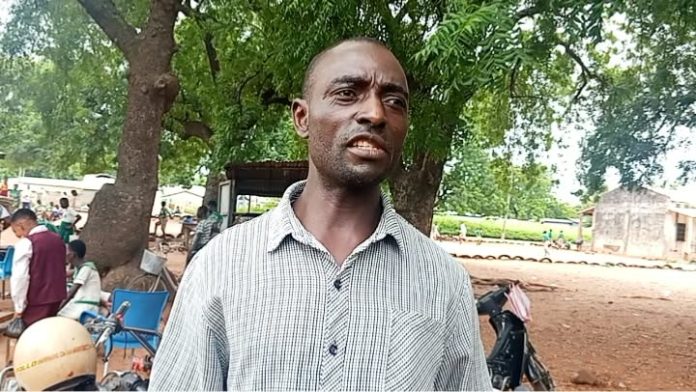
Students at Sacred Heart Junior High School in Bolgatanga say they have been reporting to school only to play and return home as the nationwide strike by pre-tertiary teacher unions continues to disrupt teaching and learning in the Upper East Region.

The students say the industrial action has deprived them of valuable instructional time, raising concerns about their preparation for examinations, particularly among final-year students.

“We only come to school to play and go back. Teaching and learning is not going on,” Muniu Ajira, a student of Sacred Heart Junior High School, told Bolga FM.

Another student, Sylvia Ayindosiya, said effective teaching had taken place for only about a week before the teachers embarked on the strike.

She expressed concern that students in the public section of the school were losing valuable instructional time while their colleagues in the private section of the same Catholic institution continued attending classes.

According to her, the disruption could affect their preparation for the Basic Education Certificate Examination (BECE).

She appealed to the government to urgently address the concerns of the striking teachers to allow academic activities to resume.

Schools across the Bolgatanga Municipality have been affected by the industrial action, with students and parents expressing growing concern about its impact on academic work.

The striking teacher unions have rejected appeals to call off the industrial action, insisting that outstanding concerns, including promotion-related salary arrears and deprived-area allowances, must be addressed.

A parent, Eric Nyaaba, said the prolonged disruption was particularly worrying for final-year Junior High School students preparing for the BECE.

“We don’t have much to say other than to appeal to the government to, as a matter of urgency, address the pressing challenges of the teachers for our children to get back to school and continue learning,” he said.

Mr Nyaaba also expressed concern about differences in access to education between public and private schools during the strike.

He alleged that some public school teachers enrol their own children in private schools while pupils in public schools continue to experience disruptions to learning.

Other students interviewed by Bolga FM also appealed to the government to resolve the dispute, warning that continued disruption could affect their academic performance.

“Please, we are begging the government to help us pay our teachers. Teaching and learning have not been stable for some time now. We have been having talks all the time, but we are still here, and no teaching and learning is going on,” one student said.

“This can seriously affect our academics because we are not learning and examinations are approaching. We are the future generation. We want to learn, make Ghana proud and contribute to the development of the country.”

A Senior High School student also expressed concern about the effect of the strike on final-year students.

“I am from the Upper East Region and I attend Senior High School. Because the teachers have gone on strike, it is affecting us, especially those of us in Form Three who will soon be writing our examinations,” the student said.

“Our teaching and learning is not going on well. It is affecting us because we are not learning. We are therefore calling on the government to pay the teachers so that they can come back to school and teaching and learning can resume.”

The students appealed to the government and teacher unions to reach an agreement that would allow teachers to return to the classroom and restore academic activities.

A1 Radio | 101.1 MHz | Moses Anaba Azubire | Bolgatanga

Teachers’ strike risks widening educational inequalities in Northern Ghana – NNED

0

The Northern Network for Education Development (NNED) has warned that the ongoing nationwide strike by pre-tertiary teacher unions could widen educational inequalities, particularly among children in rural and deprived communities in Northern Ghana.

The Network says prolonged disruptions to teaching and learning could place children in underserved communities at a greater disadvantage because many have limited access to alternative learning opportunities.

In a statement on the industrial action, NNED called on government and teacher unions to urgently resolve the impasse while protecting both teachers’ welfare and children’s right to education.

“Extended disruptions to teaching and learning risk widening existing educational inequalities and placing already vulnerable learners at an even greater disadvantage,” the statement warned.

NNED acknowledged the right of teachers to demand improvements in their conditions of service, including remuneration, promotions, allowances, professional development and general welfare.

It called on the government, Ministry of Education, Ghana Education Service, Fair Wages and Salaries Commission, Controller and Accountant-General’s Department and other relevant institutions to address the concerns raised by the unions.

According to the Network, negotiations must go beyond assurances to include clear commitments and timelines for addressing outstanding issues.

“While dialogue remains important, it must be accompanied by concrete, transparent and time-bound actions capable of restoring confidence among teachers and their unions. Where commitments have already been made, clear implementation timelines should be communicated and honoured,” NNED stated.

The Network also appealed to teacher unions to consider the consequences of the industrial action on learners and explore ways to minimise disruptions while negotiations continue.

“Teaching is not only a profession; it is a national responsibility with a profound influence on the future of every child. Each day that children remain out of school represents valuable learning time that may be difficult to recover, particularly at a time when the education sector continues to face numerous challenges,” the statement said.

NNED expressed particular concern about children in rural communities in Northern Ghana, where opportunities for learning outside the classroom are often limited.

It warned that continued disruption could worsen existing disparities in educational access and outcomes between children in deprived communities and those with greater access to learning resources.

The Network consequently urged both parties to place the interests of learners at the centre of ongoing negotiations.

“Government must demonstrate good faith by responding promptly and concretely to the concerns of teachers, while teacher unions are encouraged to remain open to avenues that will minimise further disruption to academic activities as negotiations progress,” it said.

NNED maintained that protecting teachers’ welfare and ensuring uninterrupted learning should not be treated as competing priorities.

“We firmly believe that the interests of teachers and the interests of learners are complementary, not competing. A motivated, respected and fairly treated teacher is fundamental to the education and success of every child,” the statement noted.

It called for intensified negotiations and a resolution that addresses teachers’ grievances without prolonging disruptions to academic activities.

“The current impasse requires intensified dialogue, mutual understanding and decisive action from all parties. Ghana cannot afford a prolonged disruption to the education of its children. The nation must work collectively to achieve a fair and sustainable resolution that safeguards both the interest of teachers and the fundamental right of every child to learn.”

A1 Radio | 101.1 MHz | David Azure | Bolgatanga

Police arrest suspected drug dealer with 38 parcels of suspected Indian hemp at Paga

0

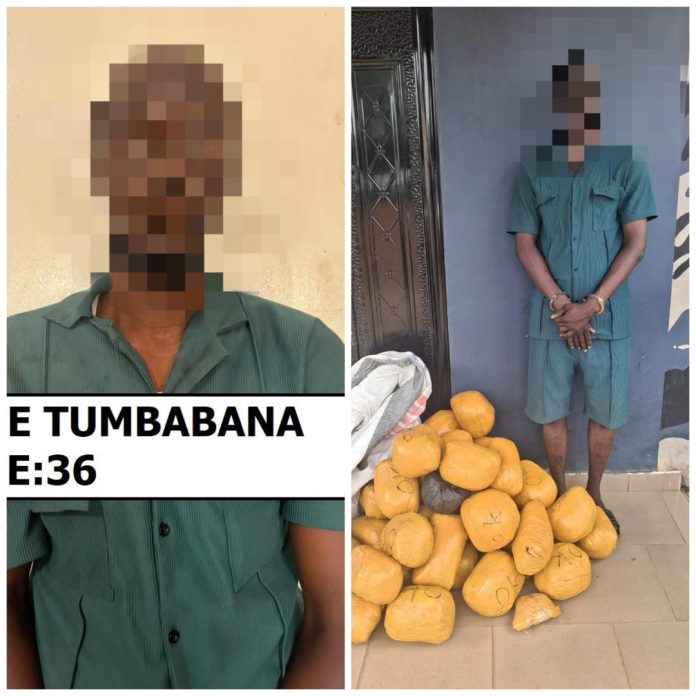
The Upper East Regional Police Command has arrested a 36-year-old man, Tumbana Ane, at Paga in the Upper East Region for allegedly possessing substances suspected to be Indian hemp and other prohibited drugs.

The suspect was arrested by the Regional Police Intelligence Directorate (PID) and the Black Cobra Team following an operation at Paga.

According to the Police, a search conducted at the suspect’s residence led to the recovery of 38 parcels of dried leaves suspected to be Indian hemp, as well as Tramadol tablets of 120mg and 250mg strengths.

The Police further said officers discovered a tunnel at the residence which they allege the suspect used to conceal the drugs to evade arrest.

Preliminary investigations, according to the Command, have also linked the suspect to the alleged operation of brothels at an illegal mining site at Wuru.

The suspect is currently in police custody and is expected to be arraigned before court.

The Upper East Regional Police Command has assured the public of its continued commitment to combating drug-related crimes and other illegal activities across the region.

The Police statement was signed by Chief Inspector Abdul-Raman Sumaila, Public Affairs Unit of the Upper East Regional Police Command.

A1Radio | 101.1Mhz | Joshua Asaah

Talensi pupils learn on their bellies as MP donates Ghc100,000 to NDC aspirants – NPP

0

The New Patriotic Party (NPP) in the Talensi Constituency has criticised the Member of Parliament for the area, Daniel Dung Mahama over a reported GH¢100,000 donation to NDC constituency executive aspirants, contrasting the political expenditure with what it says are severe challenges facing schools in the constituency.

The NPP says pupils at Sawaliga Primary School are reportedly forced to learn on their bellies because of inadequate furniture, while several other schools continue to face infrastructure challenges.

In a press statement signed by the Talensi Constituency Communications Officer, Yinwonba Yinnamaltiman Emmanuel, the party questioned the MP’s priorities, arguing that political activities appeared to be receiving greater attention than some urgent educational needs.

“While he has every right to support his political party, the people of Talensi have every right to ask why political activity consistently appear to receive greater urgency than the pressing needs of his constituents?” the statement said.

The party also cited Tindongo Primary School, where it said pupils face serious infrastructure challenges, including a damaged roof.

According to the NPP, the educational challenges extend beyond infrastructure and furniture, with some first-year Senior High School students from the constituency who gained admission this year allegedly unable to obtain the support they needed to purchase basic items required to report to school.

The party therefore questioned why GH¢100,000 could be mobilised for political activities while some children in the constituency reportedly lack basic furniture to sit and learn.

Beyond education, the NPP raised concerns about the condition of roads, bridges, electricity and potable water in parts of the constituency.

It specifically cited the Baare area, where it said residents are repeatedly stranded during rainfall because of poor roads and bridges.

The statement also claimed that workers at Earl International’s mining operations and others working around the mining site face difficulties accessing the area because of the poor road network.

The NPP further questioned the purpose and source of the GH¢100,000 donation, raising allegations that financial inducements could be used to influence delegates ahead of the MP’s attempt to retain the parliamentary seat.

The party, however, stressed that it was not presenting the allegations as facts but was demanding transparency on the source of the funds and whether any public resources, including the MP’s Common Fund, were involved.

“These are legitimate questions that deserve clear answers and transparency,” the statement said.

The NPP called for greater attention to the basic needs of Talensi residents, particularly education, roads, bridges, water and electricity.

“Political ambition must never come before the basic needs of the people,” the statement added.

A1Radio | 101.1Mhz | Joshua Asaah

David Azure named Most Promising Journalist, Best WASH Reporter at Upper East GJA Awards

0

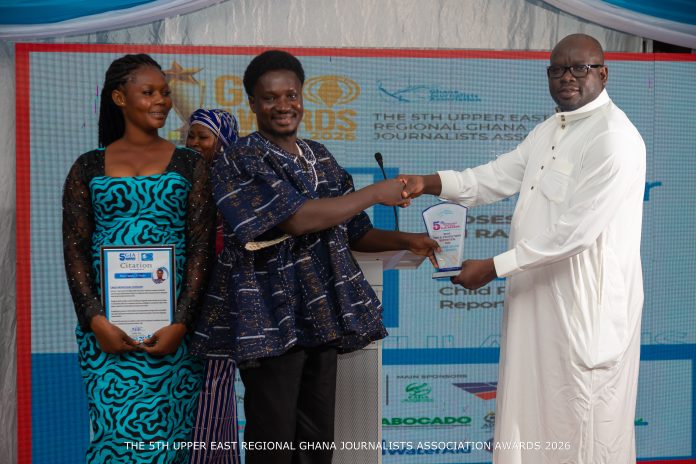
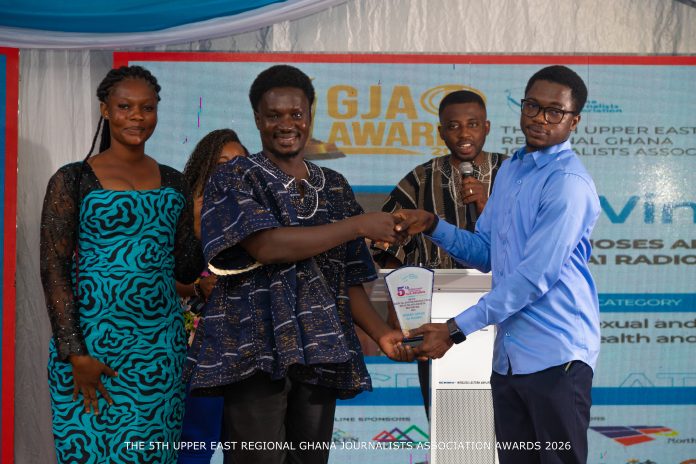
A1 Radio journalist David Azure has won two awards at the 5th Upper East Regional Ghana Journalists Association (GJA) Awards, including Most Promising Journalist of the Year.

Mr Azure, lead producer of A1 Radio’s major news bulletin, News Link, was also adjudged Best Journalist in Water and Sanitation for his reporting on waste management challenges in Bolgatanga.

Both recognitions were anchored on his story, “Bolgatanga Residents, Officials Trade Blame as Waste Crisis Deepens,” which examined the sanitation situation from the perspectives of residents, municipal authorities and other stakeholders.

A citation signed by Upper East Regional GJA Chairman Albert Sore said the report examined the public health, environmental and governance dimensions of the waste management challenges confronting Bolgatanga.

“For your compelling reporting on the worsening sanitation crisis in Bolgatanga through your story, ‘Bolgatanga Residents, Officials Trade Blame as Waste Crisis Deepens,’ which brings together the perspectives of residents, municipal authorities and other stakeholders while exposing the public-health, environmental and governance implications of the waste crisis,” the citation read.

“The Upper East Regional GJA recognises you, David Azure of A1 Radio, as the Best Journalist in Water and Sanitation for demonstrating depth, balance and commitment to reporting issues of critical public interest.”

The GJA also cited the same report in naming Mr Azure Most Promising Journalist of the Year.

“For your strong community-focused reporting and your ability to pursue issues of public interest with depth, balance and initiative, particularly through your story, ‘Bolgatanga Residents, Officials Trade Blame as Waste Crisis Deepens,’ which examines the complex sanitation challenges confronting the Bolgatanga community,” the citation stated.

“The Upper East Regional GJA adjudges you, David Azure of A1 Radio, as the Most Promising Journalist of the Year for demonstrating curiosity, initiative, balanced reporting and a strong commitment to public-service journalism.”

Reacting to the recognition, Mr Azure said he viewed the two awards as motivation to continue reporting on issues affecting communities.

“At the 5th Upper East Regional Ghana Journalists Association (GJA) Awards, I was honoured to be adjudged Best Water and Sanitation Reporter of the Year and Most Promising Journalist of the Year. I see this recognition not as an arrival, but as a call to do more and to keep telling the stories of our communities and giving voice to the vulnerable. These awards are only the starting point of the journey,” he said.

He also thanked his family, friends and senior colleagues in the media for supporting his work.

“My heartfelt appreciation to my family, friends, and senior colleagues in the media fraternity for your unwavering support,” he said.

A1 Radio | 101.1 MHz  | Bolgatanga

A1 Radio’s Moses Apiah adjudged Overall Journalist of the Year at 5th Upper East GJA Awards

0

A1 Radio journalist Moses Apiah has been adjudged Overall Journalist of the Year at the 5th Upper East Regional Ghana Journalists Association (GJA) Awards.

Mr Apiah, who produces A1 Radio’s morning show, Day Break Upper East, emerged the overall winner after earlier picking up two category awards for Sexual and Reproductive Health and Rights (SRHR) Reporting and Child Protection Reporting.

His recognition was based on two public-interest stories examining period poverty among girls in conflict-affected Bawku and the experiences of two siblings allegedly defiled and facing challenges in accessing justice.

A citation signed by Upper East Regional GJA Chairman Albert Sore praised Mr Apiah’s reporting for its depth, sensitivity and focus on vulnerable people.

“Your outstanding stories demonstrated exceptional journalistic excellence, courage, versatility and unwavering commitment to public-interest journalism that gives voice to some of the most vulnerable members of society,” the citation read.

Mr Apiah won the SRHR Reporting category with his documentary, “Period Poverty: Girls in Bawku Battle Bullets and Dreams,” which explored how conflict and poverty affect menstrual health and education among adolescent girls in Bawku.

“With sensitivity and compelling storytelling, the documentary brings to the fore an often-overlooked dimension of the challenges confronting girls in conflict-affected communities,” the GJA said.

His second story, “Crying for Justice: Two Siblings Defiled, Denied Justice,” earned him the Child Protection Reporting award.

The report examined the alleged sexual abuse of two siblings and the challenges encountered in seeking justice.

“You courageously confront the painful realities of child sexual abuse and the barriers to Justice faced by vulnerable children. The report demonstrates a strong commitment to accountability, child protection and the fundamental rights of victims,” the citation stated.

The GJA said the two reports demonstrated Mr Apiah’s ability to report across health, sexual and reproductive rights, child protection, conflict and social justice while maintaining a focus on public-interest journalism.

“Together, the two works demonstrate a journalist who is not only skilled in storytelling but also deeply committed to giving voice to the voiceless, exposing social injustice and using journalism as an instrument for positive change,” the citation said.

It added: “The depth and relevance of your reporting, the courage to tackle sensitive and difficult subjects, coupled with the quality of your storytelling reflects public-interest value of your work.”

The Association subsequently named Mr Apiah Overall Journalist of the Year.

After receiving the award, Mr Apiah thanked the GJA, his colleagues at A1 Radio, his sources and others who had supported his work.

He pledged to continue using journalism to amplify the experiences of marginalised communities and hold duty bearers accountable.

A1 Radio | 101.1 MHz | Bolgatanga

DW Akademie, MFWA training changed how I approach journalism – Moses Apiah

0

Journalist of the Year 2025, Moses Apiah, says training by DW Akademie and the Media Foundation for West Africa (MFWA) changed how he approaches journalism, teaching him to look beyond events and headlines to the lived experiences of the people at the centre of his stories.

Speaking on A1 Radio after winning the overall award at the 5th Upper East Regional Ghana Journalists Association Awards, Mr Apiah said the training had particularly influenced his approach to investigative and development journalism.

“Their training actually shaped my understanding to go beyond the headlines, to telling the lived experiences of my protagonists,” he said.

According to Mr Apiah, the training encouraged him to look beyond what had happened and examine how an issue affects the people involved, particularly when reporting on vulnerable communities and accountability issues.

He cited his reporting on period poverty among adolescent girls in Bawku and the alleged defilement of two young sisters as examples of stories in which he sought to place the experiences of affected people and families at the centre of his reporting.

Mr Apiah said producing such stories could be demanding, requiring journalists to spend considerable time gathering evidence, building trust with sources and seeking responses from relevant institutions.

He said the approach had, however, helped him better document the human consequences of some of the social and development issues affecting communities in the Upper East Region.

Mr Apiah also acknowledged the role of A1 Radio in his professional development and said the recognition at the GJA Awards had strengthened his resolve to continue pursuing such stories.

“Going forward, this winning empowers me more to do more,” he said.

The 5th Upper East Regional GJA Awards were held under the theme, “Beyond the Headlines: The Media’s Role in Promoting WASH for Safe Motherhood and Quality Healthcare.”

The awards were headlined by MyTurn Constructions Limited and Lesken Enterprise Limited, with Kacstones Records and Paga Youth Movement serving as main sponsors.

A1 Radio | 101.1 MHz | Bolgatanga

Journalists should not become cheerleaders for government, politicians – Moses Apiah

0

Journalists must maintain their independence and resist becoming cheerleaders for governments, politicians and development partners in the name of promoting development, Journalist of the Year 2025, Moses Apiah, has said.

He said journalists have a responsibility to independently scrutinise development commitments, public expenditure and the performance of institutions entrusted with public resources.

Speaking on A1 Radio after winning the overall award at the 5th Upper East Regional Ghana Journalists Association Awards, Mr Apiah said development journalism must be grounded in evidence and the experiences of the people affected by public policies and interventions.

“For me, the role of journalists in promoting development in the Upper East Region is not about becoming cheerleaders for government, politicians or development partners,” he said.

According to him, journalists should use their independence and access to information to bring neglected issues into public discussion and ensure that the experiences of affected communities are not overshadowed by official accounts.

Mr Apiah said journalists should be prepared to question why some communities continue to struggle with access to basic services despite repeated development commitments.

He argued that official announcements should also not determine when journalists begin or end their scrutiny of development interventions.

Instead, he said, journalists should independently follow up on projects and programmes to establish whether they are functioning and producing the results promised to the public.

Mr Apiah said maintaining that independence was particularly important when reporting on institutions and individuals responsible for making decisions about public resources and development.

He maintained that journalists could contribute to development without abandoning their responsibility to question those in authority and hold institutions accountable for their commitments.

The 5th Upper East Regional GJA Awards were headlined by MyTurn Constructions Limited and Lesken Enterprise Limited, with Kacstones Records and Paga Youth Movement serving as main sponsors.

A1 Radio | 101.1 MHz | Bolgatanga

Journalists must go beyond reporting projects to interrogate their impact – Moses Apiah

0

Journalist of the Year 2025, Moses Apiah, has challenged journalists in the Upper East Region to go beyond reporting the announcement and commissioning of development projects and investigate whether such interventions are improving the lives of the people they are intended to serve.

Speaking on A1 Radio after winning the ultimate award at the 5th Upper East Regional Ghana Journalists Association Awards, Mr Apiah said journalists should be concerned about what happens after the ceremonies, speeches and promises surrounding development projects.

“The question is no longer simply whether we have reported that a borehole has been constructed, a school block commissioned, an irrigation facility completed or money allocated for a community project, but whether those interventions have made any meaningful difference in the lives of the people for whom they were intended,” he said.

According to him, journalists should follow public expenditure and development commitments beyond their initial announcements and give affected communities an opportunity to assess whether promised interventions are delivering the intended results.

He said journalism should help citizens understand how development decisions are made, how public resources are used and why some communities continue to struggle with access to basic services despite successive interventions.

Mr Apiah said this approach was particularly important for journalists working in the Upper East Region, where many of the stories they encounter involve access to water, healthcare, education, agriculture and infrastructure.

He argued that journalism in such an environment should go beyond its conventional role of informing, educating and entertaining the public to include sustained scrutiny of development interventions.

For him, reporting that a project has been commissioned should therefore not necessarily mark the end of a journalist’s interest in that project.

Journalists, he said, should return to communities, speak with intended beneficiaries and establish whether projects are functional, accessible and addressing the problems for which they were provided.

Mr Apiah said such follow-up reporting would also allow journalists to identify gaps between official accounts of development and the experiences of people living in beneficiary communities.

He urged journalists to resist the tendency to move on after official announcements and commissioning ceremonies, arguing that sustained follow-up is necessary for journalism to contribute to accountability and informed public discussion.

A1 Radio | 101.1 Mhz | Bolgatanga