The Irrigation Company of the Upper Region (ICOUR) is shifting its approach to tomato production by linking farmers to buyers before cultivation begins, in an effort to reduce the risk of farmers producing without guaranteed markets.
Managing Director of ICOUR, Dr Dominic Anarigide, said the new model will connect farmers directly to identified off-takers who will provide inputs, technical support and a ready market for their produce.
“We are now anchoring the farmers with an off-taker,” he said.
Under the arrangement, participating farmers will produce according to agreed standards and specifications, with off-takers committed to purchasing their harvest.
Dr Anarigide said the approach marks a shift from farmers producing tomatoes before searching for buyers, a practice that has exposed them to market uncertainty and potential losses.
ICOUR has earmarked 500 hectares under the Tono and Vea irrigation schemes for tomato production as part of efforts to revive commercial tomato farming in the Upper East Region.
Before inputs and financing are provided, farms will be validated to ensure participating farmers meet the requirements of the programme.
Farmers will also receive technical support to enable them to produce tomatoes that meet the quality and other specifications required by the identified buyers.
Dr Anarigide said the approach is intended to address some of the challenges facing tomato farmers, including access to financing, diseases and unreliable markets.
The company hopes that linking production directly to demand will reduce farmers’ market risks and support increased tomato production under the Tono and Vea irrigation schemes.
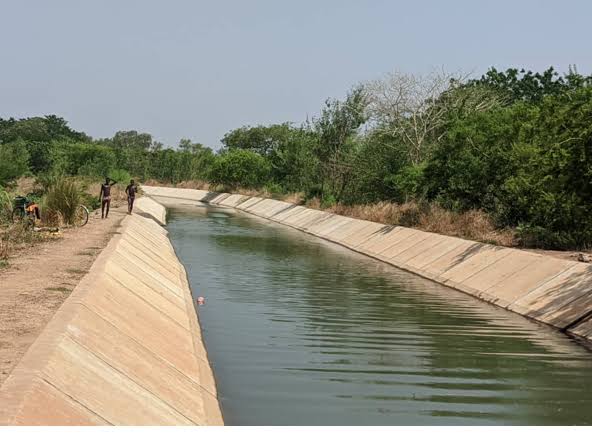
The Upper East Region could significantly increase food production and support year-round farming if the full potential of its irrigation infrastructure is utilised, according to Managing Director of the Irrigation Company of the Upper Region (ICOUR), Dr Dominic Anarigide.
Dr Anarigide said the Tono and Vea irrigation schemes have sufficient water to support more intensive agricultural production, including multiple cropping cycles for some crops.
“If we plan very well, we can even do three times a year for some crops in Vea and Tono because we have the water,” he said.
He, however, identified underutilisation of irrigation facilities, maintenance challenges and problems with parts of the Vea canal system as constraints preventing farmers from taking full advantage of the available water.
As part of efforts to expand year-round production, ICOUR is targeting 500 hectares under the Tono and Vea irrigation schemes for tomato cultivation.
At Tono, Dr Anarigide said preliminary figures put average rice yields at 6.9 tonnes per hectare, although farmers continue to face challenges securing reliable markets for their produce.
He said attention must shift from merely having irrigation infrastructure to ensuring the facilities function efficiently and enable farmers to produce throughout the year.
Dr Anarigide argued that fully utilising the region’s irrigation potential could increase food production, create employment opportunities and reduce farmers’ dependence on increasingly unpredictable rainfall.
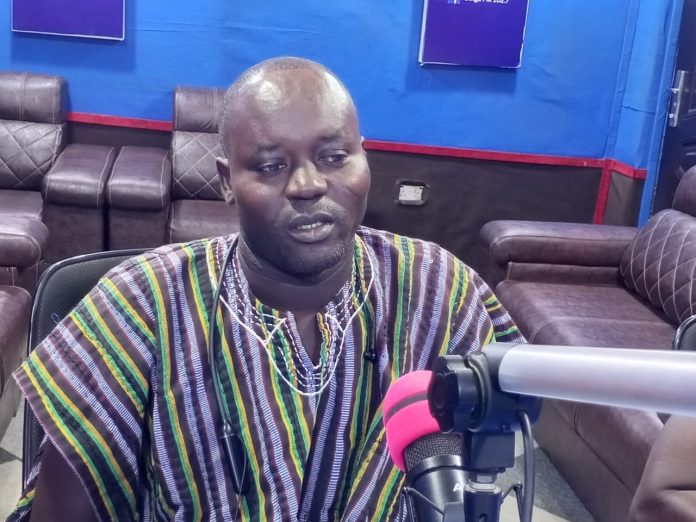
A Gurene teacher at Bolgatanga Senior High School, Emmanuel Atibire, has urged parents to speak Gurene with their children from an early age, arguing that preserving the language must begin at home.
Speaking on Bolga FM’s Tinmaalgo Sanga, Mr Atibire said parents should make Gurene part of their children’s everyday upbringing rather than leave the responsibility of teaching the language entirely to schools.
“When you give birth to a child, the child should understand his own language,” he said.
Mr Atibire said exposing children to Gurene from an early age would help them develop a stronger command of the language and encourage them to appreciate their cultural heritage.
He encouraged parents to consistently communicate with their children in Gurene and create opportunities for them to use the language in everyday conversations.
According to him, this would provide children with a foundation on which formal teaching of the language in school could build.
His comments come as schools in the Upper East Region prepare for Gurene to become an examinable subject at the 2027 Basic Education Certificate Examination (BECE).
Mr Atibire said the development provides an opportunity for parents and schools to work together to strengthen the teaching and learning of Gurene and ensure the language is passed on to younger generations.
The Upper East BONABOTO Union has welcomed the introduction of Gurene as an examinable subject at the 2027 Basic Education Certificate Examination (BECE), while calling for the recruitment of more teachers to support its implementation.
Speaking on Bolga FM’s Tinmaalgo Sanga, members of the Union said the development was an important step towards strengthening the teaching of Gurene and preserving the language and culture of its speakers.
The Union said it had previously advocated for Gurene to become an examinable subject, noting that although the language had received recognition from the Ghana Education Service, its examination had not been operationalised.
Upper East Regional President of BONABOTO, Dr Esmond Balfour, said the region already has trained Gurene teachers but called on the government to recruit more as schools prepare for the 2027 BECE.
He said having adequate qualified teachers would ensure pupils receive the instruction needed to read and write Gurene effectively.
A teacher at Bolgatanga Senior High School, Emmanuel Atibire, said making Gurene examinable could encourage students and parents to take the study of the language more seriously.
He said formal instruction would improve students’ command of written Gurene, including their ability to correctly spell names in the language.
Another contributor, Elias Yen, said teaching Gurene in schools could also help preserve aspects of the culture that are traditionally transmitted through the language.
He cited storytelling, cultural displays and the use of Gurene in everyday activities, including counting money, as areas that could benefit from greater literacy in the language.
BONABOTO therefore called for adequate teacher recruitment and educational materials to ensure the effective implementation of Gurene as a BECE subject from 2027.
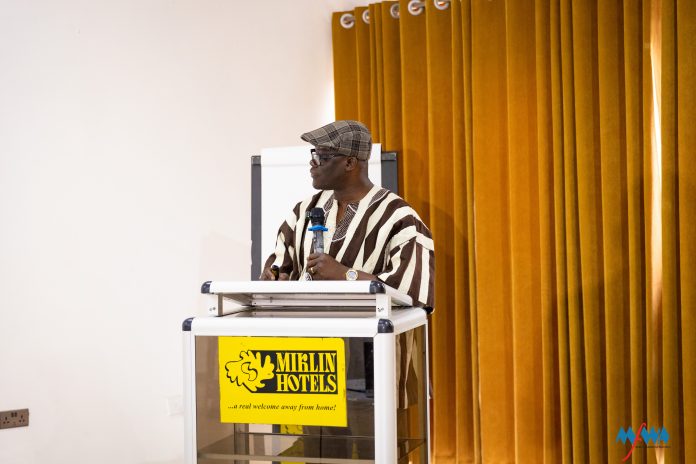
Private legal practitioner and broadcast journalist, Samson Lardy Anyenini, says the GH¢544,000 Legal Support Fund established by the Media Foundation for West Africa (MFWA) will help strengthen independent and fearless journalism by reducing the financial burden associated with litigation.
He said the fund would provide an important safety net for journalists and media organizations that face legal action arising from their legitimate professional work, particularly at a time when lawsuits against the media are increasingly common.
Mr. Anyenini was speaking at a training organized by the MFWA in Kumasi on the legal framework governing media practice and legal risk management.
He said while individuals and organizations had the right to seek redress when they disagreed with media reports, the financial cost of defending lawsuits could make it difficult for some media houses to continue pursuing issues of public interest.
He said the legal support initiative was therefore timely, particularly in cases where litigation could be used to discourage the media from continuing to report on a particular subject.
According to him, some of such cases could constitute Strategic Lawsuits Against Public Participation (SLAPPs), where legal action is allegedly used to intimidate or silence journalists or media organizations.
“The most important part of it is that you will not be shut down because you are scared that there will not be money to fight a legal suit that will come. And this is why this is very important,” he said.
Mr. Anyenini encouraged journalists to continue doing their work boldly while acknowledging and correcting errors when they occur.
“So to have a fund that is available to assist, I think, is going to be very useful. You do your work and do it boldly. Those that you need to call their bluff, you call their bluff, but where humbly you need to submit and admit that you also made an error or you erred, you will do so. But the most important part of it is that you will not be shut down because you are scared that there will not be money to fight a legal suit that will come. And this is why this is very important,” he stated
He said the availability of legal support should not be interpreted as a license for journalists to disregard professional standards, stressing the importance of responsible journalism in reducing unnecessary legal exposure.
He identified painstaking verification, seeking responses, obtaining documentation and using the Right to Information (RTI) process where necessary as essential practices for journalists.
He further urged journalists to distinguish between allegations, opinions and established facts and to preserve the evidence and documentation used in their publications in case their reports were subsequently challenged in court.
“The job a journalist does requires painstaking, patient verification, where you need to get responses, you get the responses, where you have documentation, or you do not have documentation. You procure the documentation, even including by RTI requests,” he said.
Mr. Anyenini said the 1992 Constitution provides protections for media freedom while also placing responsibilities on the media to promote accountability and serve the interests of the Ghanaian people.
He urged journalists to see their profession not merely as a privilege, but as a responsibility to uphold constitutional principles and hold public officials accountable.
He said journalists should not abandon their watchdog role because of challenges associated with reporting on corruption, abuse of power, and other matters of public interest.
“You must exercise your profession until we have seen that corruption, as a constitution mandates the state to ensure that it is eradicated and that the abuse of power is also eradicated, we will continue to do the work,” he said.
Mr. Anyenini said the media would continue to have a critical role in holding government officials and other office holders accountable for as long as they exercise public power.
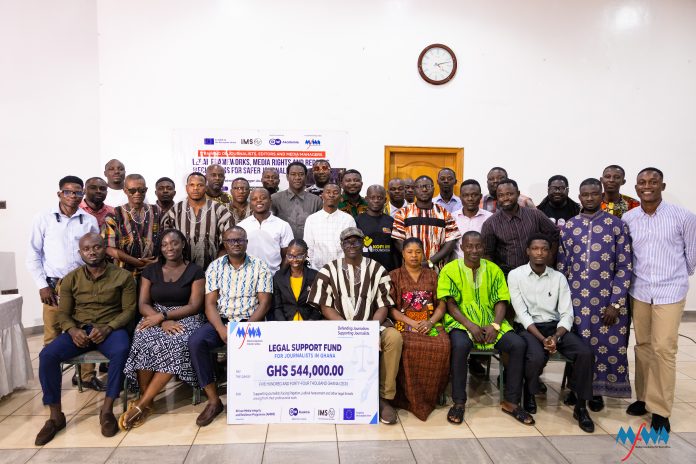
The Legal Support Fund forms part of the MFWA’s African Media Integrity and Resilience Programme (AMIRP), implemented in Ghana in collaboration with DW Akademie, with funding from the European Union through International Media Support (IMS).
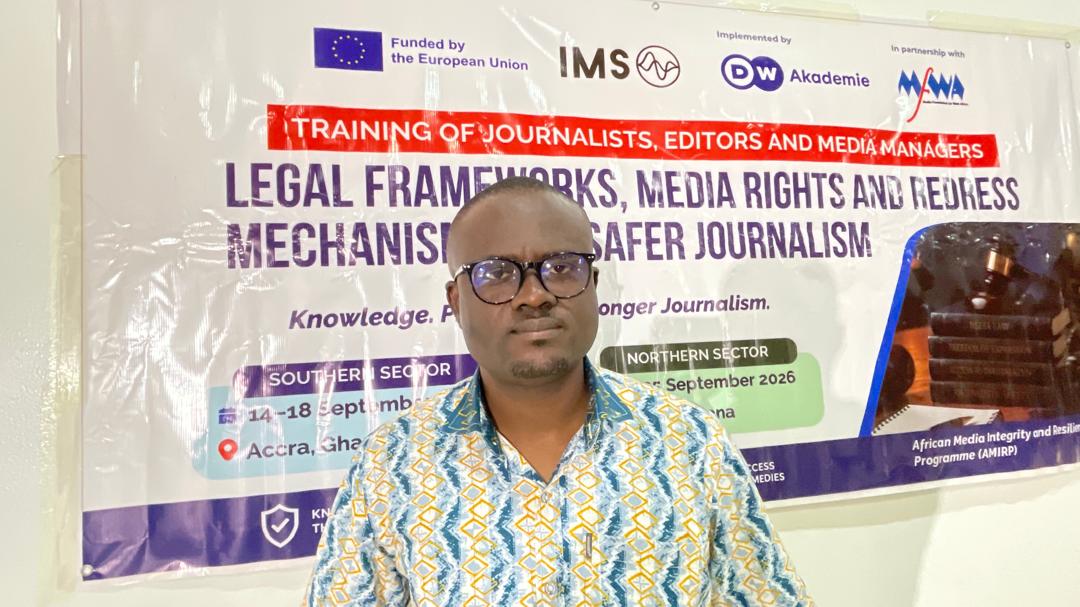
The Media Foundation for West Africa (MFWA) has trained journalists on the legal framework governing media practice in Ghana as part of efforts to strengthen the media’s capacity to manage legal risks and withstand judicial intimidation.
The training forms part of the MFWA’s African Media Integrity and Resilience Programme: Ghana, Central African Republic (AMIRP Programme), a two-and-a-half-year project being implemented in Ghana in collaboration with DW Akademie, with funding from the European Union through International Media Support (IMS).
The programme combines intensive residential training on media law and legal risk management with the operationalisation of a Legal Support Fund (LSF) to provide financial assistance for legal representation to journalists facing litigation or judicial harassment arising directly from their legitimate professional activities.
Speaking at the training in Kumasi, Program Manager of the MFWA, Dr. Daniel Kwame Ampofo Adjei, said the initiative was driven by the need to build a resilient media capable of contributing effectively to democratic participation.
He said citizens’ voices were central to meaningful democracy and that the media remained an important platform through which those voices were expressed.
Dr. Ampofo Adjei said the media was increasingly confronted with legal challenges, including defamation suits and injunctions, while many media houses lacked the financial resources to defend themselves in court even when they believed they had acted properly.
“The idea is to empower the media by giving them knowledge of the legal frameworks that govern freedom of expression in Ghana,” he said.
He disclosed that the MFWA had so far trained 60 media personnel, with two training sessions organised in the southern sector and one in the northern sector.
As part of the programme, the MFWA is also providing about GH¢544,000 for the Legal Support Fund to assist journalists who require legal representation in connection with their professional activities.
Dr. Ampofo Adjei said the programme also included a review of the curricula of media and communication training institutions in Ghana to ensure that journalism education remained relevant to contemporary challenges.
He said a consultant was currently reviewing the curricula, after which the findings would be subjected to stakeholder validation before recommendations were made and shared with major public and private institutions involved in journalism training.
He urged journalists to apply the knowledge gained from the training by maintaining professional and ethical standards. He cautioned that the availability of legal support should not encourage journalists to become careless or reckless in their work.
Private legal practitioner and broadcast journalist, Samson Lardy Anyenini, who facilitated the training, said the media was increasingly facing lawsuits, making the establishment of the legal support fund particularly important.
He explained that while people who disagreed with media reports had the right to seek redress through available constitutional and legal channels, some lawsuits could be intended to discourage the media from pursuing issues of public interest.
Mr. Anyenini said such cases could include Strategic Lawsuits Against Public Participation (SLAPPs), where litigation may be used to intimidate or prevent journalists from continuing to report on particular issues.
He said some litigants could also seek injunctions to stop media houses from continuing to publish or discuss matters under investigation.
“These things are costly, and media houses are unable to afford them. So to have a fund that is available to assist, I think, is going to be very useful,” he said.
Mr. Anyenini nevertheless urged journalists to undertake their work boldly while exercising the necessary professional care to minimise legal risks.
He said journalists must painstakingly verify information, seek responses from persons who are the subjects of their reports, obtain supporting documentation and use the Right to Information (RTI) process where necessary.
He also advised journalists to distinguish between opinions, allegations and established facts and to preserve the evidence relied upon in their publications in anticipation of possible legal challenges.
According to him, the Constitution provides protections for the media while also placing responsibilities on journalists to promote accountability and serve the interests of the Ghanaian people.
He urged journalists not to abandon their watchdog role because of the possibility of lawsuits, stressing that accountability would remain a key responsibility of the media for as long as public officials exercised power.
“For as long as that will remain, the media has a role to play. There will be people in government, there will be office holders, they must be held to account to the people who give them the power,” he said.
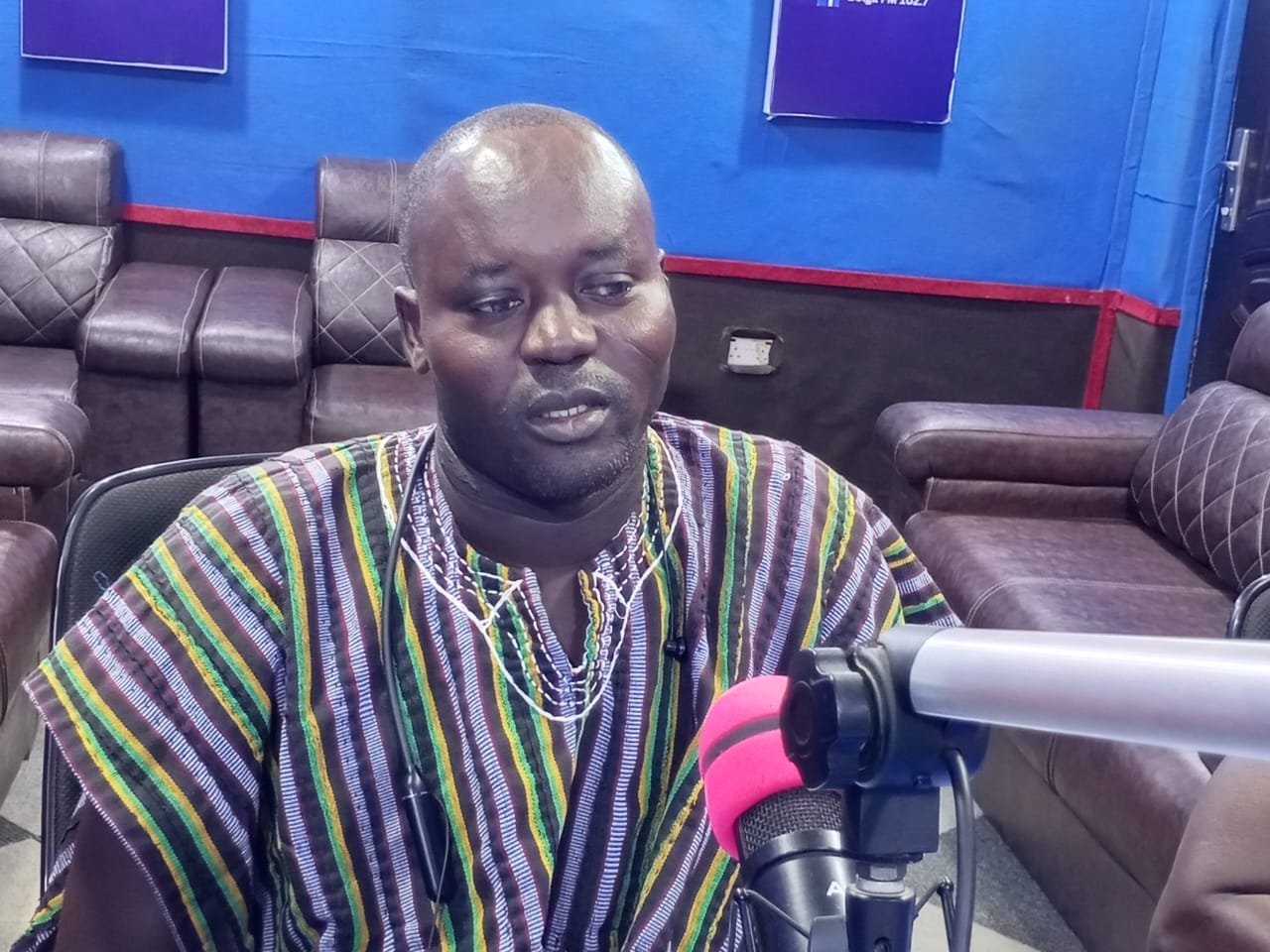
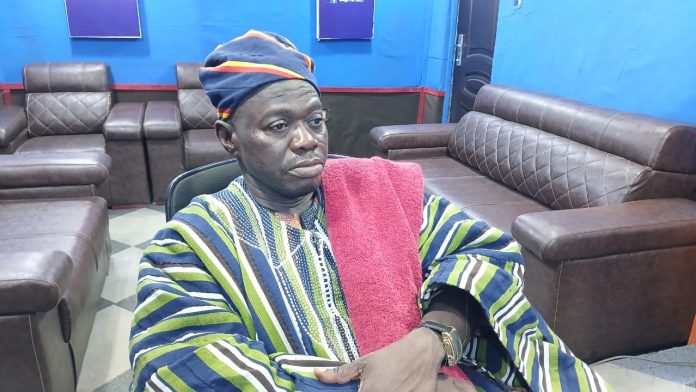
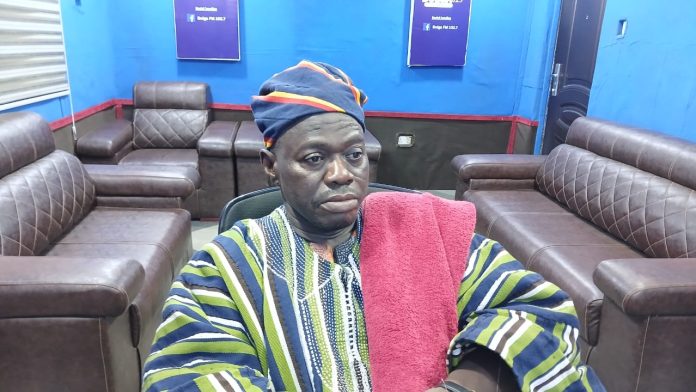
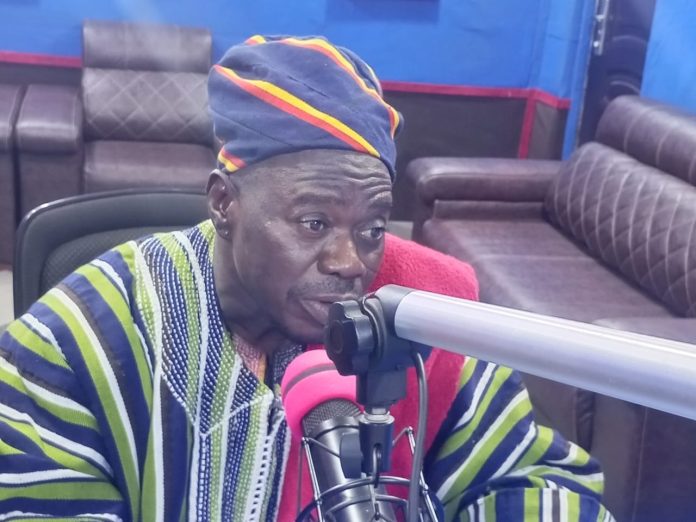
The Chief of Kotintabig under the Sakoti Traditional Council in the Nabdam District, Naab Bileehsing Lanwont Namoog, says the failure to elevate some divisional chiefs to paramount status is limiting development opportunities in the Upper East Region.
Speaking on Bolga FM, Naab Bileehsing, who is also a lecturer at Bolgatanga Technical University, argued that concentrating several divisional chiefs under a single paramountcy limits representation and participation in the Regional House of Chiefs.
“Why would one paramount chief superintend over 32 divisional chiefs? How will you grow? If we expand, you see why development can grow,” he said.
He alleged that concerns about competition for positions within the Regional House of Chiefs and benefits associated with paramountcy may discourage the elevation of some divisional chiefs.
“Because if they elevate you, you also get a Land Cruiser, or if they elevate you, you will come and contest me as the regional president of the House of Chiefs,” he said.
Naab Bileehsing argued that divisional chiefs could contribute more effectively to deliberations at the Regional House of Chiefs if more traditional areas were elevated to paramount status.
He further contended that creating additional paramountcies could increase development opportunities for communities by broadening their representation and ability to advocate for projects.
“Assuming if I’m elevated to paramount status and Sakoti is given three schools to be built, I will also be given three to build. Is it not development? But if I am not elevated, Sakoti will take the three and come and share the three among his divisional chiefs. Is it helpful?” he asked.
Naab Bileehsing stressed that elevating a divisional chief would not necessarily diminish the authority of the paramount chief under whom the traditional area currently falls.
“If you elevate, I’m not coming to take [your place]. I will still honour you as the enskinning authority,” he said.
He questioned why qualified traditional areas and chiefs should remain at the divisional level when, in his view, elevation could strengthen representation and contribute to development.
Naab Bileehsing said the issue had previously been raised in the presence of the Upper East Regional Minister and President John Mahama.
According to him, the President expressed surprise at the number of paramountcies in the Upper East compared with the Upper West Region.
“The Regional Minister was there. We talked about this elevation. And the President made it clear that he is surprised. Because if Upper West can have 32, what is making us not grow?” he said.
Naab Bileehsing therefore called for greater attention to the elevation of eligible divisional chiefs, arguing that broader traditional representation could strengthen deliberations and advocacy for development in the Upper East Region.
The Upper East Regional Director of the Ghana Tourism Authority (GTA), Joseph Appiagyei, has called for improved transport infrastructure, including an airport, railway extension and an inland port at Paga, to unlock the region’s tourism and trade potential.
Speaking at the 2026 GTA Tourism Awards in Bolgatanga, Mr Appiagyei urged the government to expedite work on the proposed Upper East Airport, describing it as a potential “game-changer” for tourism.
“I appeal to government to expedite action on the Upper East Airport project. An operational airport will be a game-changer and will significantly improve tourist traffic into the region,” he said.
He also called for the extension of Ghana’s railway network to the Upper East Region and the establishment of an inland port at Paga, a major border town linking Ghana to Burkina Faso.
“I further wish to appeal to government to consider extending the railway transportation system to this part of the country to ease the burden on our roads, and to also consider creating an inland port at Paga. These interventions will not only facilitate trade but will also open up the region to domestic and international tourists,” he said.
Mr Appiagyei argued that the Upper East Region’s location gives it a strategic advantage as a gateway between Ghana and the Sahel and should be deliberately leveraged to attract more visitors.
He urged tourism operators and other stakeholders to target travellers from neighbouring Burkina Faso and other Francophone markets, including Mali, Niger and Togo.
“The Upper East Region has a unique comparative advantage as the gateway to the Sahel. I therefore urge all stakeholders to deliberately support the tourism drive by penetrating the Sahel market,” he said.
As part of that effort, Mr Appiagyei encouraged high-end hotels in the region to employ French-speaking staff to better serve visitors from Francophone countries.
“I appeal to our upmarket hotels to engage French-speaking staff to render holistic services to our Francophone brothers and sisters,” he added.
The awards ceremony was held under the theme, “Celebrating Excellence Beyond Borders: The Black Star Experience.”
Mr Appiagyei said the theme reflected Ghana’s identity and the opportunity to position the country’s culture and tourism offerings internationally.
“The Black Star symbolises our identity, pride, culture and aspiration on the world stage,” he said.
Naab Bileehsing Lanwont Namoog of the Kotintabig Traditional Area under the Sakoti Traditional Council in the Nabdam District has called for reforms to the Upper East Region’s traditional leadership system, arguing that its fragmented nature makes it difficult for chiefs to speak with a united voice on the region’s development.
Speaking on Bolga FM’s Tooma La Dengo Sanga, Naab Bileehsing said the traditional system should create opportunities for qualified and capable divisional chiefs to advance to paramountcy while maintaining respect for existing traditional authorities.
“Our chieftaincy has a problem. The fragmented chieftaincy that we have in the region is the problem causing all that. We are fragmented,” he said.
He questioned why some paramount chiefs preside over large numbers of divisional chiefs when, in his view, some of those traditional areas could be elevated.
“Why would one paramount chief preside over thirty-two divisional chiefs? Why? How will we grow? How will we grow? That is not the way we should go,” he said.
Naab Bileehsing said some divisional chiefs have strong educational and professional backgrounds, including PhDs, and could contribute to deliberations and administration at the Regional House of Chiefs if given the opportunity.
He argued that creating additional traditional areas should not be viewed as diminishing the authority of existing paramount chiefs, but as an opportunity to broaden representation and potentially attract more development.
“If you elevate me, I am not coming to take [your authority]. The thing is that I will still honour you as the one, the senior authority,” he said.
Using the allocation of development projects as an example, Naab Bileehsing argued that the creation of additional traditional areas could potentially increase the number of communities benefiting from projects.
“Assume I am elevated to the paramountcy status, Sakoti is given three schools to be built. I will also be given three schools to be built. Is it not development?” he asked.
He also expressed concern that, unlike what he described as more centralised traditional leadership structures in the Northern and Upper West regions, the Upper East has several distinct traditional authorities without a single institution capable of mobilising chiefs around regional concerns.
He cited the Ya-Na in the Northern Region and Wa Naa in the Upper West Region as examples of traditional authorities that, in his view, can provide greater coordination on matters affecting their respective regions.
Naab Bileehsing linked the need for greater unity to the region’s political representation, questioning why the Upper East has not recorded the level of growth in parliamentary constituencies he believes has occurred elsewhere.
He recalled that before the former Upper Region was divided into the Upper East and Upper West regions, the area had 28 parliamentary constituencies, which he said were distributed between the areas that later became the two regions.
He argued that the Upper East has since seen comparatively limited growth in its parliamentary representation and attributed this, in part, to what he described as the region’s inability to collectively advocate for its interests.
Naab Bileehsing therefore called for stronger cooperation among traditional leaders and other stakeholders, while advocating reforms that would allow capable chiefs to progress within the traditional leadership system.
He maintained that such reforms should preserve respect for established traditional authorities while creating broader representation and a stronger collective voice for the development of the Upper East Region.
Naab Bileehsing Lanwont Namoog of the Kotintabig Traditional Area in the Nabdam District has commended the Member of Parliament for Nabdam, Dr Mark Kurt Nawaane, for what he described as his contributions to healthcare and community development.
Speaking on Bolga FM’s Tooma La Dengo Sanga, Naab Bileehsing said the contributions of public officials should be acknowledged when deserved, irrespective of political differences.
“If somebody is due for his good, give it to him,” he said, arguing that political considerations should not prevent people from recognising interventions that benefit communities.
Naab Bileehsing cited health interventions undertaken by Dr Nawaane, a medical doctor, including eye-screening exercises in the Nabdam area.
He said the screenings provided residents with access to important eye care services, particularly in communities where blackfly exposure and river blindness have historically been concerns.
Naab Bileehsing also highlighted Dr Nawaane’s support for people dealing with serious health conditions, including cancer, saying his medical background has given him an understanding of some of the difficulties faced by patients and their families.
Beyond healthcare, he recalled an intervention by the MP when a section of the Yakote Road was cut off, affecting residents’ access to the Perunu Market.
According to Naab Bileehsing, Dr Nawaane used his personal resources to provide culverts for the affected section, helping to restore access for residents.
He said such interventions should be recognised on their merits rather than viewed solely through a partisan political lens.
Naab Bileehsing maintained that acknowledging the contributions of public officials when they deliver meaningful interventions could encourage greater commitment to addressing the needs of communities.