Home Blog Page 8

GIPA takes investment drive to northern Ghana ahead of Invest Ghana Summit

0

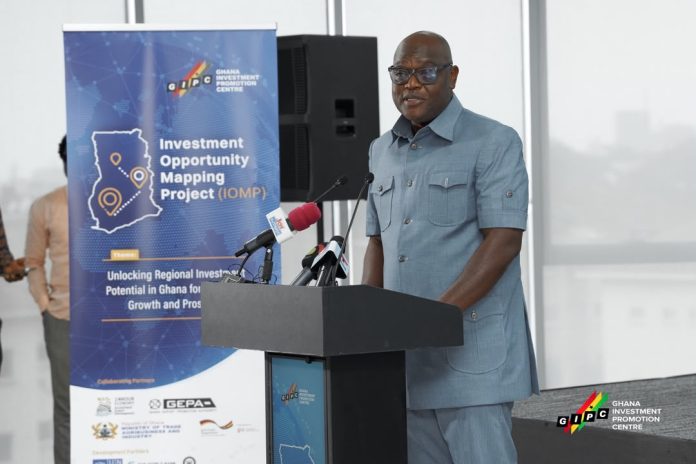
The Ghana Investment Promotion Authority (GIPA) is shifting from attracting investment to actively mobilising capital, with a strategic roadshow across Northern Ghana from October 11th to 23rd, 2026, to connect investors with investment-ready projects identified in the regions.

To be held under the theme “Driving Local Investment: Unlocking Regional Potential, Mapping Opportunities, and Mobilising Growth in the Northern, North-East, Upper East, Upper West and Savanna Regions”, the 13-day engagement follows the implementation of GIPA’s flagship Investment Opportunities Mapping Project (IOMP), launched in July 2025, which has identified more than 600 investment-ready projects nationwide.

It also forms part of a broader strategy to showcase investment opportunities from every region of Ghana to domestic and international investors at the upcoming Invest Ghana Summit, scheduled for November 16th and 17th, 2026.

Of the more than 600 investment project profiles received nationwide, 128 originated from the Northern, North East, Savannah, Upper East, and Upper West Regions, highlighting Northern Ghana’s increasing prominence in the national investment landscape. At the same time, these findings point to the vast untapped investment and economic potential that remains across the region.

The Upper West Region has the most and accounts for 45 project profiles, followed by the Northern Region with 38 projects, Savannah with 19, Upper East with 16 and the North East Region with 10. Opportunities span agriculture, agro-processing, manufacturing, tourism, mining, renewable energy, logistics and trade.

Backed by Nearly US$2 Billion in Investment

The identified opportunities are supported by a growing track record of investor interest in the Northern Belt. According to GIPA data from 1994 to June 2026, the Northern, North East, Savannah, Upper East and Upper West Regions have attracted 100 registered investment projects with an estimated foreign direct investment (FDI) value of US$1.91 billion, largely concentrated in agriculture and manufacturing. 

The Northern Region led with 68 projects, followed by Upper East with 14, then North East, Upper West and Savannah Regions with seven, six and five projects, respectively.

The Deputy Chief Executive Officer of GIPA, Mr Abdul Razak Baba, will lead the roadshow and engage regional ministers and business leaders across the five regions. He will also pay courtesy calls on key traditional authorities, including the Paramount Chief of the Sagnarigu Traditional Area, Ambassador Abdulai Yakubu Yoo-Naa; the Overlord of the Mamprugu Traditional Area, Nayiri Naa Bohagu Mahami Abdulai Sheriga II;  the Overlord of the Wa Traditional Area, Wa Naa Rahid Fuseini Pelpuo; and the Overlord of the Savanna Region,  Yagbonwura Bii- Kunuto Jewu Soale I.

Mr Baba will also lead the delegation in touring investment sites and operating businesses, including Savannah Diamond Cement at Buipe and Baba Tree Company Limited in Wa, to assess ongoing investments and identify opportunities for expansion and collaboration.

Unlocking Inclusive Growth

According to GIPA Chief Executive Officer, Simon Madjie, Northern Ghana offers significant potential in commercial agriculture, agro-processing, livestock, renewable energy, tourism, manufacturing, mining, logistics and cross-border trade, all of which can drive industrialisation and improve livelihoods across the region.

“Northern Ghana is no longer a frontier of potential. It is a destination of opportunity. Through this roadshow, we are taking investment opportunities directly to the market, building strategic partnerships and creating pathways for investors to take part in the region’s transformation”, he said.

In addition, he said by linking project identification with investor engagement, the Authority aims to accelerate investment flows into underserved regions and promote more balanced and inclusive economic growth across Ghana.

A Call to Invest in Northern Ghana

With 128 investment projects profiles received, a growing record of investor confidence and strong collaboration between government, traditional authorities and the private sector, Northern Ghana is positioning itself as one of Ghana’s most promising destinations for investment. 

Through this roadshow, GIPA is taking a decisive step toward converting opportunities into enterprises, partnerships, and jobs, ensuring that investment-led growth reaches every part of the country and contributes to a more balanced and prosperous national economy.

The roadshow is being organised in partnership with MTN Ghana and supported by the Office of the Chief of Staff, the Ministry of Trade, Agribusiness and Industry, the Ghana Export Promotion Authority, the Ghana Free Zones Authority, the Ghana Enterprises Agency, the 24-Hour Economy Secretariat and the Regional Coordinating Councils of the five northern regions.

A1 Radio | 101.1 Mhz | Bolgatanga
When equality becomes a class

0

‘We are all Ghanaians; therefore, everyone must be treated equally.’ Most often, you may have heard this statement either from a disgruntled neighbour who sought service in a public entity or a social commentator, better still, a party communicator fuming with ire and reminding everyone of how equal we are as Ghanaians.  But is that really the reality, or have we turned a blind eye to our reality?

I will base my submission on Chapter 2 of the rules in George Orwell’s Animal Farm. “All animals are equal, but some animals are more equal than others.” Article 17(1) of the 1992 Constitution says, “All persons shall be equal before the law”; the law here is the Constitution. But do not tickle yourself yet; you may end up laughing at the wrong side of your mouth. Clause (2) cements that with a bold declaration, “A person shall not be discriminated against on grounds of gender, race, color, ethnic group, religion, creed or socio-economic status”. Ponder on this clause whilst we go on this journey.

I dare say clause (2) is very succinct in meaning, maybe also in application, but that may not entirely be true. Remember that time you were competing for the same slot with your Member of Parliament’s son, and you lost even though you had the same qualification and perhaps you may have even been better qualified than him? He got it regardless. And you asked the question: are we all really equal?

In its literal meaning, Article 17(1) means any citizen can bring an action for determination in the Court for determination to wit, you can sue, as buttressed under Article 2(1) of the 1992 Constitution. If the same provision gives a Ghanaian an opportunity to bring an action for determination in the Court. What then is the meaning derived from Article 57 and 117?

Will it be a matter of prejudice or a suit – proof provision in 57(4) which opens with “Without prejudice to the provisions of Article 2 of this Constitution, and subject to the operation of the prerogative writs, the President shall not, while in office, be liable to proceedings in any court for the performance of his functions, or for any act done or omitted to be done, or purported to be done, or purported to have been done or purporting to be done in the performance of his functions, under this Constitution or any other law”.

Clause (5) makes it even more interesting as it lays bare, for utmost comprehension, to wit, “The President shall not, while in office as President, be personally liable to any civil or criminal proceedings in court”.

In the locus classicus case of AMIDU V KUFUOR & Ors, the Supreme Court, speaking through Justice Sophia Akufo (JSC), affirmed the reasoning of Clauses (4) and (5) when Her Ladyship emphasized that the framers of the 1992 Constitution intended that the Attorney General be sued instead of the President for official actions.

In corroborating Her Ladyship, His Lordship, Justice Ampiah noted that Article 57(4) ‘exempts the President from personal appearance in court to prevent disruptions of governance’. You may be thinking, is it really to prevent an envisioned disruption or shield the President from being sued? Hold on with your response; there may be a compensation for that.

Article 57(6) gives a somewhat antidote to your quest to sue the President. It says, “Civil or criminal proceedings may be instituted against a person within three years after his ceasing to be President, in respect of anything done or omitted to be done by him in his personal capacity before or during his term of office notwithstanding any period of limitation except where the proceedings had been legally barred before he assumed the office of President.”

If you are still wondering if the President can be sued, the minority or dissenting views of the Learned Justices Amua Sakyi and Aikin JJSC in the case of the NEW PATRIOTIC PARTY V RAWLINGS [1993-94] GLR 193 argue that the President could be sued personally for actions under Article 2 or prerogative orders. But does that suffice for the equality question, or do you still think otherwise? Well, just maybe there is no such thing as equality before the law. The provision should instead be framed: “There is equality before the law subject to your socio-economic standing.”

Or better still. The President is very much equal to the ordinary businessman or the farmer in the village only 3 years after leaving office. Please do not tempt me with ‘why must we wait after 3 years before we can sue? I honestly do not have answers for that question.

But wait, why are you hell-bent on suing the President? For your information, Article 117 says Civil or criminal process coming from any court or place out of Parliament shall not be served on, or executed in relation to, the Speaker or a member or the clerk to Parliament while he is on his way to, attending at or returning from, any proceedings of Parliament.

118 (1) Neither the Speaker, nor a member, nor the Clerk to Parliament shall be compelled, while attending Parliament, to appear as a witness in any court or place out of Parliament. (2) The certificate of the Speaker that a member or the Clerk is attending the proceedings of Parliament is conclusive evidence of attendance at Parliament.

Apparently, it was not only immune to legal action. Pause for a minute: how do you tell that a Member of Parliament is on their way to or from Parliament when he is seen in his constituency during a rally and, more intriguingly, during parliamentary recess but upon an imminent anticipation of an arrest, says he is on his way to Parliament?

Unlike you, who is equal before the law, an arresting or law enforcement agency will have to notify the Speaker of Parliament to release the said MP for questioning, upon writing to the Speaker. In your case, there is no such thing as writing to anyone to notify them, or perhaps permission, before they pick you up. That is how equal we are before the law, Article 2(1).

As the Court puts it in NARTEY V GATI: “It certainly does not mean that every person within the Ghanaian jurisdiction has, or must have, exactly the same rights as all other persons in the jurisdiction. Such a position is simply not practicable. Soldiers, policemen, students and judges, for instance, have certain rights that other persons do not have.”

Also. Date-Bah JSC explained: “If the law were to treat all human beings rigidly equally, it would in fact result in unequal outcomes. Rigid equal treatment would often result in unfair and unequal results. Accordingly, it is widely recognized that equality before the law requires equal treatment of those similarly placed, implying different treatment in respect of those with different characteristics.”

On that note, kindly draw your conclusion because I am unable to arrive at one. But to re-echo the most used phrase whenever the subject of equality before the law comes up for discussion, “equals must be treated equally, unequals must be treated differently”

KENNEDY ZONGBIL, LEVEL 200 LAW STUDENT @ WISCONSIN INTERNATIONAL UNIVERSITY COLLEGE

UE GJA Awards: NorthLite Solar presents laptop to Most Promising Journalist

0

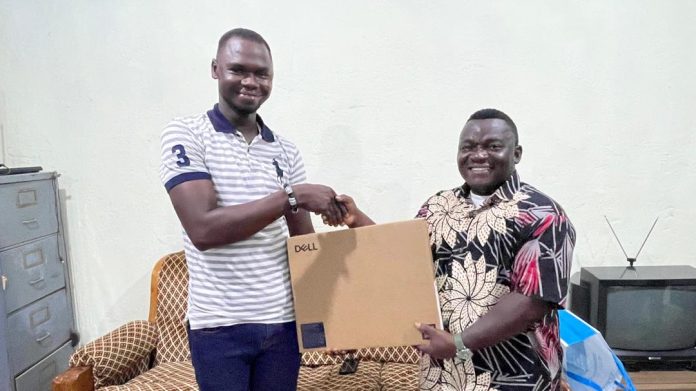
NorthLite Solar Limited has presented a brand-new laptop to David Azure of A1 Radio, winner of the Most Promising Journalist of the Year award at the 5th Upper East Regional Ghana Journalists Association (GJA) Awards.

The presentation forms part of the company’s sponsorship of the awards, through which it supported the Most Promising Journalist of the Year category with a laptop to enhance the recipient’s professional work.

The laptop was presented to Mr. Azure by the Upper East Regional Chairman of the GJA, Albert Sore, on a day to present packages to winner of this year’s awards ceremony. Mr. Azure was adjudged the Most Promising Journalist of the Year in recognition of his outstanding and enterprising journalism in the region.

The Chief Executive Officer of NorthLite Solar Limited, Frank Adabre, said the company’s support for the awards reflected its commitment to integrity, service and development.

“Our sponsorship is therefore our way of supporting the GJA and recognizing journalists who continue to demonstrate professionalism, integrity, courage, and resilience in their work,” he said.

Mr. Adabre added that the company, as a Ghanaian renewable energy business expanding internationally, was seeking to build a stronger relationship with the media and promote conversations that contribute to Ghana’s sustainable development.

“On behalf of the board, management, and the entire NorthLite Solar team, I congratulate the Ghana Journalists Association and all the journalists being recognized at this year’s awards,” he said.

NorthLite Solar Limited, a wholly Ghanaian-owned renewable energy Engineering, Procurement and Construction (EPC) company, has been providing solar electricity and project financing solutions since 2009.

The company says it has invested more than US$5 million in solar EPC projects in the Upper East Region, contributing to energy security, economic growth and sustainable development.

It has also expanded into the United States market, a move it says is aimed at promoting Africa–US energy investment opportunities and attracting international partnerships for Ghana’s renewable energy sector.

The Upper East Regional GJA expressed appreciation to NorthLite Solar for its support, describing the gesture as timely and impactful, particularly in providing young journalists with tools to improve their work in an increasingly digital media environment.

The 5th Upper East Regional GJA Awards brought together journalists, media partners, development partners and other stakeholders to celebrate excellence, professionalism and resilience in journalism in the region.

A1 Radio | 101.1Mhz | Bolgatanga

Aduana FC Manager apologises to André Ayew, Paga residents over goat farming remark

0

Aduana FC General Manager Takyi Arhin has issued an unconditional apology to Ghanaian football star André Ayew and the people of Paga following his controversial remark suggesting that the former Black Stars captain invest in goat farming in the community instead of contesting to become the next GFA president.

Mr. Arhin described the comment as an unfortunate moment, admitting that he had erred and expressing regret over the controversy.

“I write to offer my sincere and unconditional apology to André Ayew for the comment. I do not intend to offer any explanation, but I apologise profusely. It was simply an unfortunate moment,” he said.

He added that he had absolute respect for André Ayew and his family for their passion, dedication and commitment to Ghanaian football.

“I have absolute respect for André and his family for their remarkable passion, dedication and commitment to Ghana football. I erred,” Mr. Arhin stated.

The apology follows a demand by the Paga Youth Movement (PAYOM) for the football administrator to withdraw the remark and publicly apologise to the community and the people of Northern Ghana.

In a statement issued on October 8, 2026, the group described the comment as “offensive, demeaning and unacceptable,” arguing that the reference to Paga in a discussion about Ayew’s reported interest in the Ghana Football Association (GFA) presidency unnecessarily disparaged the community.

PAYOM maintained that although Mr. Arhin was entitled to express his views on football administration, he should not have invoked Paga in a manner the group considered derogatory.

The movement also expressed concern that the remark could reinforce stereotypes that Northern Ghana is suited mainly to agriculture and livestock production, rather than leadership and other areas of national development.

It stressed, however, that its objection was not to goat farming, which it described as dignified work and an important part of Ghana’s economy, but to the context in which Paga was referenced.

In his apology, Mr. Arhin directly addressed the concerns of the community, saying he had no intention of disrespecting Paga, which he described as a beautiful town that had produced top footballers.

“I also wish to apologise to the good people of Paga for the offensive, demeaning and unacceptable comment, and I hope they find it in their hearts to forgive me,” he said.

“I had no intention of disrespecting a beautiful town that has produced top footballers, including the legendary Abedi Pelé.”

PAYOM had called on Mr. Arhin to withdraw the comment, apologise publicly to Paga residents and extend the apology to the people of Northern Ghana.

The group clarified that its demand was not an attack on Aduana FC, its supporters, the people of Dormaa or the Bono people, but a call for respect and responsible public discourse.

The controversy arose after Mr. Arhin was quoted as suggesting during a radio discussion on Space FM in Sunyani that Ayew should invest in goat farming in Paga rather than pursue the GFA presidency, arguing that football administration depended on relationships.

Ayew has not publicly announced an intention to contest for the GFA presidency, according to media reports on the controversy.

A1 Radio | 101.1Mhz | Joshua Asaah

Isaac Adongo pushes for $500,000 GNPC funding to redevelop ZAMSTECH sports park

0

The Member of Parliament for Bolgatanga Central, Isaac Adongo, has disclosed plans to secure approximately $500,000 from the Ghana National Petroleum Corporation (GNPC) to redevelop the sports park at Zamse Senior High/Technical School (ZAMSTECH).

According to him, the money was originally approved by a previous GNPC board for feasibility studies for the proposed Bolgatanga Sports Stadium, but he is seeking to have the funds redirected towards improving sporting facilities at his former school.

Speaking as the guest speaker at ZAMSTECH’s 50th anniversary celebration in Bolgatanga, Mr Adongo explained that the proposed reallocation followed indications of government interest in constructing the Bolgatanga Sports Stadium.

He said the previous GNPC board that approved the funding had since been dissolved, and he was pursuing efforts to have the money used to redevelop the school’s sports park.

The MP did not indicate whether GNPC had formally approved the proposed reallocation or provide a timeline for the project.

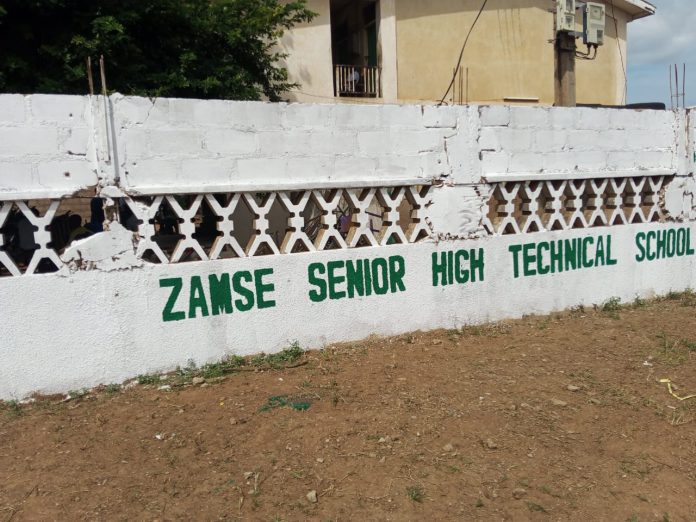
Mr Adongo also disclosed that government had approved renovation works at ZAMSTECH, while the Ghana Education Trust Fund (GETFund) had approved the construction of a perimeter wall.

He explained that the wall would help secure the school’s dormitories and protect its land from encroachment.

The MP further appealed for the completion of an abandoned staff bungalow and the provision of a new school bus to support the institution’s operations.

Reflecting on ZAMSTECH’s development over the past five decades, Mr Adongo recalled that the school was once considered an undesirable choice for students and had to organise supplementary entrance examinations to fill available places.

He said the institution had since grown into a school that many parents were willing to choose for their children.

Sharing his personal experience, Mr Adongo recounted that he entered ZAMSTECH with difficulties in English and French and initially struggled academically.

He said he worked to improve his performance, eventually placing first in his class by Form Three and emerging as the best student in Northern Ghana in his year of completion.

The MP attributed much of his personal and professional development to the education he received at the school.

“I carry the name of ZAMSTECH first and foremost and Bolga Central second because of ZAMSTECH being who I am,” he said.

He commended the school for providing students with opportunities to develop beyond academic work.

“Today is a choice for many parents to bring their children here. You are not only learning, but you are developing all the faculties,” he added.

Mr Adongo urged the school’s leadership, alumni and other stakeholders to continue supporting its development to improve teaching, learning and extracurricular activities.

Established in 1976, ZAMSTECH celebrated its Golden Jubilee under the theme, “Celebrating 50 Years of Academic Excellence: Empowering Minds and Shaping the Future, The Role of Stakeholders.”

The celebration brought together former students, traditional leaders, education officials, staff and students to reflect on the school’s progress and discuss its future.

A1 Radio | 101.1 MHz | David Azure | Bolgatanga

We were ashamed to wear ZAMSTECH uniforms in town – Isaac Adongo recalls

0

The Member of Parliament for Bolgatanga Central, Isaac Adongo, has recounted how Zamse Senior High/Technical School (ZAMSTECH) was once looked down upon by students of other schools but has grown into an institution whose former students proudly identify with it.

Speaking at the school’s 50th anniversary celebration in Bolgatanga, Mr Adongo said students of ZAMSTECH were once ridiculed for attending the institution, which was sometimes described as an “advanced middle school.”

The MP, who is an old student of ZAMSTECH, recalled that wearing the school’s green and white uniform in public was particularly uncomfortable because of the negative perception surrounding the institution at the time.

He said the stigma extended to sporting competitions, where students from other schools sometimes considered it embarrassing to lose to ZAMSTECH.

“I enjoyed when I was a footballer. And in fact, as a footballer, one of the most difficult challenges I faced as a student was the indignity of wearing these green and white into the town. In fact, I remember when we beat Big Boss, the headmaster called the students and told them, and how you allow advanced middle school to beat you?” he recounted.

According to Mr Adongo, the perception of the school has changed significantly over the years, with students and alumni now taking pride in their association with the institution.

“Today, you are very proud owners of the green and white. And I want to thank you for making this school a very proud school,” he said.

Reflecting on the school’s academic progress, Mr Adongo recalled that during his time at the University of Ghana, it was uncommon to encounter other students who had attended ZAMSTECH.

He said he could sometimes go between five and seven years before meeting another former student of the school at the university.

Today, however, he said ZAMSTECH graduates could be found in universities and various professional fields, reflecting what he described as the institution’s growth over the past five decades.

Mr Adongo noted that former students were increasingly identifying with ZAMSTECH in professional and public spaces, including airports, while some had risen to become professors and other accomplished professionals.

He attributed the school’s changing reputation to its development over the years and the achievements of successive generations of students.

The MP urged the school’s current leadership, students and alumni to build on that progress and work towards further improving the institution.

“What is left for us is the current generation of leaders to continue the forward march to make the school even better,” he urged.

Established in 1976, ZAMSTECH marked its Golden Jubilee with a celebration that brought together old students, traditional leaders, education stakeholders, staff and students.

The anniversary provided an opportunity for alumni to reflect on the school’s development and its contribution to education in the Upper East Region.

A1 Radio | 101.1 MHz | David Azure | Bolgatanga

I entered ZAMSTECH as the last student on the admission list, left as the best – Isaac Adongo

0

The Member of Parliament for Bolgatanga Central, Isaac Adongo, has recounted how he entered Zamse Senior High/Technical School (ZAMSTECH) as the last student on a supplementary admission list but went on to graduate as the school’s best student.

Mr Adongo said his experience demonstrated that students could overcome academic and personal challenges through determination and hard work, regardless of their circumstances when they begin their education.

Speaking at the school’s 50th anniversary celebration in Bolgatanga, the MP, who is an old student of ZAMSTECH, recalled that the institution was not a preferred choice for many students when he enrolled.

According to him, the school struggled to attract students through the regular admission process and had to seek permission from the Ghana Education Service (GES) to conduct its own entrance examinations.

“Unlike those days when I came here, it was not a school anybody wanted to come and that is the honest truth, students did not pick this school. So after admissions, this school had to write to GES to get permission to conduct their own internal exams and admit students. We used to call it late entrance exams,” he recounted.

Mr Adongo disclosed that even after taking the supplementary entrance examination, he was placed last on the admission list and did not meet the required qualification.

“I came to this school by late entrance. And even when I came, I was the very last person on the list. And I was not qualified even to enter,” he said.

He recalled that language was among his biggest challenges when he first arrived at the school because he could not speak English or French, which he said were the only languages permitted on campus at the time.

Despite these difficulties, Mr Adongo said he worked to improve his academic performance and eventually emerged as the school’s best student.

“I came here almost an illiterate, and I left here as the best student. So anything is possible. It means that what you think is a limitation is something you can work on and you can become better than the Isaac Adongo that you are proud of,” he told the students.

The MP encouraged current students not to allow their backgrounds or academic difficulties to discourage them from pursuing their ambitions.

Reflecting on the school’s development over the past five decades, Mr Adongo said ZAMSTECH had grown from an institution that struggled to attract students into one that parents now actively consider for their children.

He noted that former students of the institution were pursuing careers in universities, aviation and other professional fields in Ghana and abroad.

Mr Adongo also expressed pride in his association with the school, saying he identified himself first with ZAMSTECH before his position as Member of Parliament for Bolgatanga Central.

ZAMSTECH, established in 1976, celebrated its Golden Jubilee under the theme, “Celebrating 50 Years of Academic Excellence: Empowering Minds and Shaping the Future, The Role of Stakeholders.”

The anniversary brought together past and present students, school authorities, traditional leaders and other stakeholders to reflect on the institution’s development and future.

A1 Radio | 101.1 MHz | David Azure | Bolgatanga

ZAMSTECH marks 50 years, appeals for science laboratory, workshops and vehicles

0
The Headmaster of Zamse Senior High/Technical School (ZAMSTECH), Simon Anabah Amaligah, has appealed for support to address infrastructure and logistical challenges facing the school as it marks 50 years of providing academic and technical education in the Upper East Region.

The school, established in 1976, is seeking a modern science laboratory, well-equipped technical and vocational workshops, the completion of outstanding infrastructure projects, a 66-seater bus and a pick-up vehicle to improve teaching, learning and administrative operations.

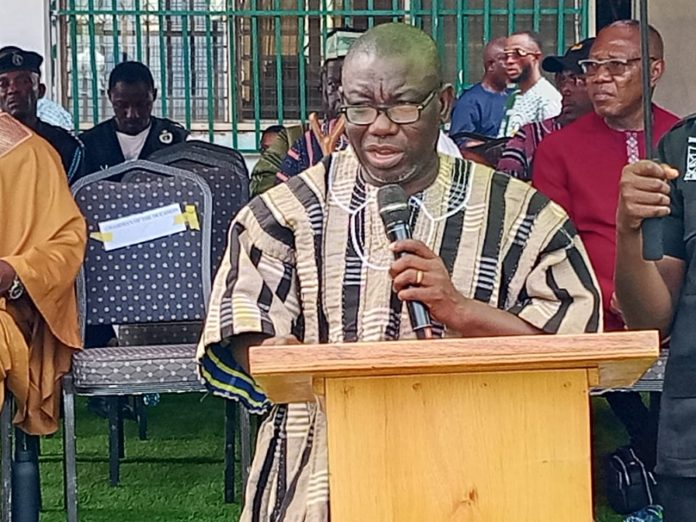
Speaking at the school’s Golden Jubilee celebration in Bolgatanga, Mr Amaligah said the institution had made progress over the past five decades but continued to face challenges that required the attention of government, old students and other stakeholders.

“As Zamse Senior High/Technical School celebrates its Golden Jubilee we respectfully appeal for your support in addressing some of the school’s critical infrastructural needs,” he stated.

He identified five priority areas requiring intervention, including the construction and furnishing of a modern science laboratory and the provision of equipment for technical and vocational training.

The school is also seeking support to complete ongoing projects and acquire vehicles to facilitate academic activities, student transportation and administrative work.

Mr Amaligah acknowledged government support for the school, disclosing that contracts had been awarded for three major infrastructure projects.

“We are pleased to acknowledge the Government’s support through the award of contracts for; construction of a school perimeter fence wall, construction of a three-storey, eighteen unit classroom block, and construction of a multipurpose assembly hall,” he said.

However, the Headmaster did not indicate the current stages of the projects or when they were expected to be completed.

Outlining the school’s ambitions for the coming decades, Mr Amaligah said ZAMSTECH intended to strengthen its academic and technical programmes to equip students with skills for employment and entrepreneurship.

“Our vision for the next 50 years is to make Zamstech a centre of excellence for academic and vocational education in Ghana, producing job creators and not job seekers for the industrial transformation of Ghana,” he declared.

The Deputy Minister of Education, Dr Clement Abas Apaak, who represented Education Minister Haruna Iddrisu at the celebration, acknowledged the school’s infrastructure needs and assured management of the Ministry’s commitment to addressing them.

Dr Apaak disclosed that the Ministry was working with the Architectural and Engineering Services Limited (AESL) to review cost estimates submitted for outstanding projects at the school.

He indicated that progress on the projects would depend on the availability of resources.

The Deputy Minister also acknowledged the school’s contribution to education in the Upper East Region over the past five decades and reiterated government’s commitment to improving teaching and learning conditions.

The Golden Jubilee was celebrated under the theme, “Celebrating 50 Years of Academic Excellence: Empowering Minds and Shaping the Future, The Role of Stakeholders.”

The event brought together old students, traditional leaders, education stakeholders, past and present staff, students and other dignitaries to reflect on the school’s achievements and discuss its future development.

A1 Radio | 101.1 MHz | David Azure | Bolgatanga

Talensi Assembly distributes 640 desks to 22 schools

0

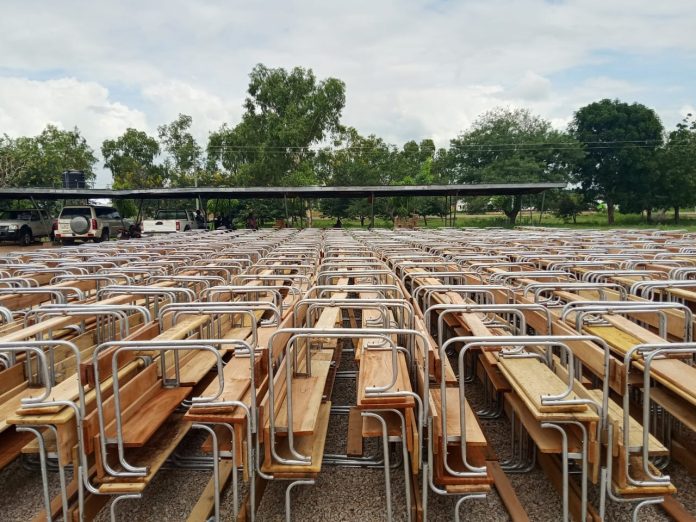
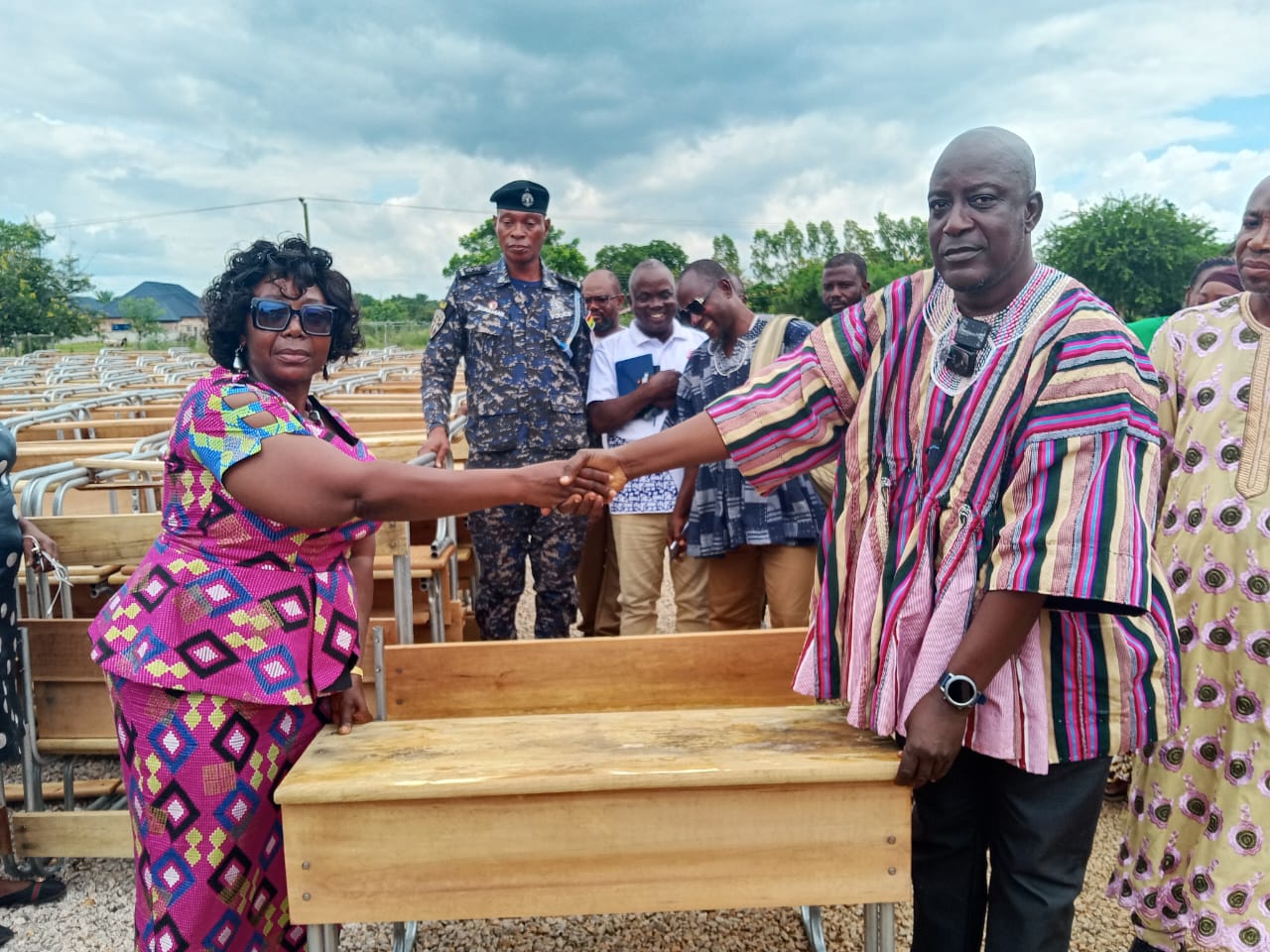
The Talensi District Assembly in the Upper East Region has handed over 640 desks to the District Education Directorate to help address a furniture shortage estimated at about 5,000 desks across schools in the district.

The furniture, comprising 600 dual desks and 40 hexagonal desks, was procured through the District Assemblies Common Fund (DACF) and is expected to improve teaching and learning conditions in beneficiary schools.

District Chief Executive John Millim Nabwomya presented the furniture to the Education Directorate at the Assembly’s forecourt, urging school authorities to ensure that the desks are properly maintained.

According to figures provided by the Ghana Education Service (GES), the district currently faces a furniture deficit of approximately 5,000 desks, making the latest intervention part of efforts to address the shortage.

Speaking during the presentation, Mr Nabwomya reminded teachers, pupils and other education stakeholders that the furniture had been procured with public funds and should therefore be handled responsibly.

“I have a word for you and for our teachers here that whatever we have gotten here, all of us have contributed for the procurement of these ones. It has not come from any other source apart from our own money. When you take your payslip, look at the tax component. That money is part of the money that we have used to procure this one,” he said.

The DCE expressed concern about the poor maintenance of school furniture, noting that several schools across the district had broken desks that could have been repaired and returned to use.

He urged school authorities to pay greater attention to maintaining existing furniture rather than relying solely on the procurement of new desks.

“We know that the children, all of them, their own is to be cared for. They have no responsibility. And so if they are not handling them well, we are the people who suffer. So we should keep on producing new things. It’s about going back to repair old things. When you move around the schools in the district, there are a number of broken furniture,” he stated.

Mr Nabwomya warned that the failure to maintain the new furniture could force the Assembly to spend additional public funds on replacements instead of addressing other educational needs.

“If by the end of four years, five years, we can’t find any of these ones in the classroom, it’s a harm to we ourselves, not any other person called government. Because we are all the government. So I would urge you people to make sure that these ones are put into proper use and proper care, so it will last longer,” he added.

The DCE credited the government’s release of DACF resources for making the procurement possible.

He also disclosed that the district had received two new school facilities and was preparing to construct another to address congestion and improve access to education in underserved communities.

Receiving the furniture on behalf of the Education Directorate, District Director of Education Christiana Azure Ayinzoya thanked the Assembly for the intervention.

She disclosed that 22 schools would benefit from the first phase of distribution.

Madam Ayinzoya said additional schools would be considered when the Directorate receives another expected consignment of 600 dual desks.

She assured the Assembly that the furniture would be distributed and used appropriately to support teaching and learning.

A1 Radio | 101.1 Mhz | David Azure | Talensi

Women without waist beads risk losing partners to women who wear them – Bead maker

0

Women who do not wear waist beads risk losing their partners to other women who adorn themselves with the traditional accessory, Chief Executive Officer of UD Beads and More, Ursula Akurugu, has warned.

According to Ms Akurugu, some men are attracted to women who wear waist beads, and women who refuse to use them could potentially give other women an advantage in attracting their partners.

She therefore urged women to embrace waist beads as part of their dressing, particularly when in intimate relationships.

Ms Akurugu said waist beads enhance a woman’s appearance and can add to her attractiveness, insisting that women should not be afraid of wearing them.

“I can tell you that because of you refusing to wear beads, if the man happens to see that there is a lady who is using beads, there are some men that will leave the wife and go for another woman outside because of that woman wearing beads.”

She questioned why a woman would refuse to wear waist beads when the accessory is designed to adorn the waist.

“Why? Don’t you have a waist? You have a waist. Put it on. Don’t let this simple thing snatch your man away from you.”

Ms Akurugu said waist beads can be worn not only as part of everyday dressing but also in intimate settings, where she believes they can enhance a woman’s appearance.

She recounted an example of how a woman could be lying beside her partner without wearing waist beads while another woman who wears them could attract his attention.

According to her, women should therefore not dismiss waist beads as unnecessary or be afraid of wearing them.

“So, waist beads are good. Wear them. Don’t say, I’m afraid of them.”

Ms Akurugu, who is engaged in the production and sale of beads, said waist beads remain an important accessory for women and encouraged them to make greater use of them.

She said her business produces different types of beads and accessories, including waist beads, sandals and necklaces, which can be incorporated into women’s dressing.

Her comments come amid discussions about the role of physical appearance and personal adornment in relationships, with Ms Akurugu arguing that waist beads can form part of a woman’s appeal to her partner.

A1 Radio | 101.1 MHz | Joshua Asaah