Home Blog Page 6

Teachers must collaborate to improve education delivery – Bolga Municipal GES Director

0

The Bolgatanga Municipal Director of Education, George Asirah, has urged teachers in the Upper East Region to build stronger professional networks to share knowledge, exchange ideas and develop innovative solutions to challenges affecting education.

He said collaboration among teachers was essential to improving teaching and learning, as it provided opportunities for educators to learn from one another and collectively address problems encountered in their schools.

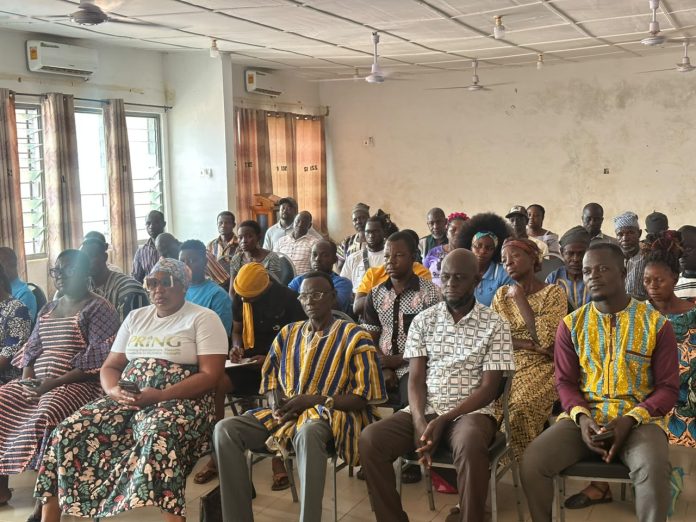
Mr Asirah made the call at Gambibgo Community Day Senior High School in the Bolga East District during a practical chemistry training programme organised for Junior High School science teachers.

According to him, teachers have responsibilities beyond delivering lessons in the classroom and must recognise their potential to contribute to the development of their communities.

He explained that building strong professional relationships would enable teachers to share experiences, adopt effective teaching methods and develop practical approaches to addressing educational challenges.

Mr Asirah encouraged teachers to maintain the relationships established during training programmes and use them as platforms for continuous learning and professional support.

He noted that stronger networks could also help teachers identify common challenges facing their schools and work together to develop solutions suited to their local circumstances.

The Education Director further urged teachers to apply their knowledge and professional skills to broader community development initiatives.

He maintained that sustainable development required collective effort and encouraged educators to work with colleagues and other stakeholders to address challenges affecting their communities.

Mr Asirah expressed optimism that greater collaboration among teachers would improve education delivery and contribute to the development of innovative ideas capable of benefiting schools and communities across the Upper East Region.

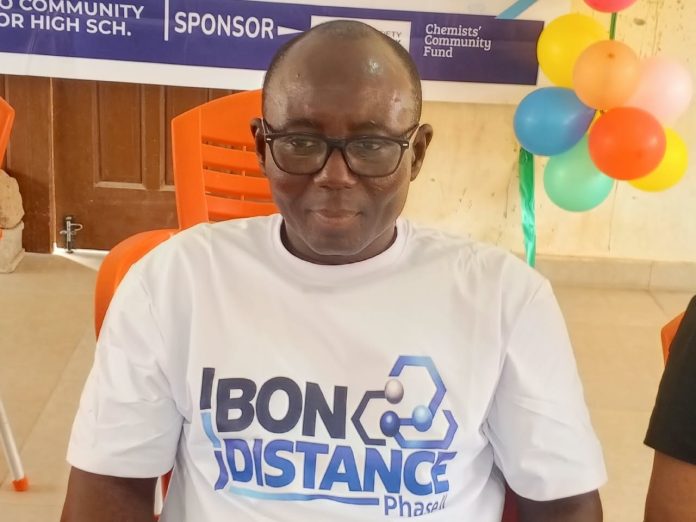
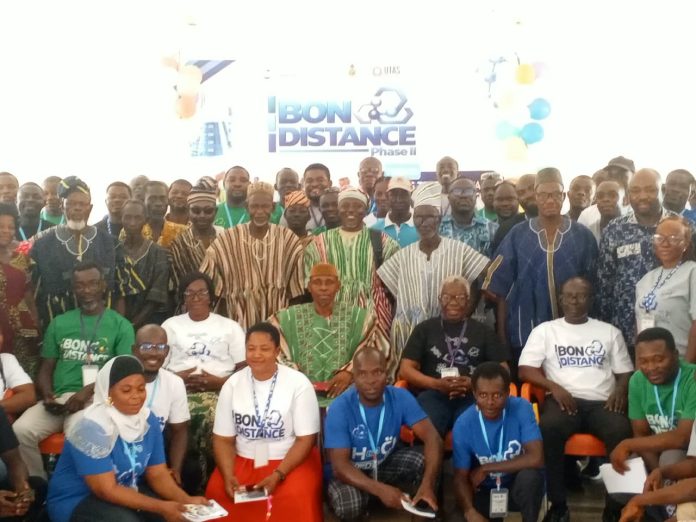
The practical chemistry training, held under the BONDISTANCE Phase II project from October 5 to 6, 2026, brought together 73 science teachers from the Bolgatanga Municipality and Bolga East District.

The programme focused on equipping teachers with practical chemistry skills, including the use of locally available materials to conduct experiments in schools with limited laboratory facilities.

A1 Radio | 101.1 MHz | Moses Anaba Azubire | Bolgatanga

73 science teachers trained in low-cost chemistry experiments in Upper East

0

Seventy-three Junior High School (JHS) science teachers from the Bolgatanga Municipality and Bolga East District have received practical chemistry training to improve science teaching in schools, particularly those without laboratories.

The two-day training, held from October 5 to 6, 2026, at Gambibgo Community Day Senior High School in the Bolga East District, brought together one teacher from each of the 73 junior high schools across the two areas.

Of the participants, 54 were drawn from the Bolgatanga Municipality, while 19 came from the Bolga East District.

The training formed part of the BONDISTANCE Phase II project, funded by the Royal Society of Chemistry (RSC) through its Chemists’ Community Fund, under the theme, “Scaling Teacher Capacity in Practical Chemistry.”

Participants were introduced to hands-on chemistry experiments using locally available materials, as well as PhET interactive simulations to help students understand scientific concepts through virtual demonstrations.

The initiative particularly targeted teachers without formal science training, those who had never conducted practical chemistry experiments and teachers working in schools without laboratory facilities.

Speaking at the opening ceremony, the Lead Programme Coordinator and Senior Lecturer at the Department of Chemistry of the Kwame Nkrumah University of Science and Technology (KNUST), Dr Gershon Amenuvor, said the training was developed in response to concerns raised by teachers during an earlier project in 2023.

He explained that the first phase of BONDISTANCE, also supported by the Royal Society of Chemistry, provided practical chemistry learning opportunities for 180 young learners in the Gambibgo community.

However, feedback from teachers revealed that some were teaching scientific experiments they had never personally conducted.

“We have never done these practicals before. We have been teaching what we have never seen,” Dr Amenuvor quoted some of the teachers as saying.

He said the revelation prompted the then Bolga East District Director of Education, George Asirah, and the Chief of Gambibgo to request a follow-up programme specifically targeting teachers.

According to him, the request informed the development of BONDISTANCE Phase II, which seeks to equip teachers with practical skills and affordable teaching methods that can be applied even in schools without conventional laboratories.

Dr Amenuvor stressed that the programme was not limited to improving teachers’ knowledge of chemistry but was also intended to strengthen their confidence in delivering practical science lessons.

“It is about telling every teacher here: You matter. Your work matters. And you are not alone,” he said.

He expressed appreciation to the Royal Society of Chemistry, Ghana Chemical Society, University of Technology and Applied Sciences (UTAS), Navrongo, and KNUST’s Department of Chemistry for supporting the initiative.

The Secretary of the Ghana Chemical Society, Dr Michael Baah Mensah, also called for greater investment in practical science education, stressing that every child deserved access to quality chemistry education regardless of geographical location or background.

He said equipping teachers with the necessary skills, knowledge and confidence was essential to making science education more accessible and inclusive.

Dr Mensah, however, acknowledged that sustaining such programmes required financial and technical support, particularly for teacher training, laboratory equipment, learning materials and community outreach.

He appealed to industry players, institutions, development partners and individuals to support practical science education initiatives through funding, equipment, mentorship and technical expertise.

“Investing in teachers today is investing in the next generation of scientists and innovators,” he said.

The Chief of the Gambibgo Traditional Area, Naba Sayeed Akolmolga Anon-Egra Sadik, commended the organisers and participating teachers for their commitment to improving science education.

He urged teachers to apply the knowledge and practical skills acquired during the training to improve students’ understanding of chemistry and stimulate greater interest in science.

The chief also called for the programme to be sustained rather than treated as a one-time intervention.

According to him, strengthening science and technology education was necessary to prepare Ghanaian and African youth to compete in an increasingly technology-driven world.

He argued that while Africa must preserve its history and learn from past achievements, greater attention should be given to developing the scientific knowledge and technological capabilities needed for future development.

Naba Sayeed therefore called for sustained investment in science education and stronger collaboration among educational institutions, professional bodies and development partners.

The organisers expressed optimism that the training would help teachers introduce more practical lessons in their classrooms and encourage students to pursue further studies and careers in science, technology, engineering and mathematics.

A1 Radio | 101.1 MHz | Moses Anaba Azubire | Bolgatanga

Moses Apiah calls for investment in journalists to strengthen rural reporting

0

The 2025 Upper East Regional Journalist of the Year, Moses Apiah of A1 Radio, has urged journalists to prioritise stories affecting rural communities rather than allowing politicians and influential personalities to dominate media coverage.

He has also called on media organisations and other stakeholders to invest in the professional development of journalists, arguing that continuous training is essential to improving the quality of reporting and ensuring that underserved communities receive adequate media attention.

Speaking on Bolga FM’s Tinmaalgo Sanga programme, Mr Apiah said journalism must remain focused on ordinary people, particularly those in rural communities whose challenges and experiences often receive limited public attention.

Describing himself as a rural journalist, he explained that his commitment to reporting on underserved communities was driven by the belief that journalism should amplify the voices of people who might otherwise struggle to have their concerns heard.

He cautioned journalists against concentrating excessively on political activities and prominent personalities while neglecting issues affecting people at the grassroots.

According to him, rural communities have important stories about access to essential services, development challenges and local initiatives that deserve sustained media attention.

He maintained that giving such communities a voice could help bring neglected issues to the attention of authorities, promote accountability and encourage interventions to improve living conditions.

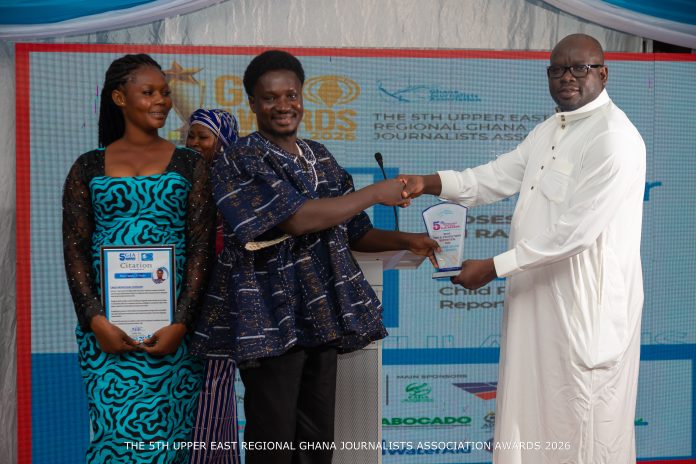
Mr Apiah said his recognition as the Upper East Regional Journalist of the Year had reinforced his commitment to rural journalism and demonstrated the importance of reporting on issues affecting ordinary people.

However, he acknowledged that producing impactful journalism required continuous learning and access to professional development opportunities.

He identified inadequate financial and logistical resources as major challenges preventing some media organisations from regularly training their journalists.

According to him, although many media houses recognise the importance of professional development, limited resources sometimes make it difficult for journalists to participate in training programmes.

Drawing on his experience, Mr Apiah said training opportunities provided by the Media Foundation for West Africa and DW Akademie had contributed significantly to his professional growth.

He explained that additional training from other institutions had helped him strengthen his reporting skills and improve the quality of his work.

He expressed concern that many journalists, particularly those working in resource-constrained media organisations, lacked similar opportunities to develop their professional skills.

Mr Apiah therefore appealed to individuals, organisations and development partners to support journalism training, suggesting that investing in even 10 to 15 journalists could make a meaningful contribution to improving reporting standards.

He argued that such investments would benefit not only the journalists but also the communities they serve through better coverage of development issues and stronger public accountability.

Beyond institutional support, Mr Apiah urged journalists to take personal responsibility for their professional growth by continuously improving their knowledge and skills.

He encouraged media practitioners to make effective use of available learning opportunities and strive to produce better stories with each assignment.

“If your story today, they are able to publish it, make sure your tomorrow’s story will be better than your yesterday’s story,” he said.

Reflecting on his journey into journalism, Mr Apiah disclosed that he had initially aspired to become a nurse but eventually entered the media profession.

He credited the mentorship and encouragement of experienced journalists with helping him develop his skills and establish himself in the profession.

Among those he acknowledged were William Jalula of The Fourth Estate, JoyNews’ regional correspondent, Edward Aditye of Media Without Borders and Joshua Asaah of A1 Radio.

He said their guidance had played an important role in shaping his career and strengthening his commitment to reporting on issues affecting rural communities.

Mr Apiah consequently encouraged experienced journalists to mentor younger colleagues and help them develop the skills needed to serve their audiences effectively.

He maintained that improving journalism required both investment in professional development and a renewed commitment to reporting on people and communities whose concerns were often overlooked.

According to him, when journalists acquire the necessary skills and focus their reporting on issues that matter to ordinary citizens, they can contribute more effectively to accountability and community development.

A1 Radio | 101.1 MHz | Moses Anaba Azubire | Bolgatanga
Journalists need public cooperation to expose community challenges – Moses Apiah

0

The 2025 Upper East Regional Journalist of the Year, Moses Apiah of A1 Radio, has urged members of the public to volunteer information to journalists to help expose challenges affecting communities and hold public institutions accountable.

According to him, journalists sometimes struggle to investigate important issues because individuals with relevant information are unwilling to speak, particularly on matters involving public institutions and the experiences of vulnerable people.

Speaking on Bolga FM’s Tinmaalgo Sanga programme, Mr Apiah said effective journalism depended partly on the willingness of citizens to share information about issues requiring public attention.

“If we are not ready to voluntarily provide information, I as a journalist will not be able to do my work as expected,” he said.

He explained that information provided by community members could help journalists uncover problems, investigate their causes and draw the attention of relevant authorities to them.

Mr Apiah encouraged the public to develop confidence in journalists, stressing that professional journalism required the protection of confidential sources where necessary.

He maintained that the purpose of investigative and public-interest reporting was not to harm individuals who volunteered information but to promote accountability and contribute to addressing societal challenges.

Beyond public cooperation, the award-winning journalist called on media organisations in the Upper East Region to invest more in the professional development of their staff.

He expressed concern that some journalists were unable to participate in training programmes because their media organisations lacked sufficient personnel to cover their duties in their absence.

“Media houses in the Upper East Region, actually, they need to wake up. They need to begin training,” he said.

Mr Apiah argued that media organisations did not necessarily need to engage international experts to improve the skills of their journalists.

Instead, he suggested that they collaborate with experienced Ghanaian journalists and relevant institutions to organise regular, practical training sessions.

According to him, continuous professional development would help journalists strengthen their reporting skills and produce more accurate, balanced and impactful stories.

He also appealed to political leaders and other stakeholders to support media practitioners with essential working equipment.

Mr Apiah acknowledged recent assistance provided to journalists by the Upper East parliamentary caucus but said more support was needed to address the logistical challenges facing media practitioners.

He identified laptops and other reporting equipment as some of the resources that could improve journalists’ ability to gather information, conduct investigations and produce quality reports.

The journalist further encouraged his colleagues to give greater attention to advocacy and solutions journalism, particularly stories highlighting the experiences of underserved communities.

He said journalists should not limit their reporting to identifying problems but should also examine initiatives being undertaken by individuals, communities and organisations to address those challenges.

According to him, such reporting could draw attention to practical interventions, encourage public participation and inspire similar efforts elsewhere.

“If we keep doing that, then we are telling a story, a positive story, we are telling an advocacy story, we are telling a solution story,” he said.

Mr Apiah maintained that stronger public cooperation, continuous training and improved access to working tools were essential to strengthening journalism and promoting accountability in the Upper East Region.

A1 Radio | 101.1 MHz | Moses Anaba Azubire | Bolgatanga
Late-night events, poor patronage hurting Upper East musicians – Isaac Asoore

0
Upper East Region-based musician Isaac Asoore has expressed concern over the late commencement of entertainment programmes in the region, warning that the practice discourages attendance, exposes patrons to security risks and affects musicians’ earnings.

According to him, many entertainment events begin several hours later than scheduled and consequently end in the early hours of the morning, making it difficult for patrons to attend and return home safely.

Speaking on Bolga FM’s Tooma La Dengo Sanga programme, the musician, who hails from the Nabdam District, said poor time management had become a major challenge for musicians and event organisers in the region.

He explained that some potential patrons avoid entertainment programmes because of concerns about travelling home late at night, particularly the risk of robbery and other security threats.

Mr Asoore added that during the rainy season, unexpected rainfall could disrupt events that start late, affecting attendance and the financial investments of musicians and organisers.

He therefore urged event organisers to adhere to advertised starting times and ensure that programmes end at reasonable hours to encourage attendance and improve the safety of patrons.

Beyond event management, the musician raised concerns about the financial difficulties facing artistes in the Upper East Region, particularly the high cost of producing and promoting music.

He said many musicians struggle to recover their investments because of limited financial returns and inadequate patronage of their work.

According to him, music launches have become one of the few opportunities for local artistes to raise funds to support their careers and recover some of the money spent on recording and promoting songs.

Mr Asoore also expressed disappointment over what he described as inadequate support for musicians from residents of the Upper East Region.

He observed that some artistes receive greater appreciation and support when they perform in southern Ghana than they do in their home region.

He therefore encouraged residents to patronise local entertainment programmes, purchase music and support musicians in ways that would help them sustain their careers.

The musician maintained that greater local support could help artistes earn reasonable incomes from their work and encourage more young people to develop their musical talents.

Mr Asoore also cautioned fellow musicians against the use of substances they believe enhance their creativity or performance.

He warned that relying on such substances could lead to addiction and negatively affect their health, careers and personal lives.

He urged musicians to adopt healthier lifestyles and make responsible decisions while pursuing their careers in the entertainment industry.

Mr Asoore called for greater cooperation among musicians, event organisers and music lovers to address the challenges affecting the growth of the Upper East Region’s music industry.

A1 Radio | 101.1 MHz | Moses Anaba Azubire | Bolgatanga

Don’t wait for Assembly to fix broken school doors – School for Life urges Talensi parents

0
School for Life (SfL), a non-governmental organisation focused on education development, has urged parents and school management bodies in the Talensi District to take greater responsibility for maintaining school infrastructure rather than relying entirely on the District Assembly and Ghana Education Service (GES) to address minor repairs.

The organisation says many School Management Committees (SMCs) and Parent-Teacher Associations (PTAs) do not adequately understand their responsibilities in managing and maintaining schools, contributing to the deterioration of facilities in some communities.

Speaking at a stakeholders’ engagement forum in Tongo, the District Field Officer for School for Life’s Citizen-Led Action for Educational Accountability and Responsiveness in Ghana (CLEAR) project, Dorcas Zoogah, said community participation was essential to sustaining investments in education.

“The school is for the SMCs and the PTA, but we realize that most of them don’t even understand their roles and responsibilities,” she said.

Mrs Zoogah questioned why parents and community leaders would expect the District Assembly to undertake every minor repair after providing school infrastructure, particularly when other communities were still struggling to secure basic educational facilities.

“If assembly is able to provide a school and then a door breaks and you still expect assembly to come and fix the door, how? When others are also there that need even a school,” she asked.

She explained that the Talensi District has more than 100 schools, making it difficult for the Assembly to address all infrastructure and furniture needs simultaneously.

According to her, communities must therefore develop a stronger maintenance culture to protect existing facilities and ensure that limited resources can be directed towards schools with more pressing needs.

“Assembly is doing their best. They are sharing chairs, furniture to schools. If they share furniture to you, it is your responsibility, the parents, teachers and students to keep the chairs well because it is not able to reach all the schools,” she said.

Mrs Zoogah observed that some concerns raised by parents during the forum reflected responsibilities that communities themselves could help address.

“You bring a question and say your door, your gates. it boils back to them again,” she said.

She stressed that improving education delivery required shared responsibility among the District Assembly, GES, headteachers, SMCs, PTAs and parents.

The CLEAR Project Field Officer called for more education on the roles and responsibilities of school management bodies to help communities distinguish between challenges requiring government intervention and minor maintenance issues they could address locally.

The stakeholders’ forum, organised by School for Life in collaboration with GES, brought together parents and representatives of communities across Talensi to discuss challenges affecting education delivery and the responsibilities of the various stakeholders.

School for Life has been implementing the CLEAR project in 10 communities in the district since 2022, with the aim of strengthening citizen participation and accountability in education.

A1 Radio | 101.1 MHz | David Azure | Talensi

Schoolchildren abandoning classrooms for gold mining in Talensi – School for Life

0

School for Life (SfL), a non-governmental organisation focused on education development, has raised concerns over children abandoning school to engage in gold mining activities in parts of the Talensi District of the Upper East Region.

The organisation says the situation threatens the educational prospects of children in mining communities, where the attraction of income from gold mining is reportedly drawing some pupils away from the classroom.

The District Field Officer for SfL’s Citizen-Led Action for Educational Accountability and Responsiveness in Ghana (CLEAR) project, Dorcas Zoogah, said the trend was particularly worrying because some children initially attend school but eventually drop out when they become old enough to participate in mining activities.

Speaking at a stakeholders’ forum in Tongo, Mrs Zoogah, who has worked with communities in the district since 2022, warned that the situation could have long-term consequences for the development of affected communities.

“Sometimes it’s terrible. I always feel like the future of those communities is so bad… You go to the mine, we didn’t say mining is bad, but education is way, way more important. The gold will go away. But ask yourself, in the next 10 years, where will your community be?” she lamented.

According to her, the problem extends beyond children leaving school, as some parents in mining communities also show little interest in participating in meetings intended to address educational challenges.

She explained that while parents in non-mining communities often turn out in large numbers for education-related engagements, mobilising parents in mining areas has become increasingly difficult.

“In mining communities, I have to park my motor and run from house to house, chasing them to come. Even when we bring it to their doorstep, they still don’t come. They think it’s all about money. Because they feel that when we come and talk, there’s no money there,” she said.

Mrs Zoogah further observed that in some schools located in mining communities, many of the pupils who remain in classrooms are children of migrant workers rather than children from the host communities.

She attributed this partly to the tendency for some local children to abandon school once they are considered capable of working at mining sites.

“A child is in school at a tender age who cannot go into mining. But when it gets to a stage where they can, they just leave and go. Even the girl child, parents use them,” she said.

The CLEAR Project Field Officer called for stronger collaboration among traditional authorities, community elders, parents, the District Assembly and the Ghana Education Service (GES) to address the situation.

She proposed the enforcement of community bylaws to prevent children from being engaged in mining activities and to hold individuals who employ them accountable.

“Imagine you put a ban saying at a tender age, if you go to mining community, they should not pick you. And you start arresting anybody who picks those children,” she suggested.

Mrs Zoogah maintained that protecting children’s access to education required the active involvement of families and community leaders, particularly in areas where mining provides an important source of livelihood.

School for Life has been implementing the CLEAR project in 10 communities in Talensi since 2022, with a focus on strengthening citizens’ participation in education delivery and improving accountability among education stakeholders.

A1 Radio | 101.1 MHz | David Azure | Talensi

School for Life raises concerns over lack of education accountability forums in Talensi

0

School for Life (SfL), a non-governmental organisation focused on education development, has raised concerns over the failure of the Ghana Education Service (GES) in the Talensi District to regularly organise public accountability forums for residents to assess education delivery and raise concerns.

According to the organisation, the absence of such engagements has limited opportunities for parents and other community members to hold education authorities accountable and seek solutions to challenges affecting schools in the district.

Speaking at a stakeholders’ forum in Tongo, the District Field Officer for School for Life’s Citizen-Led Action for Educational Accountability and Responsiveness in Ghana (CLEAR) project, Dorcas Zoogah, said regular engagement between education authorities and communities was essential to improving education delivery.

She explained that although GES was expected to provide opportunities for citizens to raise concerns and receive updates on education delivery, such engagements had not been taking place regularly in the district.

“Since we’ve been in the district, we realized that this has not really been happening. And this is so bad because there’s a need for it. Visiting the communities, we see how bad some of the situations are. And every time parents and citizens keep lamenting,” she said.

Mrs Zoogah said School for Life had been implementing the CLEAR project in 10 communities in Talensi since 2022, educating residents on their rights and responsibilities in education and the roles of institutions responsible for education delivery.

She explained that the project was intended to empower citizens to demand accountability and take appropriate action when challenges affecting their children’s education remained unresolved.

However, she said the organisation recognised the need to extend the benefits of the project beyond the 10 participating communities.

“The project has helped the 10 communities in Talensi district, but we realize that opening only the 10 communities’ eye, it’s not the best. So this particular forum, in partnership with GES, we brought communities across Talensi, not only the CLEAR communities, to come and participate.”

Mrs Zoogah described the forum as productive, explaining that it provided an opportunity for parents and other stakeholders to better understand their respective responsibilities in improving education delivery.

She stressed that addressing challenges in schools required collaboration among GES, the District Assembly, headteachers, School Management Committees (SMCs), Parent-Teacher Associations (PTAs) and parents.

The Talensi District Director of Education, Christiana Azure Ayinzoya, commended School for Life for organising the forum and providing a platform for residents to engage education authorities.

She also used the occasion to brief stakeholders on developments in the district’s education sector and the efforts being made to address challenges affecting schools.

The forum brought together representatives of communities across the district, including those outside the 10 communities participating in the CLEAR project.

A1 Radio | 101.1 MHz | David Azure | Talensi

Youth activist calls for presidential intervention after Gbane-Namoulog clash

0

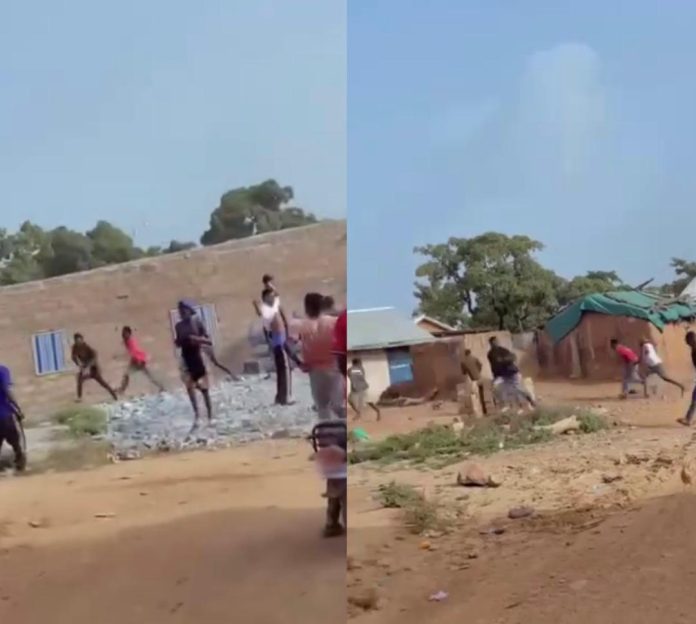
A development advocate and youth activist in the Talensi District of the Upper East Region, Solomon TTB Zenakena, has appealed to President John Dramani Mahama to intervene in the escalating tensions between residents of Gbane and Namoulog following a clash at a mining site in Gbane.

He has also called on the two communities to lay down their weapons, exercise restraint and pursue dialogue to resolve their differences over a land dispute currently before the courts.

Speaking on A1 Radio, Mr. Zenakena said the situation threatened the longstanding relationships between the two communities, which he noted were bound by family ties, intermarriages, shared traditions and common social institutions.

He said residents of Gbane and Namoulog were deeply interconnected, making continued violence detrimental to both communities and the wider Talensi area.

“We are not enemies. We are brothers. We are sisters. We are mothers, and we are fathers. We share the same market. We share the same tradition. We share the same culture. We share the same hospital, the same school, the same workplaces, the same farms and the same land,” he said.

He explained that the dispute between the two communities had been before the courts for several years without violence, but recent events had heightened tensions.

Although acknowledging the role of the courts in resolving disputes, he urged traditional authorities and opinion leaders in neighbouring communities to facilitate dialogue between the factions.

He specifically called on leaders from communities including Sheega, Sawalga, Tindongo, Duusi, Kpatia and Yamerega to engage the two sides and help restore peace.

“The court may resolve the matter, but will it be peaceful? The court may resolve the matter, but will every faction be okay with it? That is why the court is always the last resort,” he said.

He stressed that the immediate priority should be to stop the violence, adding that other disagreements could be addressed through dialogue once peace had been restored.

Mr. Zenakena also appealed to the Upper East Regional Security Council (REGSEC), the District Security Council (DISEC) in Talensi and the National Security Council to strengthen security in the affected communities.

He said people he had spoken to on the ground had raised concerns about the visibility of security personnel, urging the police and military to intensify patrols and protect lives and property.

He called on security agencies to remain professional, impartial and firm in dealing with both sides.

“I want them to be fair. I want them to be firm. I want them to defend the land. I want them to protect lives. I want them to protect property,” he said.

The activist warned that delays in responding to the situation could make it more difficult to contain, urging authorities to act before further harm was recorded.

Mr. Zenakena said the effects of the conflict were already being felt beyond the two communities, citing disruptions to economic and social activities.

He recalled that violence on a Sunday that coincided with Tindongo market day prevented normal market activities, while health workers were reportedly forced to flee and schools faced disruption.

He said the situation was affecting residents regardless of whether they identified with Gbane or Namoulog.

“The houses that we are burning today are not for anybody. They belong to us. The blood that may be shed today is not anybody’s blood. It’s our blood,” he said.

He urged residents to reject revenge and consider the welfare of children, mothers and vulnerable people whose lives were being affected by the unrest.

Mr. Zenakena reiterated that Talensi had long been associated with peace and stability and called on traditional leaders, security agencies and other stakeholders to work together to restore calm.

He said dialogue, forgiveness and collaboration remained essential to resolving the dispute and preventing further violence.

A1 Radio | 101.1Mhz | Joshua Asaah

Rural location should not deny students access to quality university education – Regentropfen President

0

The Founder and President of Regentropfen University College, Rev. Fr. Dr Moses Asaah Awinongya, has defended the decision to establish a university in rural Namoo in the Bongo District of the Upper East Region, arguing that access to quality higher education should not depend on where a student lives.

He said the institution was established to address inequalities in access to tertiary education, particularly for young people in rural communities who face financial and geographical barriers to pursuing university education.

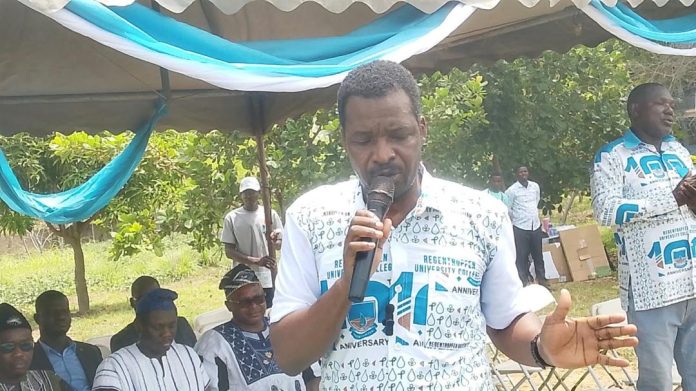
Speaking as Regentropfen University College marked its 10th anniversary, Rev. Fr. Dr Awinongya said the decision to locate the institution outside a major urban centre had raised questions about its economic viability.

However, he maintained that the university’s purpose was to develop the potential of young people rather than maximise financial returns.

“Many asked me at the beginning of the University College and some still do today, whether establishing a University College in a rural area made/make business sense. My answer was and is simple: YES. The young people will create wealth for Ghana. We are promoting talents. We are not maximizing profit,” he said.

According to him, many young people in the Upper East Region previously had to travel to southern Ghana to pursue higher education, a situation that placed additional financial pressure on students and their families.

He argued that students from rural communities deserved access to the same educational opportunities available to their counterparts in urban areas.

Reflecting on the institution’s early years, Rev. Fr. Dr Awinongya acknowledged that establishing a university college in Namoo came with significant challenges.

He identified inadequate accommodation for staff and students, poor road access, limited infrastructure and low student enrolment as some of the difficulties the institution encountered.

“We had more faith than facilities and more vision than funding,” he said.

Despite those challenges, he said the institution continued to operate with support from the University for Development Studies, staff, students, traditional authorities, parents, alumni, academic partners and other benefactors.

Rev. Fr. Dr Awinongya disclosed that Regentropfen initially received accreditation to offer 10 academic programmes, comprising five diploma and five bachelor’s degree programmes.

Over the past decade, the institution has expanded its offerings to five diploma programmes, 10 undergraduate degree programmes and three postgraduate programmes.

He said additional programmes had been submitted to the Ghana Tertiary Education Commission (GTEC) for accreditation as part of efforts to broaden educational opportunities.

Beyond expanding access to higher education, the President said Regentropfen was committed to producing graduates capable of identifying problems, developing solutions and creating employment opportunities.

He argued that universities should prepare students to contribute to economic development through innovation and entrepreneurship rather than focusing solely on securing salaried employment.

Looking ahead, Rev. Fr. Dr Awinongya said the institution intended to expand postgraduate education and research, strengthen partnerships with industry and international organisations, and pursue a charter to operate as an autonomous university.

He also outlined plans to introduce a medical programme supported by a proposed hospital within the next five to ten years, subject to the necessary preparations and regulatory approvals.

The university President appealed to individuals, organisations and development partners to support the institution’s efforts to extend higher education to underserved communities.

Regentropfen University College is celebrating its 10th anniversary under the theme, “From Vision to Reality: A Decade of Promoting Talents and Shaping Future Minds.”

A1 Radio | 101.1 MHz | Moses Apiah | Bongo